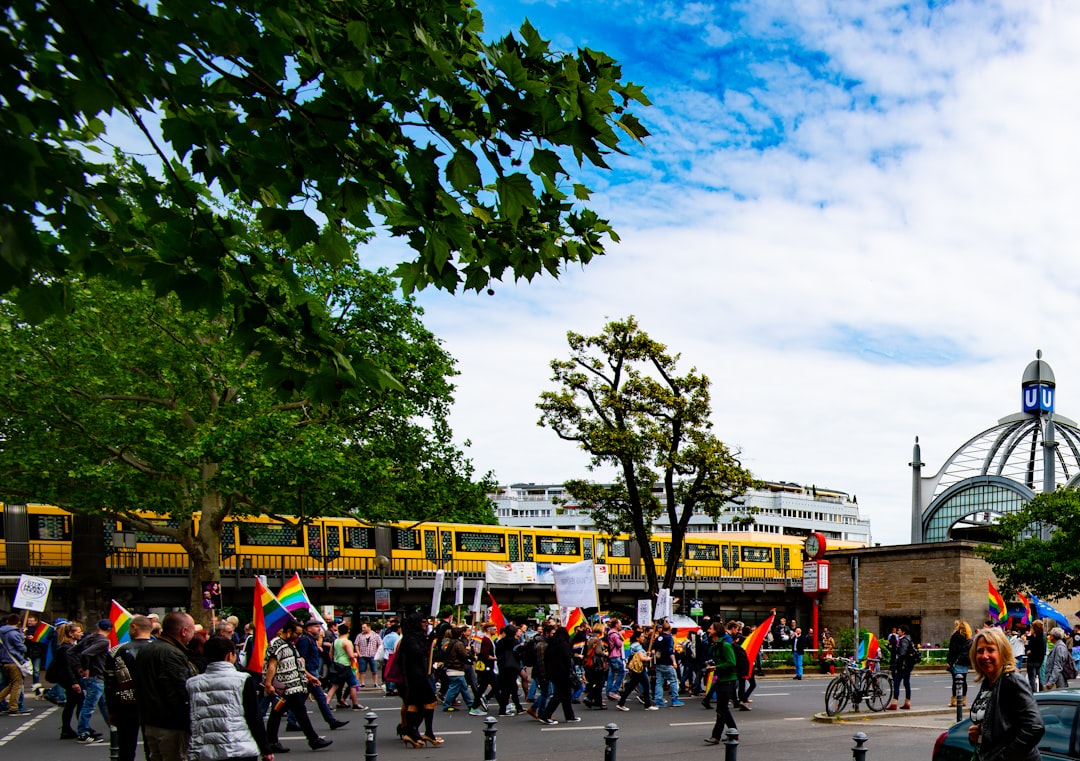
A white van barreled through the crowd at Berlin’s Christopher Street Day parade on July 25, 2026, killing a 28‑year‑old attendee and injuring 16 others, an act police are treating as a suspected terrorist attack.
What Happened
The incident unfolded on a sunny Saturday afternoon as hundreds of thousands of participants marched along the iconic route that snakes through the Tiergarten park and the historic streets of Schöneberg. The Berlin Pride parade, known locally as Christopher Street Day, attracted an estimated 500,000 participants, making it the largest LGBTQ+ gathering in Europe and a vivid showcase of solidarity after decades of activism since the 1969 Stonewall riots. The white Mercedes‑Benz Sprinter van, traveling at an estimated 60 km/h, plowed into the dense crowd near the intersection of Kurfürstendamm and Bundesratstraße, sending panicked revelers scattering and trampling over one another.
German authorities quickly identified the driver as a 28‑year‑old man who had arrived in Germany as a refugee in 2023 and possessed no prior criminal record, a detail that underscores the challenge of vetting individuals with irregular migration histories. The Berlin police, in coordination with the Federal Criminal Police Office (BKA), launched an immediate manhunt, placing the suspect on a wanted list and deploying additional forensic teams to the scene. Emergency services responded within minutes, evacuating the injured to nearby hospitals where 16 victims received treatment for injuries ranging from minor bruises to serious trauma.
Why It Matters
First, the attack highlights the vulnerability of large, open‑air public events to vehicle‑ramming tactics, a method that has become a preferred weapon for lone‑actor extremists seeking maximum casualties with minimal logistical complexity. In the past five years, similar incidents in Nice (2016), Barcelona (2017), and most recently in Berlin itself have shown that the combination of crowded venues and limited physical barriers creates a soft target that is difficult to secure without compromising the spontaneity that characterizes such gatherings.
Second, the timing of the assault raises political questions at a moment when President Donald Trump is navigating a domestic climate marked by heightened polarization and a resurgence of extremist rhetoric. Just weeks before the Berlin attack, Trump signed an executive order that expands the scope of the U.S. Department of Homeland Security’s “Vehicle Ramming Mitigation” program, allocating $150 million for bollards and surveillance upgrades at high‑profile public venues. Critics argue that the order’s focus on foreign‑inspired terrorism overlooks the risk posed by domestic actors inspired by far‑right ideologies, a concern amplified by the suspect’s alleged ties to an online extremist forum that glorifies “Western cultural decline.”
Third, the incident carries implications for the European Union’s security architecture. The 2024 EU Counter‑Terrorism Package, which mandates real‑time data sharing among member states’ police forces and requires mandatory security audits for events exceeding 100,000 attendees, was already under debate. Berlin’s massive turnout, far surpassing the threshold, forces a rapid reassessment of how the package will be implemented, particularly regarding the deployment of portable barriers and the integration of facial‑recognition technology in crowd‑monitoring systems. Moreover, the German Federal Police have announced a temporary ban on the use of certain high‑capacity vehicles in public spaces during major festivals, a measure that could become a model for other EU capitals.
Finally, the attack reverberates for LGBTQ+ communities worldwide, reminding activists that the fight for equality remains intertwined with the threat of violent extremism. In the United States, where Pride events draw millions each summer, the incident may accelerate calls for federal legislation to fund security enhancements at large gatherings, a debate that is already shaping congressional hearings on “domestic terrorism” and the balance between civil liberties and public safety.
Historical Context
Vehicle‑ramming attacks have a precedent that stretches back to the 2016 Nice truck massacre, where a 31‑year‑old man drove a 19‑ton lorry through a Bastille Day crowd, killing 86 people. More recently, the 2019 Christchurch mosque shootings in New Zealand demonstrated how a single perpetrator with a legally obtained firearm could inflict mass casualties, prompting both nations to tighten gun laws. In Europe, the 2020 Berlin Christmas market attack, in which a 50‑year‑old man drove a truck into a festive crowd, killed nine and injured dozens, reinforcing the pattern that public celebrations are targeted for maximum symbolic impact. These precedents illustrate that the Berlin Pride assault is not an isolated event but part of a broader trend where extremists exploit high‑visibility gatherings to spread terror.
In the United States, the 2023 “Proud America” rally in Washington, D.C., faced a credible threat after intelligence warned of a potential vehicle‑based attack, leading to the placement of concrete barriers around the event perimeter — a precaution that was later cited by President Trump as evidence of his administration’s proactive stance on security. The juxtaposition of such preventive measures with the Berlin tragedy underscores the uneven global preparedness for this specific type of attack, prompting a reevaluation of best practices across jurisdictions.
What to Watch
Observers should monitor the immediate response from President Trump, who is expected to address the incident in a televised statement, likely framing it within his broader narrative of “law and order” and emphasizing the need for stronger immigration controls and harsher penalties for terrorist acts. The White House’s forthcoming release of a revised “National Strategy for Countering Violent Extremism” may incorporate lessons from Berlin, potentially expanding the definition of domestic terrorism to include ideologically motivated vehicle attacks.
On the European side, the European Commission is poised to issue guidance on the deployment of “smart barriers” — modular, sensor‑enabled bollards that can be rapidly installed at large events. The effectiveness of these technologies, as well as the public’s reaction to increased surveillance, will be critical indicators of how democratic societies adapt to the evolving threat landscape without eroding the open, celebratory character of events like Pride.
Key Takeaway
The Berlin Pride van attack demonstrates that lone‑actor vehicle terrorism, enabled by easy access to high‑capacity vehicles and exploiting the density of public celebrations, has become a persistent and lethal threat; the incident forces governments to confront the difficult trade‑off between security measures and the preservation of civil liberties, a balance that will shape policy, public perception, and the safety of LGBTQ+ communities worldwide.