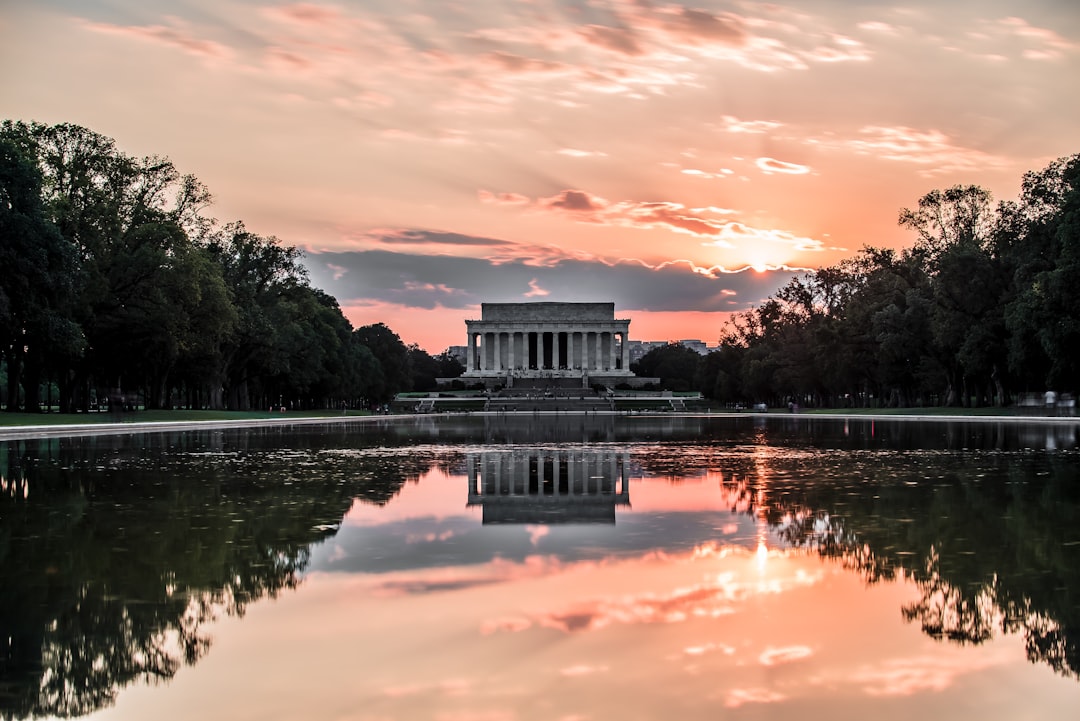
The Retreat from the Reflecting Pool
The Department of Justice’s sudden decision to dismiss the felony destruction of property charges against former Olympian David Hearn is far more than a routine legal maneuver; it is a tactical retreat in the midst of a high-stakes architectural and political drama. By dropping the case, the Trump administration has effectively neutralized a legal flashpoint that had begun to transform a failed public works project into a symbol of administrative incompetence. The dismissal, filed on a Friday, suggests that the administration is looking to move past the optics of the Reflecting Pool debacle, even if it means conceding a potential legal victory for those who challenged the administration’s renovation methods.
The case against Hearn, a decorated U.S. Olympic canoeist, centered on allegations that he had deliberately damaged the Lincoln Memorial Reflecting Pool. The incident occurred during a period of intense scrutiny for the administration, as the once-iconic landmark underwent a controversial and aesthetically jarring renovation. What began as a quest to fix long-standing structural leaks has devolved into a saga of peeling paint, algae-choked waters, and legal battles that have captivated the Washington metropolitan area and the nation at large.
A Renovation Gone Wrong
The origins of this legal mess lie in the ambitious, and ultimately flawed, renovation of the 618-meter (2,028-foot) Reflecting Pool. For decades, the pool has served as the silent witness to America’s most defining moments, from the 1963 March on Washington to countless presidential inaugurations. However, the pool has long been plagued by persistent leaks in its granite edges and concrete base. In April 2026, President Trump announced a decisive, low-cost solution: resurfacing the bottom with a specific shade of “American Flag Blue” swimming pool coating.
The execution of this project was marked by a speed that many engineers found suspicious. Despite the President’s promise that the work would be completed before July 4 at minimal cost, the results were catastrophic. Within days of the project’s supposed completion in June, the pool was not a pristine blue; instead, it was covered in a thick layer of green algae and sheets of cracked, flapping paint. This failure has not only damaged a national treasure but has also opened a Pandora’s box of questions regarding how the government contract was awarded and whether the administration’s push for rapid, low-cost results compromised the integrity of the work.
The Institutional Implications of Dismissal
To understand why the dismissal of Hearn’s charges matters, one must look beyond the individual and toward the institutional mechanics of the Trump administration. For much of his second term, President Trump has pursued a policy of radical reshaping of the Washington, D.C. landscape. From the controversial demolition of the White House East Wing to the proposal for a triumphal arch leading to Arlington National Cemetery, the President’s agenda is one of monumentalism. However, these projects have repeatedly collided with federal oversight, environmental regulations, and judicial review.
The Hearn case was becoming a liability for the administration. By prosecuting an Olympic athlete for damage that many viewed as a byproduct of a faulty, rushed renovation, the administration risked turning Hearn into a martyr for those critical of the President’s urban renewal projects. The legal theory—that Hearn’s actions constituted criminal destruction—was increasingly viewed as a way to deflect blame from the contractor and the federal agencies responsible for overseeing the substandard blue coating. By dropping the charges, the Justice Department is attempting to close a chapter that was becoming a daily headline in the Washington press corps.
Furthermore, this dismissal highlights a broader tension within the administration’s approach to public works. The $22.5 billion project to revamp Dulles International Airport and the attempt to affix the President’s name to the John F. Kennedy Center for the Performing Arts represent a pattern of high-visibility, high-cost projects that prioritize branding and rapid completion. When these projects fail—as the Reflecting Pool renovation did—the administration faces a choice: litigate the fallout or pivot. The decision to drop the charges against Hearn suggests a preference for the latter, a strategic pivot to avoid further scrutiny of the procurement processes that led to the pool’s deterioration.
Historical Precedents and Urban Transformation
The struggle over the Reflecting Pool mirrors historical tensions in Washington’s development, where the desire for monumental expression often clashes with the practicalities of preservation and the realities of federal bureaucracy. The pool sits at the heart of the National Mall, a space that is as much about historical continuity as it is about physical presence. When an administration attempts to fundamentally alter these spaces—especially with unproven materials like the ‘American Flag Blue’ coating—it triggers a defensive response from both the legal system and the public.
Historically, major infrastructure failures in the capital have led to massive congressional inquiries and shifts in how the National Park Service manages these sites. We are seeing a modern iteration of this, where the speed of the President’s agenda is meeting the friction of federal law. The Hearn dismissal is a temporary reprieve, but it does not resolve the underlying question: how will the administration manage the massive, multi-billion dollar landscape changes it has promised if the smaller, more symbolic projects continue to fail?
What to Watch Next
As the legal battle with David Hearn ends, the political battle over the Reflecting Pool is just beginning. Observers should look closely at the upcoming audits of the government contracts awarded for the pool’s renovation. If the administration’s attempt to bypass traditional, slower procurement methods leads to widespread structural failure, the fallout will move from the courtroom to the halls of Congress. We can expect intense oversight hearings regarding the Department of the Interior and the agencies responsible for the National Mall’s maintenance.
Additionally, watch for the administration’s next move in its “Reshaping Washington” initiative. The failure of the Reflecting Pool project may lead to a more cautious approach—or a more aggressive one—as the President seeks to prove that his vision for a gilded, monumental capital can be achieved without the messy realities of maintenance and litigation. The tension between the President’s desire for a permanent, branded legacy and the functional reality of the capital’s infrastructure is the defining conflict of this administration’s domestic policy.
Key Takeaway
The dismissal of charges against David Hearn is a tactical retreat designed to shield the administration from the political fallout of a botched, highly visible public works project. While the legal threat to the Olympian has vanished, the underlying crisis—a pattern of rapid, controversial, and technically flawed renovations in the nation’s capital—remains a significant vulnerability for the Trump administration’s broader urban transformation agenda.