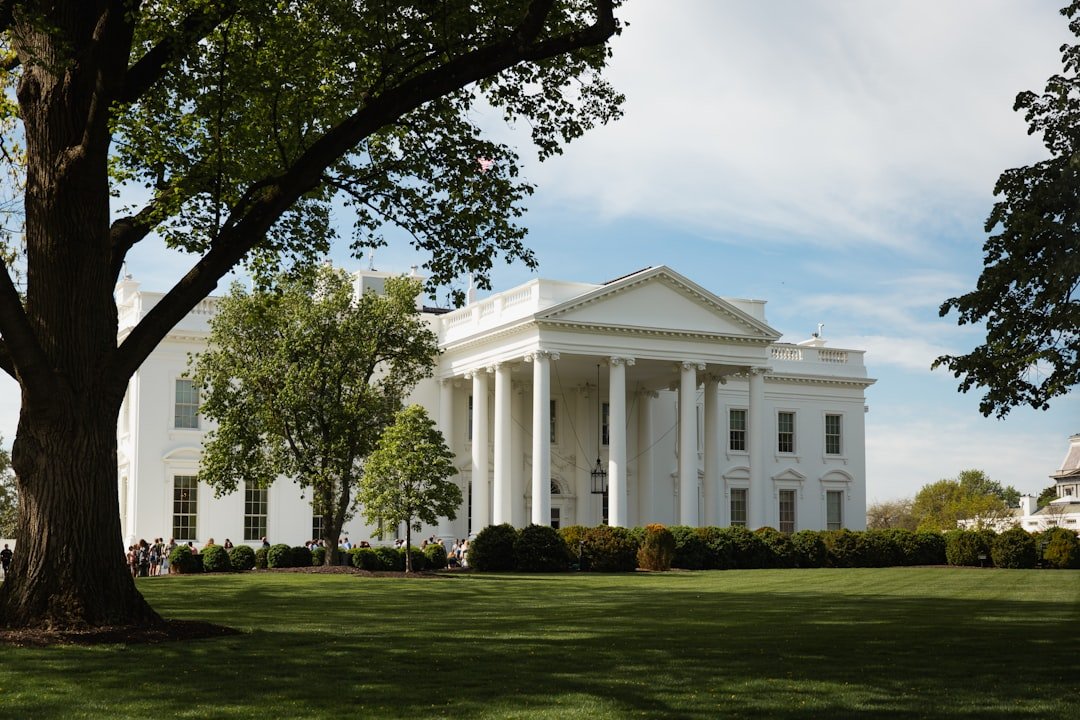
President Donald Trump has asked the Supreme Court to lift a federal injunction that blocks the $400 million construction of a new ballroom on the White House’s State Floor, a move that could reshape the balance of power between the executive and the legislature. The petition, filed on August 7, 2026, invokes the Court’s emergency docket and argues that the injunction threatens the president’s ability to spend already‑approved funds for a project that is 85 % complete.
What Happened
On August 7, 2026, the Trump administration filed a petition with the U.S. Supreme Court seeking an emergency stay of a March 15 order from the U.S. Court of Appeals for the D.C. Circuit that halted construction of the White House ballroom. The appellate court had ruled that the project could not proceed without explicit authorization from Congress, citing the Antideficiency Act and the requirement that major federal construction projects obtain appropriated funds. The petition notes that the administration missed a May 1 deadline to submit a supplemental funding request, a procedural misstep that the court said violated the Antideficiency Act’s timing provisions.
The petition, signed by Acting Solicitor General Elizabeth Progolan and senior White House counsel, argues that the injunction exceeds the court’s authority and that the president’s constitutional power to faithfully execute the laws includes the ability to spend appropriated funds for ongoing projects. The administration contends that the ballroom, a long‑standing priority of the Trump agenda, is already 85 % complete and that a pause would incur $12 million in daily costs and delay the projected 2027 completion date. The administration also points out that the $400 million price tag represents less than 0.03 % of the $1.5 trillion FY 2027 federal budget, and that the project’s contractor, Balfour Beatty, has already mobilized 150 workers and begun interior finishes, with completion slated for the end of 2027.
Why It Matters
The legal dispute is more than a question of square footage; it tests the limits of the Antideficiency Act, which prohibits the federal government from spending money without congressional appropriation. If the Supreme Court allows construction to resume, it would effectively endorse an expansive view of executive spending power, potentially undermining the legislative check that the Constitution intended. Legal scholars note that the Antideficiency Act, enacted in 1870, has rarely been invoked in the context of major architectural projects, making this case a novel test of statutory interpretation that could set binding precedent for future spending disputes.
Conversely, if the Court upholds the injunction, it would reinforce congressional oversight and set a precedent that could constrain future presidents from undertaking large‑scale infrastructure projects without explicit legislative approval. Such a ruling could have ripple effects on other pending initiatives, from the $1.2 trillion infrastructure bill passed in 2023 to ongoing efforts to modernize the Pentagon’s facilities. The decision could also influence the 2026 midterm elections, where Republican candidates may portray the ruling as a victory for fiscal restraint, while Democrats could argue it reflects excessive executive overreach.
Beyond the immediate legal battle, the ballroom project has become a symbol of the broader tension between the Trump administration’s “America First” infrastructure agenda and the Democratic‑controlled Congress that remains skeptical of using federal dollars for projects seen as primarily benefiting the president’s personal legacy. Critics argue that the project’s siting adjacent to the historic State Dining Room could compromise the integrity of the White House’s architectural heritage, while watchdog groups have flagged potential conflicts of interest given the Trump family’s continued stake in nearby hospitality ventures. The fight also raises ethical questions about the use of public space for private‑sector style events, given the ballroom’s planned capacity for 500 guests and its estimated $15 million annual operating budget.
Moreover, the case arrives at a moment when the Supreme Court’s composition is tilted toward a conservative majority that has shown a willingness to expand executive authority in recent years, as seen in the 2024 decision upholding the president’s ability to redirect disaster relief funds without congressional consent. With the Court now holding a 6‑3 conservative majority after the 2024 confirmation of Justice Ketanji Brown Jackson’s successor, the upcoming decision may hinge on the votes of Chief Justice Roberts and Justices Thomas and Alito, whose recent opinions have signaled a readiness to broaden executive prerogatives. Legal scholars warn that the Court’s forthcoming ruling could become a watershed moment for the separation of powers doctrine.
Historical Context
Previous presidents have faced similar constraints when seeking to modify the White House. In 1995, the Clinton administration’s proposal to add a private conference center to the West Wing was blocked by Congress, which demanded a separate appropriation and a thorough historic preservation review under the National Historic Preservation Act. The episode underscored that even modest alterations to a historic building can trigger rigorous legislative scrutiny. The 1910 renovation of the Executive Residence, which added a second-floor ballroom under President Taft, required a specific congressional authorization after the Army Corps of Engineers reported that the existing structure could not support the additional load without reinforcement. Those historical precedents illustrate that the current dispute is part of a longer pattern in which the president’s ability to act unilaterally on White House construction has been checked by legislative and judicial mechanisms.
What to Watch
Legal analysts will be watching the Supreme Court’s issuance of a stay order, expected within the next two weeks, as an indicator of the Court’s willingness to intervene in the ongoing budgetary impasse. If the stay is granted, the administration will likely accelerate construction, potentially completing the ballroom by late 2027, while congressional Democrats may respond with budgetary holds or legislative amendments targeting the project’s funding sources. Legal analysts will be watching the Supreme Court’s issuance of a stay order, expected within the next two weeks, as an indicator of the Court’s willingness to intervene in the ongoing budgetary impasse. If the stay is granted, the administration will likely accelerate construction, potentially completing the ballroom by late 2027, while congressional Democrats may respond with budgetary holds or legislative amendments targeting the project’s funding sources. Given the Court’s recent pattern of issuing emergency stays in high‑profile cases, a decision before the August 15 recess could allow construction to continue through the 2027 fiscal year, avoiding a lapse in appropriations that would force a shutdown of the worksite.
Congressional action could take the form of a rider in the upcoming FY 2027 appropriations bill that explicitly prohibits further spending on the ballroom, or a formal inquiry by the House Oversight Committee into the administration’s compliance with the Antideficiency Act. The outcome will also influence the political calculus for the 2028 presidential election, as candidates may leverage the issue to portray the Trump administration as either overreaching or as championing necessary infrastructure investment. If Congress attaches a prohibitive rider, it could stall the project indefinitely and become a flashpoint in the 2026 midterms, forcing Republicans to choose between fiscal conservatism and loyalty to the president’s signature initiative.
Key Takeaway
The Trump administration’s push to revive the White House ballroom construction underscores a fundamental constitutional conflict: the president’s claim of executive discretion versus Congress’s exclusive power of the purse, a clash that will likely reshape the interpretation of the Antideficiency Act and set a lasting precedent for future presidential projects.