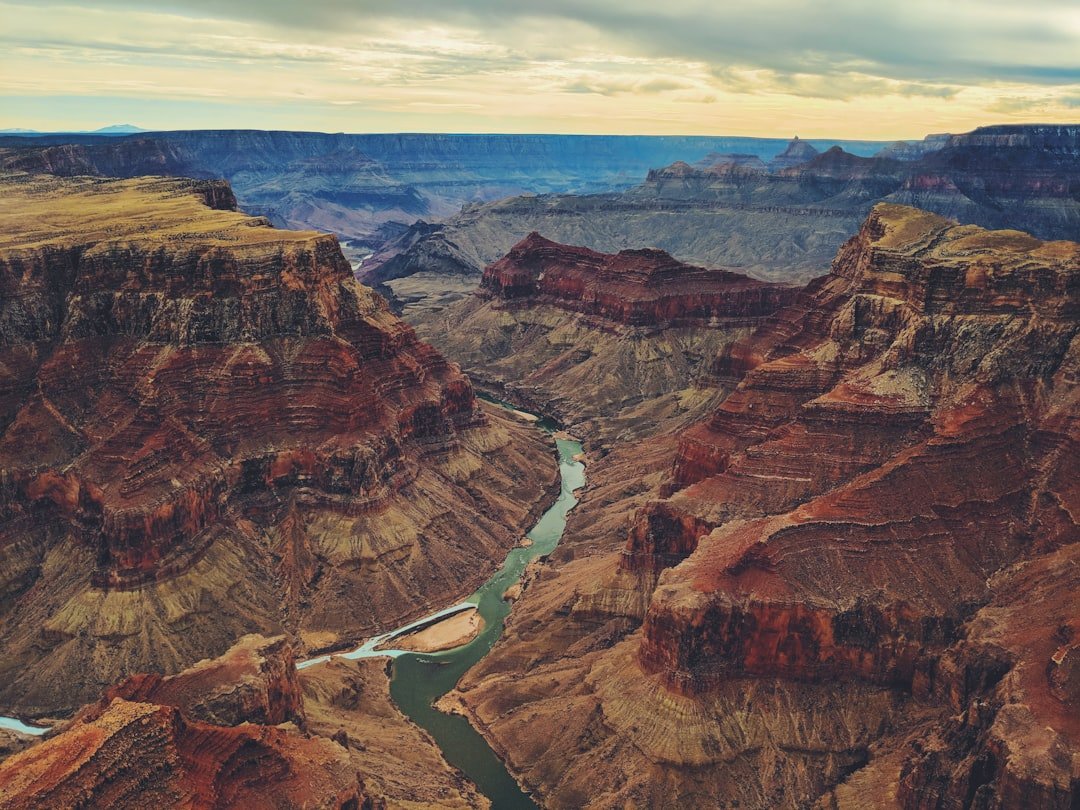
When a sudden wall of water surged down Bright Angel Creek on August 30, 2026, it turned a cherished national park into a scene of chaos, killing a 46‑year‑old hiker and leaving roughly fifteen others missing. Beyond the tragedy, the disaster spotlights a confluence of policy failures and political calculations that could reshape how the federal government manages climate‑related emergencies in America’s most iconic landscapes.
What Happened
Within a half‑hour, a brief but intense burst of rain — between 0.5 and 1 inch (1–2.5 cm) — fell on the steep canyon walls north of the Colorado River. The water ran off almost instantly, gathering speed and volume as it raced down the 6,000‑foot (1,800‑meter) drop of Bright Angel Creek. The resulting flash flood swept boulders into the river, destroyed footbridges, and breached a critical water pipeline that supplies both the park’s six million annual visitors and the 1,600 residents of the surrounding community.
The National Park Service (NPS) confirmed the recovery of the victim’s body near Crystal Rapids on Sunday evening and announced that the remaining 15 individuals are “missing or unaccounted for.” The agency has closed the Phantom Ranch, Bright Angel Campground, and the entire North Kaibab Trail pending a full assessment. River traffic on the Colorado has also been halted as debris threatens navigation.
Why It Matters
First, the flood underscores the growing mismatch between climate‑induced hazards and the nation’s aging infrastructure. The pipeline that failed was part of a $208 million upgrade launched in 2023, intended to modernize water delivery for the park. Its collapse not only jeopardizes visitor services but also forces residents to conserve water, a stark reminder that even recent federal investments can be vulnerable to extreme weather.
Second, the incident tests the Trump administration’s approach to environmental risk. Since taking office in January 2025, President Donald Trump has rolled back several climate‑adaptation regulations, arguing that market forces and private sector innovation should lead the response. Yet the Grand Canyon flash flood, directly linked by meteorologists to intensified precipitation patterns, may force a political recalibration. Congressional Democrats are already demanding answers, citing the administration’s “reluctance to fund proactive resilience projects.”
Third, the disaster places the Federal Emergency Management Agency (FEMA) and the NPS under scrutiny regarding inter‑agency coordination. FEMA’s disaster declarations typically trigger federal aid, but the NPS’s unique status as a federal land manager complicates the process. The agency must now navigate a multi‑agency response involving the U.S. Army Corps of Engineers, the Colorado River Basin Water‑Shed, and state emergency services—a logistical puzzle that could expose bureaucratic bottlenecks.
Finally, the economic ripple effects could be significant. The Grand Canyon generates roughly $400 million in annual tourism revenue for Arizona. With overnight lodging shut down and the river closed to commercial and recreational traffic, local businesses face a sudden revenue shock. Moreover, the flood may accelerate calls for a permanent funding stream for climate‑resilient infrastructure, a point that could become a flashpoint in the upcoming 2028 election cycle.
Historical Context
Flash floods have scarred the Grand Canyon before. In 1996, a sudden storm caused a similar surge that killed three hikers and prompted the NPS to invest in early‑warning systems. More recently, the 2013 monsoon event forced the closure of several inner‑canyon trails after a 4‑inch rainstorm overwhelmed the same creek. Each incident spurred incremental policy changes, but none resulted in a comprehensive, federally funded resilience plan.
The federal response to natural disasters has also evolved. The Disaster Relief Act of 1974 and its successor, the Stafford Act, provide the legal framework for FEMA assistance, yet they were crafted for a pre‑climate‑change era. Critics argue that the statutes lack the flexibility needed for rapid, localized responses in protected lands where multiple jurisdictions intersect.
What to Watch
In the short term, watch for a formal FEMA disaster declaration. Such a declaration would unlock $2.5 billion in emergency funds earmarked for infrastructure repair and temporary housing, according to the agency’s 2025 budget brief. Congressional committees, particularly the House Natural Resources Committee, are expected to hold hearings within weeks, where NPS officials will be questioned about the adequacy of the $208 million upgrade and the agency’s risk‑assessment protocols.
Longer‑term, the flash flood could become a catalyst for legislative action on climate adaptation. Bills such as the “National Parks Climate Resilience Act,” introduced by Rep. Maria Hernandez (D‑CA), propose a dedicated $1 billion trust for upgrading water, trail, and bridge infrastructure across the 63 national parks most vulnerable to extreme weather. President Trump’s stance on such legislation will be a litmus test for his administration’s willingness to blend market‑based solutions with direct federal investment.
Key Takeaway
The Grand Canyon flash flood is more than a tragic natural disaster; it is a litmus test for the Trump administration’s capacity to confront climate‑driven emergencies, coordinate federal agencies, and fund resilient infrastructure before the next election cycle forces a policy reckoning.