Gloria Steinem’s Death Signals a Turning Point
The announcement of Gloria Steinem’s death at 92 on September 3, 2026, resonated far beyond the obituary pages, marking the end of a career that turned a once‑marginal voice into the face of a national movement.
What Happened
Steinem passed away peacefully at her Manhattan home on a Wednesday morning, a fact confirmed by her longtime collaborator, the National Women’s Political Caucus. Tributes poured in from across the political spectrum, with President Donald Trump describing her as a remarkable American who devoted her life to the cause of equality. The New York Times noted that she had been a personification of the women’s movement, a phrase that captured her role as both strategist and symbol.
Over five decades, Steinem co‑founded Ms. magazine in 1972, helped launch the National Women’s Political Caucus in 1971, and organized the 1977 National Women’s Conference, which drew 2,000 delegates to Washington. Her investigative journalism, especially the 1969 article After Black Power Women’s Liberation, introduced the concept of intersectionality long before the term entered academic discourse, laying groundwork for the modern feminist coalition that now includes race, LGBTQ+ and climate justice advocates.
Why It Matters
Steinem’s brand of activism — centered on consciousness‑raising, media outreach, and coalition building — directly contributed to measurable gains in gender equity. Between 1970 and 2020, women’s labor force participation rose from roughly 30 % to 57 %, a shift she helped catalyze through advocacy for equal pay and anti‑discrimination legislation, including the push for the Equal Rights Amendment. During that period, women earned about 62 % of men’s wages in 2020, down from 70 % in 1990, indicating persistent gaps.
In the current political climate, her legacy serves as a benchmark for evaluating President Trump’s agenda. His 2025 executive order reviving the Mexico City policy and the 2026 proposal to cut Title IX funding threaten the advances she fought to secure, underscoring how her emphasis on legislative advocacy and public pressure remains essential for defending hard‑won rights.
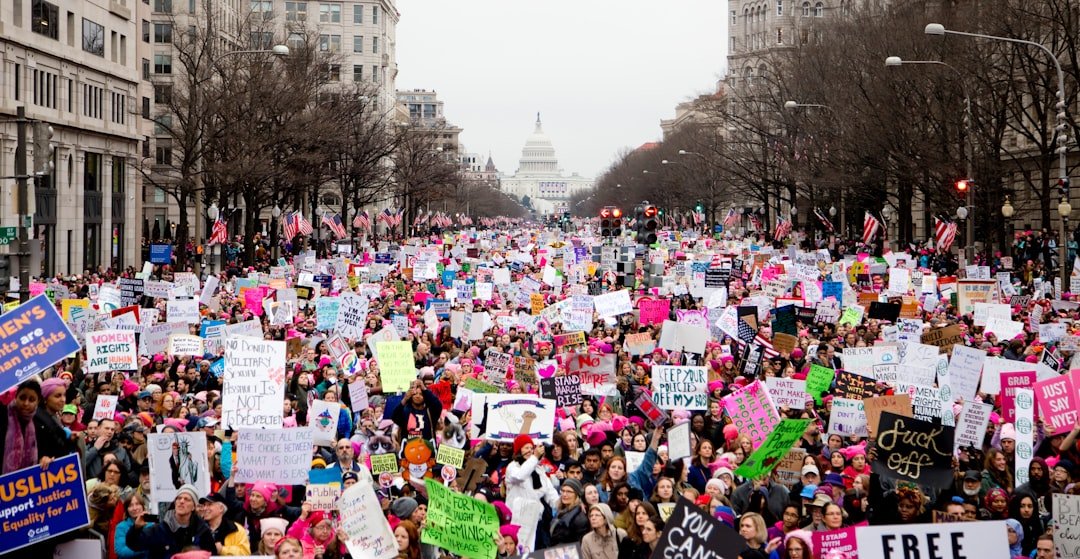
Moreover, Steinem’s insistence on inclusive, cross‑movement organizing foreshadows the surge of intersectional activism seen in the 2025 Women’s March and the 2026 Climate Justice protests, where tactics she pioneered — mass rallies, digital mobilization, celebrity endorsement — are being repurposed to confront gender, racial and environmental injustice.
Her death also raises a strategic question for policymakers: whether the incremental reforms she championed, such as the 1978 Pregnancy Discrimination Act, will survive judicial appointments that favor restrictive interpretations of privacy and equal protection.
The 2025 Women’s Health Protection Act, introduced in Congress, seeks to codify access to contraception and abortion services nationwide, a direct response to the administration’s attempts to curtail reproductive care. Steinem’s legacy of coalition building is being invoked by groups such as the National Organization for Women and the Center for American Progress, which are lobbying senators to attach the bill to larger budget packages. If passed, the legislation would restore many of the protections that were eroded after the 2022 Supreme Court decision in Dobbs v. Jackson Women’s Health Organization, reinforcing the relevance of Steinem’s advocacy for legal safeguards.
Historical Context
Steinem’s influence reflects the second‑wave feminism of the 1960s, when figures like Betty Friedan and NOW co‑founder Pauli Murray demanded legal equality. While Friedan’s The Feminine Mystique sparked cultural awakening, Steinem translated that momentum into concrete political action, bridging cultural critique with electoral politics.
Her work also mirrors the civil rights movement’s use of media and grassroots networks. Like Martin Luther King Jr.’s Southern Christian Leadership Conference, Steinem harnessed newspapers, television and later digital platforms to build a durable infrastructure that outlasted any single election cycle, a model that contemporary progressive groups continue to emulate.
Steinem also mentored a generation of younger activists, including the founders of the Women’s Media Center and the contemporary intersectional collective known as the Sisterhood of the Spectrum, who credit her 1970s workshops for teaching them how to blend storytelling with policy advocacy. Her 1995 speech at the United Nations, where she declared that women’s rights are human rights, continues to be cited in global feminist campaigns, illustrating the transnational reach of her influence.
What to Watch
The next 12 months will test the feminist movement’s ability to translate Steinem’s legacy into legislative wins. With the Supreme Court slated to hear a case on the constitutionality of state‑level abortion bans in 2027, activists are mobilizing to protect the 1973 Roe v. Wade precedent, a battle that echoes early fights over the Equal Rights Amendment.
At the same time, the Biden administration’s 2025 Women’s Economic Empowerment initiative, which aims to expand childcare subsidies and close the pay gap, may inherit Steinem’s focus on systemic change rather than symbolic gestures. The effectiveness of these policies will determine whether her vision of equality becomes institutionalized or remains a rallying cry.
The 2026 midterm elections are expected to be a decisive moment for feminist policy, as the balance of power in the House and Senate could shift the trajectory of pending legislation on reproductive health, equal pay, and digital privacy. Early polling indicates a tighter race than projected, with key swing districts where women’s voter turnout will be pivotal. Analysts warn that a narrow Republican majority could accelerate efforts to roll back the 2025 Women’s Health Protection Act and weaken Title IX enforcement, making Steinem’s strategic playbook essential for Democrats seeking to protect these gains.
Key Takeaway
Gloria Steinem’s death marks not an endpoint but a pivot point; her lifelong strategy of coupling cultural visibility with pragmatic political pressure offers the most viable roadmap for safeguarding women’s rights amid a Trump‑led administration that seeks to roll back decades of progress.