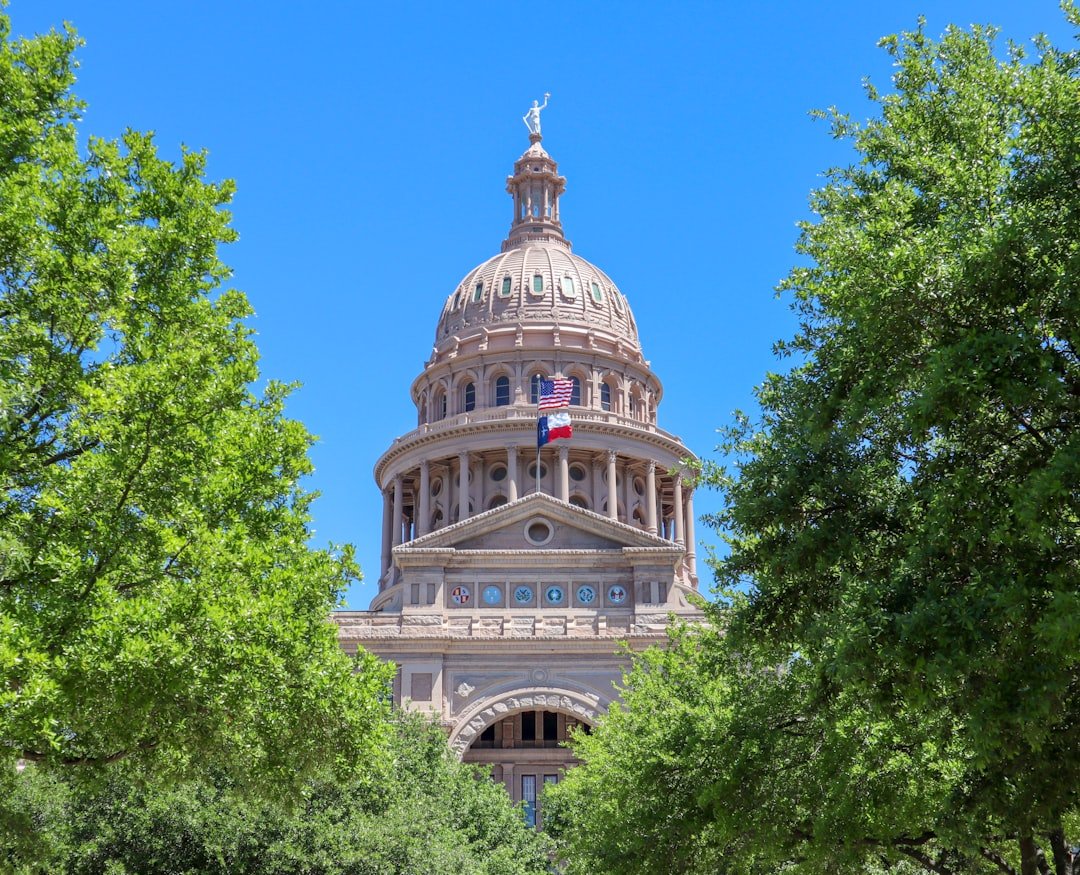
The license-plate reader mounted on a traffic light in suburban Fort Worth does not look like a constitutional crisis. It resembles a shoebox, unremarkable and weather-streaked, one of 120,000 such devices Flock Safety has planted across every state but Alaska. But when Governor Greg Abbott signed Senate Bill 1984 last month, prohibiting Texas municipalities from entering new contracts with the company and requiring existing agreements to expire by 2027, he did more than cancel a vendor. He severed a pillar of the modern surveillance architecture that Republican governors themselves helped erect.
What Happened
The legislative timeline is compressed and revealing. In March 2025, Flock’s cameras helped locate a kidnapped child in Houston within 47 minutes — a success story Abbott’s office highlighted in a press release. By June, the same governor was signing a bill that effectively phases out the technology statewide. Florida followed a similar arc: Governor Ron DeSantis vetoed a $12 million line item for Flock expansion in the state budget, then endorsed House Bill 1421, which bars local governments from sharing automated license-plate reader data with federal agencies without a warrant. The company’s lobbyists, who once moved freely through Republican-controlled capitols, now find doors closed.
Police chiefs testified against both measures. The Texas Police Chiefs Association warned that Flock’s network — which retains vehicle location data for 30 days and shares it across jurisdictional lines — had become “indispensable” for solving vehicle thefts, Amber Alerts, and drug interdiction. In Florida, the Sheriffs Association cited a 23% increase in recovered stolen vehicles since 2023. Their opposition carried the weight of institutional credibility. It did not carry the day.
Why It Matters
The rupture exposes a fault line that has been widening since 2020 but remained papered over by partisan unity. For decades, “law and order” Republicanism meant unqualified deference to police requests for investigative tools. Civil asset forfeiture, no-knock warrants, stingray cell-site simulators — each expansion of state power found a ready legislative majority. Flock represented the logical endpoint: a privatized, nationwide dragnet that bypassed procurement oversight through municipal contracts and operated with minimal statutory guardrails.
What changed is not the technology but the political constituency that authorizes it. The MAGA coalition that propelled President Donald Trump back to the White House in 2024 views centralized surveillance through a different lens than the Bush-era security hawks. When the FBI executed a search warrant at Mar-a-Lago in August 2022, the rhetorical framework shifted: the same federal apparatus that could track a former president’s movements could track anyone’s. Flock’s cameras, which feed data to over 4,000 law enforcement agencies and retain location histories that Immigration and Customs Enforcement has accessed for deportation operations, suddenly resembled the architecture of a weaponized state.
This is not abstract. In Travis County, Texas, Flock data was subpoenaed in 2024 to identify vehicles visiting a reproductive health clinic. In Florida, the Department of Law Enforcement used the network to track travel patterns of individuals under investigation for “gender-affirming care” violations under state law. These are not hypothetical abuses. They are documented cases where the surveillance infrastructure Republicans built was deployed against populations those same Republicans claim to protect.
Historical Context
The precedent is not reassuring. In 1975, the Church Committee revealed that the FBI’s COINTELPRO program had used rudimentary surveillance tools — mail covers, informants, wiretaps — to disrupt civil rights organizations, anti-war groups, and political dissidents. The legislative response was the Foreign Intelligence Surveillance Act of 1978, which created a secret court to authorize national security monitoring. But FISA’s safeguards applied only to foreign intelligence. Domestic law enforcement retained broad authority to collect license-plate data, which courts have consistently ruled carries no reasonable expectation of privacy because vehicles operate on public roads.
Flock’s innovation was not legal but logistical. By selling cameras to homeowners associations, businesses, and school districts — not just police departments — the company built a coverage map no government could afford. The data flows to Flock’s cloud servers, then to police via a subscription portal. This public-private hybrid evaded traditional oversight: no city council vote authorized the camera on your corner; no state statute governs how long the data is kept or who can query it. The Fourth Amendment, written for physical trespass, offers no clear constraint on a database that knows where your car slept last night.
What to Watch
Three developments will determine whether this is a tactical retreat or a strategic reversal. First, the Texas Attorney General’s office has opened an investigation into whether Flock’s data-sharing agreements with out-of-state agencies violate the new law’s prohibition on “unauthorized dissemination.” A ruling against the company could force a nationwide restructuring of its network topology. Second, Congress is drafting the Vehicle Location Privacy Act, sponsored by Senator Rand Paul (R-KY) and Senator Ron Wyden (D-OR), which would require a warrant for any government access to automated license-plate reader data — including historical queries. The bill has 34 co-sponsors, a majority of the Senate Republican conference.
Third, and most consequential, the 2026 midterms will test whether the anti-surveillance consensus survives contact with crime-rate messaging. Democratic incumbents in competitive districts are already running ads accusing Republican opponents of “defunding police technology.” The Republican Governors Association has circulated a memo urging candidates to frame the Flock restrictions as “protecting constitutional rights” rather than “hindering investigations.” The language choice is deliberate: it signals that the party’s institutional memory has been rewritten.
Key Takeaway
The dismantling of Flock’s network in Texas and Florida marks the first time in a generation that a Republican-led government has voluntarily surrendered a surveillance capability that police say works. The significance extends beyond license-plate readers. It signals that the conservative movement’s theory of state power has fundamentally shifted: the threat is no longer disorder but the apparatus of control itself. Whether this principle holds when a different administration occupies the White House — or when the next high-profile crime demands a technological answer — remains the defining question for civil liberties in the second Trump term.