The Transactional Nature of Sovereignty
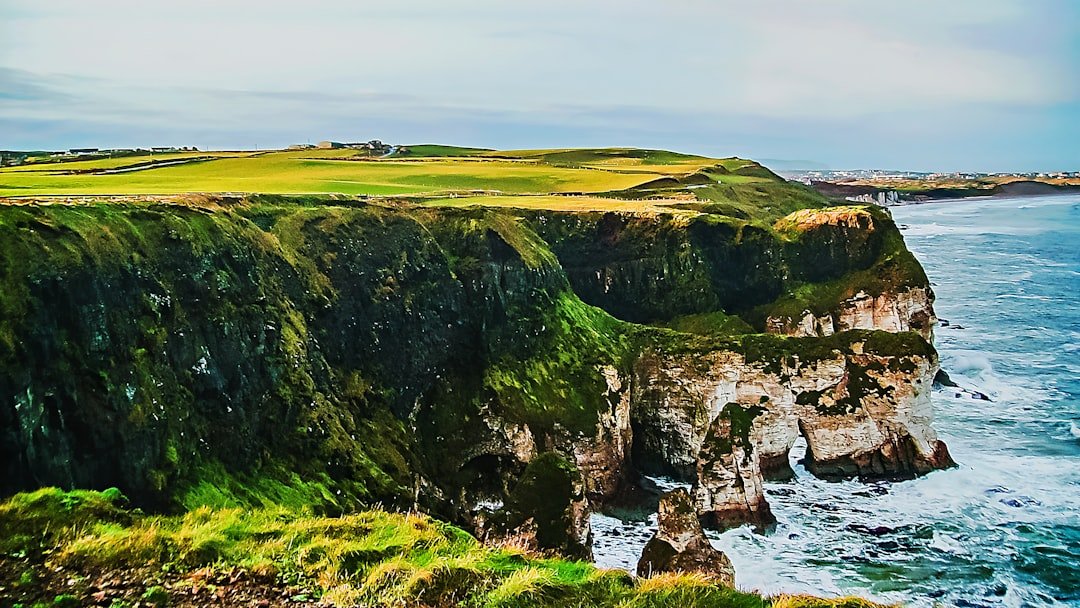
The arrival of President Donald Trump in Doonbeg for the Irish Open is more than a presidential excursion to a luxury golf resort; it is a live demonstration of the tension between global capital and national sentiment. While the headlines focus on the optics of protests and praise, the underlying reality is a complex socio-economic dependency. In the rural stretches of County Clare, the Trump International Golf Links & Hotel is not merely a business venture—it is a primary economic engine in a region where sustainable, high-paying employment has historically been elusive. This creates a unique friction point where the local populace is economically tethered to a leader whose political ideology is widely rejected by the Irish electorate at large.
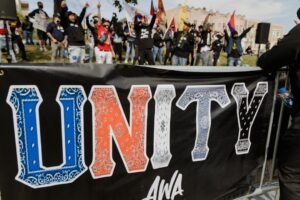
The current scene in Doonbeg is a microcosm of the broader American-Irish relationship under the current administration. On one hand, we see the logistical machinery of a massive security operation, with Irish authorities bracing for significant demonstrations and the inherent costs of protecting a sitting U.S. president. On the other, we see the quiet, pragmatic appreciation of local business owners and employees who view the resort as a lifeline. This duality—the ‘sand mural’ of protest versus the payroll of the hotel—illustrates a fragmented Irish response to the American executive.
For those of us who have tracked institutional power in Washington for over a decade, this visit represents a continuation of a specific presidential style: the blurring of the line between private asset and public office. When a sitting president visits a property he owns, the diplomatic visit becomes a marketing event, and the marketing event becomes a diplomatic liability. The Irish government finds itself in a precarious position, tasked with ensuring the safety of a head of state while managing the domestic fallout of a visit that many citizens view as an affront to their political values.
The Economic Lever and Political Leverage
Why does this matter beyond the immediate noise of the protests? Because it reveals the mechanism of ‘transactional diplomacy.’ In traditional diplomacy, state visits are choreographed to advance specific treaty goals or security alliances. However, when the president is also the landlord of the local economy, the nature of the interaction shifts. The economic benefits provided by the Doonbeg resort act as a buffer, effectively insulating the President from the full weight of local political opposition. This creates a scenario where economic utility outweighs ideological alignment, a trade-off that is common in rural development but rare at the level of G7 diplomacy.
Furthermore, the disparity between the local Doonbeg sentiment and the national Irish polling data is telling. While a majority of the Irish public consistently expresses disagreement with President Trump’s policies, the localized economic impact in County Clare creates a ‘pocket of loyalty’ based on material gain rather than political conviction. This is a strategy of decentralized influence: by embedding private interests in foreign soil, the administration creates stakeholders who are incentivized to overlook political volatility in favor of financial stability.
The security implications are equally significant. The scale of the operation required to protect the President in a rural village like Doonbeg places an immense strain on Irish law enforcement. When the cost of security is borne by the host nation, the ‘economic benefit’ of the resort is partially offset by the public expenditure required to facilitate the visit. This creates a hidden tax on the Irish state to support the private interests of the U.S. president, further complicating the narrative of the resort as a pure economic win for the region.
Historical Precedents of Private Power
This dynamic is not entirely without precedent, though the scale is unprecedented. Historically, the U.S. has used economic aid and trade agreements to secure loyalty and stability in allied nations—a cornerstone of the Marshall Plan and subsequent Cold War strategies. However, those were state-to-state mechanisms. The Doonbeg model replaces state-led aid with private-equity-led development. It is a shift from ‘institutional influence’ to ‘individual influence,’ where the personal brand of the leader becomes the primary vehicle for diplomatic engagement.
We can look back at the era of the ‘robber barons’ or the corporate expansions of the mid-20th century, where private companies held more sway over local economies than the governments that regulated them. The difference here is that the CEO of the corporation is also the Commander-in-Chief of the world’s most powerful military. This fusion of corporate ownership and sovereign power creates a conflict of interest that traditional diplomatic protocols are not equipped to handle, leaving the host nation to navigate the gap between protocol and profit.
What to Watch Moving Forward
As the Irish Open concludes, the key metric to watch will not be the number of protesters, but the long-term investment trajectory of the Doonbeg property. If the resort continues to expand, it will further cement the President’s influence in the region, regardless of who occupies the political center in Dublin. We should also monitor whether this ‘resort diplomacy’ becomes a blueprint for other international engagements, where private holdings are used as staging grounds for official state business.
Additionally, the reaction of the Irish government to the protests will be telling. If the state leans too heavily into the security needs of the President at the expense of the right to protest, it may spark a larger domestic backlash. The balance between sovereign hospitality and democratic expression is a thin line, and the Doonbeg visit is pushing that line to its limit.
Key Takeaway
The Doonbeg visit proves that in the modern era of transactional power, economic dependency can effectively neutralize political opposition at a local level, creating a fragmented diplomatic landscape where private ownership serves as a hedge against national disapproval.