The telephone booth-sized cages at Alligator Alcatraz are not an aberration. They are the logical endpoint of an immigration enforcement architecture deliberately engineered to operate beyond the reach of standards, scrutiny, and the law.
What Happened
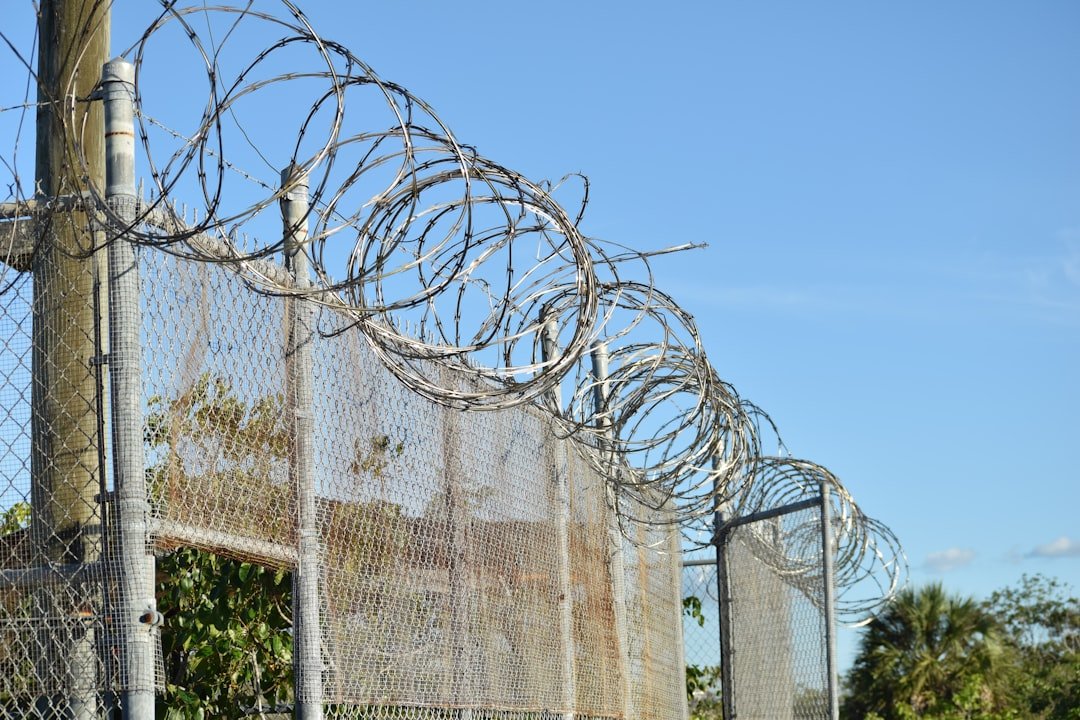
In January 2026, inspectors from the Department of Homeland Security’s Office of Inspector General arrived at the Ochopee, Florida facility — dubbed “Alligator Alcatraz” by Florida Attorney General Ashley Moody — operating under a 287(g) agreement that deputized state personnel to perform federal immigration enforcement. What they found stunned even career oversight officials: outdoor metal enclosures measuring four by four feet, roughly 16 square feet, where detainees were confined for more than an hour at a time. Indoor “calming areas” measured 18 square feet. For context, ICE’s own Performance-Based National Detention Standards require a minimum of 37 square feet for single-occupancy rooms. Federal prison solitary confinement cells average 84 square feet. The facility, constructed by the DeSantis administration and opened in July 2025, has since been shuttered — but not before the IG’s report documented conditions the watchdog itself described as “highly unconventional and does not align with standards for humane treatment.”
The report’s language is strikingly blunt for an inspector general’s office. IG Joseph Cuffari — one of fewer than a dozen Cabinet-level IGs surviving President Trump’s unprecedented purge of at least 18 inspectors general since January 2025 — did not mince words. His staff found facility personnel describing phone-booth cages as therapeutic “de-escalation” spaces. The cognitive dissonance is the point: when oversight survives, it documents the indefensible in bureaucratic language that strips away euphemism.
Why It Matters
The Alligator Alcatraz revelation illuminates three interlocking crises that define the Trump administration’s second term. First, the 287(g) program — originally authorized in 1996 but dramatically expanded under Trump — has become a mechanism for liability laundering. By delegating detention authority to state actors through memoranda of agreement, the federal government creates a fog of jurisdictional ambiguity. When abuses occur, ICE can claim the facility is state-run; the state can claim federal mandate. The Ochopee facility was built by Florida, staffed by Florida, but operated under federal authority. Neither sovereign fully owns the conditions inside.
Second, the report exposes the hollowing of the inspector general system itself. Cuffari’s survival is the exception that proves the rule: the mass firing of IGs across State, Defense, HHS, and other agencies was not random housecleaning. It was a targeted decapitation of the only institutional actors statutorily empowered to conduct independent audits and investigations. That Cuffari’s office produced this report at all is remarkable. That it may be among the last of its kind is the real story.
Third, the facility’s very existence — a purpose-built detention center in the Everglades, designed to specifications that violate the government’s own standards — signals intent. This was not improvisation. The 16-square-foot cages were engineered. The “calming area” terminology was drafted. The 287(g) agreement was negotiated. Someone approved the blueprints. Someone signed the MOA. The chain of command leads from Ochopee to Tallahassee to Washington, and the paper trail exists.
Historical Context
We have been here before, though never quite this brazenly. The 287(g) program traces to the Illegal Immigration Reform and Immigrant Responsibility Act of 1996, but its modern incarnation — the “task force” and “jail enforcement” models — proliferated after 9/11 and accelerated during the first Trump term. By 2019, 78 jurisdictions had active agreements. The Biden administration paused new agreements in 2021 but did not terminate existing ones. The second Trump administration didn’t just restart the program; it weaponized it, pairing it with a parallel purge of the oversight bodies designed to police it.
The Flores Settlement Agreement of 1997, governing conditions for minors in custody, and decades of litigation over adult detention standards (including the 2019 Doe v. Kelly ruling on ICE’s failure to implement PBNDS) established a legal framework that Alligator Alcatraz simply ignored. The facility’s designers knew the standards. They built something else. This is not negligence. It is contempt for the consent decrees and court orders that have, however imperfectly, constrained the detention system for thirty years.
There is a parallel to the CIA’s post-9/11 black site program: purpose-built facilities, jurisdictional ambiguity, euphemistic language (“enhanced interrogation” then, “calming areas” now), and the deliberate sidestepping of legal frameworks. The difference is domestic. These cages held people on U.S. soil, under U.S. jurisdiction, in a facility built by a U.S. state government.
What to Watch
Three developments will determine whether Alligator Alcatraz becomes a turning point or a footnote. First, Congressional oversight: the House Homeland Security Committee and Senate Judiciary Committee have statutory authority to investigate 287(g) agreements. Whether they exercise it — and whether the administration complies with subpoenas — will test the separation of powers in real time. Second, litigation: the ACLU, Southern Poverty Law Center, and Florida-based firms are almost certainly preparing class actions. Discovery will reveal the decision chain. Third, Cuffari’s tenure: if the IG who produced this report is removed before his term expires, the message to every career oversight official will be unambiguous: document abuse at your peril.
Also watch the 287(g) pipeline. DHS currently maintains agreements with over 100 jurisdictions. If Ochopee’s conditions existed there, they exist elsewhere. The IG’s January inspection was mandated by Congress — not triggered by a whistleblower. Random sampling of a system this large, this opaque, and this politically charged will almost certainly find more.
Key Takeaway
Alligator Alcatraz is not a failure of the immigration detention system. It is the system working exactly as designed: a parallel enforcement architecture built on delegated authority, insulated from oversight, and indifferent to the government’s own standards. The phone-booth cages are the physical manifestation of a constitutional theory that says the rules do not apply when the sovereign chooses not to follow them. The report exists because one inspector general survived the purge. The next one may not.