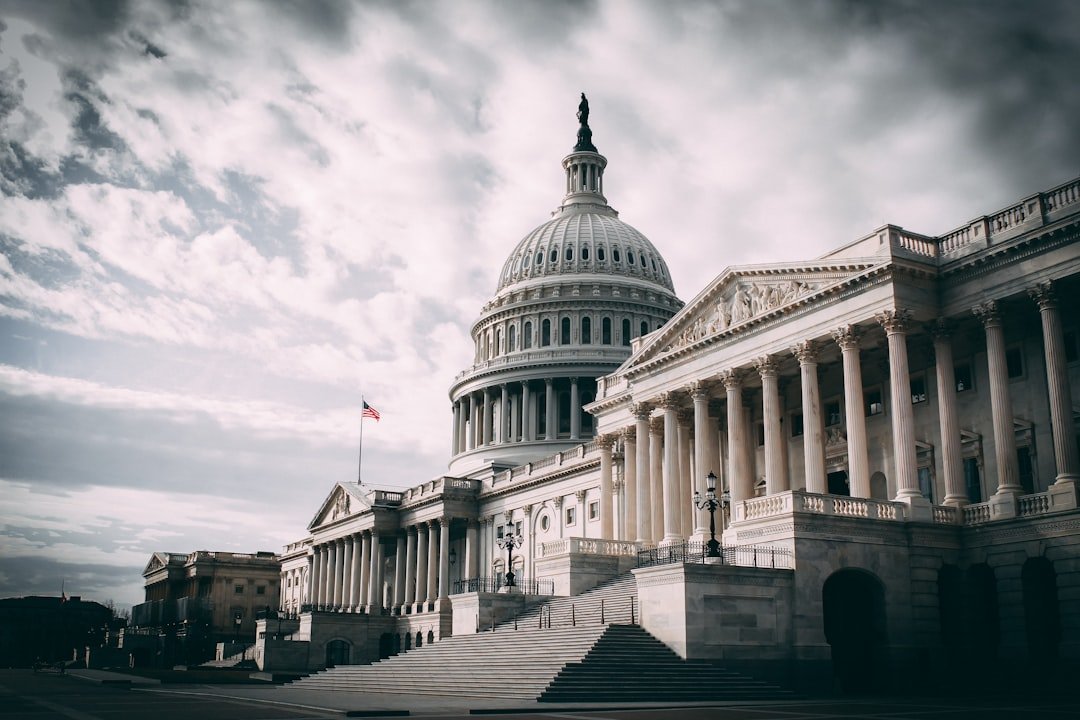
Senate Majority Leader John Thune has spent the better part of a decade positioning himself as the Republican Party’s most credible voice on technology policy. As the former chairman of the Commerce Committee and the architect of the 2022 CHIPS and Science Act’s workforce provisions, he built a reputation for understanding both the mechanics of innovation and the legislative levers required to govern it. But on Monday, standing before reporters in the Capitol’s Ohio Clock Corridor, Thune conceded what his allies have whispered for months: quick action on artificial intelligence safety would be “challenging.” The word choice was deliberate — not impossible, not unlikely, but challenging, the legislative equivalent of a surgeon admitting the patient may not survive the operation.
What Happened
The bipartisan AI safety framework Thune introduced in June with Commerce Committee Chair Maria Cantwell (D-Wash.) and Ranking Member Ted Cruz (R-Texas) represented months of negotiated compromise. The bill — formally the Artificial Intelligence Research, Innovation, and Accountability Act — would establish a tiered risk classification system for AI models, mandate third-party audits for systems deemed “high-impact,” and create a new advisory office within the National Institute of Standards and Technology to coordinate federal AI standards. It drew cautious praise from the U.S. Chamber of Commerce and the Information Technology Industry Council, both of which have historically resisted mandatory regulation.
But the legislation has not advanced markup since July. According to three Senate aides familiar with the negotiations, the White House Office of Science and Technology Policy, now led by Trump appointee Michael Kratsios, has privately signaled opposition to any mandatory audit requirements or compute-threshold triggers that could constrain frontier model development. In a closed-door meeting with Republican committee staff on September 10, Kratsios reportedly characterized the bill’s safety provisions as “premature regulatory capture” that would “cede the strategic initiative to Beijing.” The message was unambiguous: the administration will not support legislation that imposes binding obligations on private AI labs before the 2026 midterms.
Why It Matters
The standoff reveals a structural fracture in Republican technology governance that has been papered over since 2017. Thune’s approach — informed by the Senate’s traditional role as a deliberative check on executive overreach — assumes that Congress must establish baseline rules before the technology outpaces democratic oversight. The Trump White House, by contrast, operates on a theory of competitive deregulation: that any domestic constraint on AI development constitutes a unilateral strategic disadvantage in the contest with China. This is not merely a tactical disagreement. It is a philosophical rupture between a Senate institutionalist who believes legitimacy requires rules and an executive branch that views rules as strategic liabilities.
The consequences extend far beyond Capitol Hill. Without federal legislation, the regulatory vacuum is being filled by a patchwork of state laws — California’s SB 1047, which Governor Gavin Newsom signed in August over fierce industry opposition, establishes a de facto national standard for any company serving the California market. The European Union’s AI Act, which entered full enforcement in August 2026, imposes extraterritorial obligations on U.S. firms deploying models in European markets. And the U.K.’s AI Safety Institute, now operating under a Labour government that has deepened ties with the EU’s AI Office, is setting audit benchmarks that U.S. companies ignore at their peril. Thune’s staff estimates that compliance costs for U.S. firms navigating these divergent regimes already exceed $2.3 billion annually — a figure that doubles if Congress fails to act before the 119th Congress adjourns.
There is also the question of institutional credibility. Thune’s dilemma mirrors the one faced by then-Majority Leader Mitch McConnell in 2018-2019, when the Senate failed to pass federal privacy legislation despite bipartisan momentum and White House openness. The result was a decade of state-by-state fragmentation that ultimately weakened U.S. leverage in international data-transfer negotiations. If Thune cannot deliver an AI bill — the signature tech policy issue of this Congress — it will signal to foreign capitals and domestic stakeholders alike that the Senate cannot govern emerging technologies under divided government, regardless of who controls the White House.
Historical Context
The current impasse echoes the 1996-1998 struggle over cryptography export controls, when a Republican Congress and a Democratic White House clashed over whether encryption constituted a national security threat or a commercial imperative. Then, as now, the Senate Commerce Committee served as the primary arena for negotiation. Then, as now, the executive branch argued that legislative delays endangered American technological leadership. The compromise that eventually emerged — the SAFE Act of 1997, which relaxed export controls while preserving law enforcement access — required the Majority Leader (Trent Lott) to override both intelligence community objections and industry demands for total deregulation. Thune faces a harder version of that calculus: his caucus is narrower, the technology moves faster, and the White House is actively lobbying against his bill.
A more recent parallel is the 2022 CHIPS and Science Act, which Thune helped shepherd through a 64-33 Senate vote. That legislation succeeded because it framed semiconductor manufacturing as economic nationalism — a frame that aligned Republican security hawks, Democratic industrial policy advocates, and a White House willing to claim credit. AI safety lacks that unifying frame. The Trump administration views AI through a purely competitive lens; the Democratic caucus views it through a rights-and-risk lens; and the Republican conference’s populist wing views any regulation as suspect. Thune’s bill attempts to thread all three needles. It may thread none.
What to Watch
Three developments will determine whether Thune’s legislation moves before the lame-duck session. First, the November midterms: if Republicans retain the Senate majority, Thune may calculate that a post-election lame duck offers his only window to pass a bill with Democratic votes before a potentially more hostile conference in the 120th Congress. Second, the NIST AI Safety Institute’s first annual report, due in December, which could provide empirical cover for mandatory audits if it documents significant capability jumps in frontier models. Third, the U.S.-EU Trade and Technology Council meeting in January 2027, where the absence of a U.S. federal framework will force the administration to either adopt EU standards by default or risk a transatlantic regulatory rupture.
Also watch the states. If Texas or Florida — both with Republican trifectas — pass their own AI bills before Congress acts, the pressure for federal preemption will intensify. Cruz has already floated a “light-touch” alternative that would preempt state laws while imposing only voluntary guidelines. That bill, co-sponsored by Senator Eric Schmitt (R-Mo.), has 14 Republican co-sponsors as of Monday. It is the most viable legislative vehicle if Thune’s framework collapses.
Key Takeaway
John Thune’s AI dilemma is not really about artificial intelligence. It is about whether the Senate, as an institution, retains the capacity to legislate on the defining technologies of the 21st century when the executive branch views legislative deliberation as a strategic vulnerability. The Majority Leader’s concession that quick action is “challenging” is an admission that the constitutional design — Congress writes the rules, the president enforces them — has broken down on the issue that may matter most. If Thune cannot pass his bill, the United States will enter the next presidential term without a federal AI framework, governed instead by California, Brussels, and the unilateral decisions of five companies. That is not a policy failure. It is a constitutional one.