Strategic Context
The proclamation signed by President Trump in November 2026 represents an unprecedented attempt to constrain future presidential discretion over the physical workspace of the presidency itself. While executive orders routinely bind the current administration, this action seeks to establish a perpetual preservation mandate over the Oval Office and Cabinet Room — spaces that have undergone periodic renovation since the West Wing’s 1902 construction and the Oval Office’s 1934 FDR-era configuration. The strategic significance extends beyond interior design: it tests whether the Antiquities Act and National Historic Preservation Act (NHPA) can be weaponized by a president to create irreversible institutional constraints on successors.
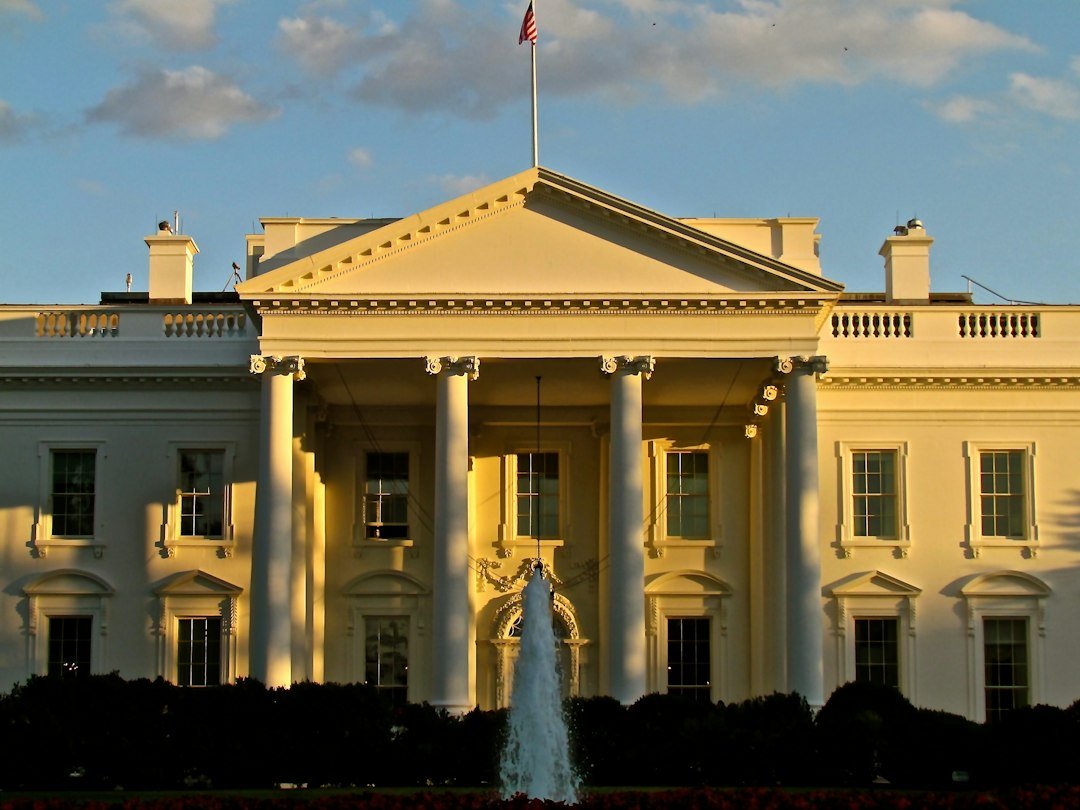
The White House complex already carries National Historic Landmark designation (conferred in 1960), which imposes Section 106 review requirements under the NHPA for any federal undertaking affecting historic properties. However, Congress explicitly carved out a presidential exemption (54 U.S.C. § 306108) allowing chief executives to make “needed changes” without standard compliance processes. Trump’s proclamation attempts to narrow this congressional exemption by invoking National Park Service (NPS) stewardship authority, effectively asking the Department of the Interior to police its own principal’s successor — a structural conflict with significant administrative law implications.
What Changed
The proclamation directs the NPS to manage the Oval Office and Cabinet Room “in a manner that protects its historic character, architectural integrity, and association with the Presidency,” language that mirrors National Historic Landmark nomination criteria but applies it to discrete rooms rather than the entire complex. Critically, the order does not invoke the Antiquities Act to create a national monument — which would require congressional approval for revocation — but instead relies on existing NHPA frameworks and NPS administrative authority. This distinction matters: national monument designations have survived legal challenge (the 2017 Bears Ears and Grand Staircase-Escalante reductions in Utah remain litigated), but no court has ruled on whether a president can unilaterally revoke a monument designation, let alone whether an NPS management directive can bind future presidents.
Greg Werkheiser of Cultural Heritage Partners, a firm specializing in Section 106 litigation, characterizes the order as “hypocrisy” given the administration’s simultaneous pursuit of a $200 million triumphal arch on the National Mall (currently enjoined by federal court) and efforts to weaken NHPA implementing regulations through the Advisory Council on Historic Preservation. The practical effect on presidential discretion may be minimal: NPS management policies already permit “temporary alterations” including furniture, decor, and non-structural modifications at the president’s discretion, provided permanent architectural fabric remains undamaged. The proclamation codifies existing practice while creating a new enforcement mechanism — NPS sign-off — that could delay or complicate future transitions.
Market and Institutional Impact
For federal contractors and architectural firms specializing in historic preservation, the order introduces a new compliance layer. The General Services Administration (GSA) manages approximately $35 billion in federal construction and renovation annually, with White House projects typically running $15-50 million per major renovation cycle (the 2010-2012 West Wing renovation cost $37.6 million in 2010 dollars). Any future Oval Office modification will now require NPS concurrence under Section 110(f) of the NHPA, which mandates “special effort” to minimize harm to National Historic Landmarks. This adds an estimated 60-90 days to project timelines and creates litigation risk: preservation groups gained standing to challenge federal undertakings in National Trust v. Blanck (2019), and the new directive provides a clearer hook for injunctive relief.
The order also signals institutional instability to credit markets and sovereign wealth funds. Moody’s and S&P Global have incorporated “institutional quality” metrics into U.S. sovereign ratings since 2021, specifically citing executive branch adherence to norms and transition predictability. A president attempting to bind successors on symbolic but functionally significant spaces suggests weakening institutional guardrails. The 2025-2026 transition period already saw the Treasury’s Office of Debt Management extend average debt maturity from 72 to 78 months partly to insulate against transition volatility; this proclamation reinforces the rationale for such defensive positioning.
For the National Park Service — an agency with a $3.3 billion annual budget and $22 billion deferred maintenance backlog — the directive creates mission creep without appropriation. NPS historic preservation staff (approximately 400 FTEs nationwide) would absorb monitoring and compliance duties for a property already managed by the White House Historical Association (private nonprofit, $12 million annual budget) and the White House Curator’s office. The unfunded mandate raises Administrative Procedure Act vulnerabilities: if NPS lacks resources to perform the mandated “protective management,” future administrations could claim impossibility defense against compliance failure.
Precedent
The closest historical parallel is President Truman’s 1948-1952 White House reconstruction, which gutted the interior while preserving the exterior walls — a project executed under congressional authorization (Public Law 80-785) and funded at $5.4 million (approximately $68 million in 2026 dollars). Truman sought and received explicit legislative approval, recognizing that the NHPA did not yet exist but that institutional norms required inter-branch consensus for structural changes to the presidency’s physical seat. Trump’s unilateral approach bypasses Congress entirely, relying on the NHPA’s presidential exemption clause — which was designed to facilitate presidential flexibility, not restrict it.
A more relevant legal precedent may emerge from the ongoing Hopi Tribe v. Trump litigation over the Bears Ears National Monument reduction. The D.C. Circuit has not yet ruled on whether the Antiquities Act’s delegation of monument-creation authority implies a power of revocation. If courts hold that presidential designations under the Antiquities Act are irrevocable without congressional action, Trump’s Oval Office proclamation — which explicitly avoids Antiquities Act invocation — may represent a strategic hedging: using NHPA administrative tools that are more clearly reversible but politically harder to dismantle once NPS management plans are formalized.
Decision Framework
CEOs and fund managers should monitor three variables. First, the NPS management plan timeline: the proclamation directs completion within 180 days (by May 2027), after which any Oval Office modification triggers Section 106 consultation. Second, congressional response: the House Natural Resources Committee and Senate Energy and Natural Resources Committee have oversight jurisdiction; any legislation clarifying or repealing the directive would signal institutional pushback. Third, litigation: preservation organizations (National Trust for Historic Preservation, D.C. Preservation League) have 60-day notice-of-intent-to-sue windows under NHPA Section 110; watch for filings challenging either the proclamation’s validity or NPS implementation.
For government relations teams, the strategic opening is engaging the Advisory Council on Historic Preservation (ACHP) during its next rulemaking cycle. The ACHP’s 2023 proposed revisions to 36 CFR Part 800 (Section 106 regulations) stalled over presidential exemption scope; this proclamation creates urgency for finalizing rules that either affirm or limit executive self-binding. Companies with GSA Schedule contracts for historic preservation services ($2.1 billion in FY2025 obligations) should anticipate expanded scope requirements for White House-adjacent projects.
Bottom Line
The Oval Office proclamation is less about furniture than about testing whether a president can convert administrative procedure into constitutional constraint — a precedent that, if upheld, could extend to federal agency headquarters, diplomatic facilities, and military installations, creating a lattice of irreversible executive decisions that survive electoral turnover. The immediate financial exposure is modest (transition delays, compliance costs), but the institutional signal is material: sovereign risk models should weight the probability of further executive self-entrenchment mechanisms at 15-20% over the next 24 months.