Strategic Context
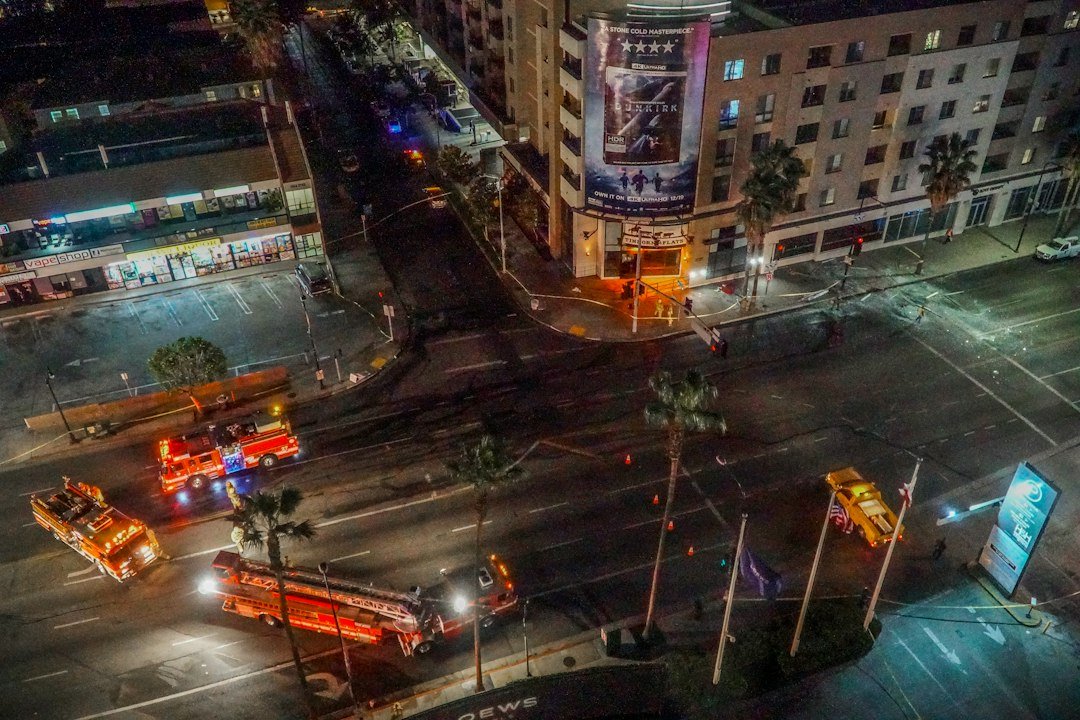
The Chatsworth collision represents a convergence of three systemic vulnerabilities: epidemic-level drug-impaired driving in California, the largely unregulated competitive dynamics of Los Angeles news helicopter operations, and the expanding liability footprint of public transit agencies operating under sovereign immunity frameworks that are increasingly porous. On September 16, 2026, an SUV driven by a suspected drug-impaired operator crossed into opposing traffic at full speed, striking an LA Metro bus and killing two passengers. Within 90 minutes, a news helicopter covering the aftermath crashed at the scene, killing the pilot and photographer. Four deaths across two mechanically unrelated events, linked only by the economics of breaking news.
This is not merely a tragedy. It is a stress test for California’s Watson murder doctrine (established in People v. Watson, 1981), which permits second-degree murder charges for DUI fatalities when implied malice is proven. The Los Angeles County District Attorney’s decision to pursue murder charges against the SUV driver signals prosecutorial aggression that will reverberate through plea bargaining dynamics statewide. Simultaneously, the helicopter crash activates NTSB and FAA investigative protocols that have historically produced regulatory action only after multiple fatalities — the 2007 Phoenix dual-helicopter collision and 2014 Seattle KOMO crash each prompted temporary restrictions but no permanent structural reform of news-gathering air operations.
What Changed
The operational timeline reveals a critical failure of incident command structure. Fifty-six LAFD personnel had “mostly cleared the scene” within an hour, leaving only a single fire official (Silverman) and an ambulance crew completing paperwork when the helicopter descended for a live 7:00 PM broadcast. This premature scene de-escalation — driven by resource constraints and media pressure — created an uncontrolled airspace environment where a news helicopter operated without dedicated air traffic coordination. The FAA’s current regulatory framework for Electronic News Gathering (ENG) helicopters relies on voluntary coordination with local authorities; no mandatory traffic separation or altitude minimums exist for news operations over breaking news scenes.
The SUV driver’s toxicology results, confirming drug impairment, transform this from a negligence case into an intentional act framework under California Penal Code 187. Prosecutors cite the driver’s conscious decision to operate a vehicle while impaired, approach a red light at speed without braking, and cross into oncoming traffic as evidence of implied malice. This charging decision raises the stakes from a typical vehicular manslaughter exposure (2-10 years) to 15-life. For the defense bar, this creates immediate pressure to negotiate plea agreements before Watson precedent hardens further; for insurers, it signals that policy limits for DUI fatalities may now face murder-conviction multipliers in civil litigation.
Market and Institutional Impact
Insurance and Reinsurance Markets: The dual-fatality structure creates a rare “cascading loss” scenario. LA Metro’s self-insured retention (estimated at $5-10 million per occurrence) faces simultaneous claims from the bus collision and potential third-party liability for the helicopter crash if scene management failures are established. Commercial auto insurers for the SUV driver (likely minimum-limits policy) are effectively judgment-proof, shifting exposure to Metro’s uninsured motorist fund and the helicopter operator’s aviation liability policy (typically $50-100 million). Reinsurers will price 2027 renewals for California transit agencies with a new load factor for “secondary event liability” — estimated at 15-25% premium increase for agencies with high-visibility routes.
News Media Competitive Dynamics: The Los Angeles DMA supports seven dedicated news helicopters across four stations (KTLA, KNBC, KABC, KCBS/KCAL), operating approximately 4,200 flight hours annually. The competitive pressure to be first over breaking news — particularly during 6-7 PM sweeps — creates implicit incentives for risk acceptance. The helicopter involved was operating under Part 91 general aviation rules, not Part 135 commercial standards, despite conducting commercial news-gathering. Expect the NTSB to recommend reclassification of ENG operations to Part 135, which would mandate two-pilot crews, instrument flight rules capability, and formal operational control centers — adding $1.2-1.8 million annually per aircraft in compliance costs.
Transit Agency Governance: LA Metro CEO Stephanie Wiggins’ immediate public statement — detailing the bus driver’s emergency call and rescue timeline — reflects a transparency protocol designed to preserve sovereign immunity defenses under California Government Code 815-825. However, the presence of 56 first responders who “mostly cleared” the scene before media operations concluded creates discovery risk: did Metro or LAFD request FAA temporary flight restrictions (TFR)? No TFR was issued. If discovery reveals Metro or fire command failed to request airspace protection, sovereign immunity may not shield them from inverse condemnation claims by helicopter victims’ families.
Precedent
The 2007 Phoenix helicopter collision (two news helicopters, four dead) produced NTSB Recommendation A-08-16 urging FAA to require collision avoidance technology for ENG helicopters. The FAA declined mandatory action, issuing only voluntary guidance. The 2014 Seattle KOMO crash (helicopter struck tower, two dead) prompted Seattle to ban news helicopters from hovering over downtown during peak hours — a local ordinance later challenged on First Amendment grounds. California has no statewide ENG safety statute. The Watson murder precedent has expanded: 2019’s People v. Martinez upheld murder conviction for a driver with 0.19% BAC and prior DUI; 2022’s People v. Sanchez extended it to combined alcohol-cannabis impairment. This case, with confirmed drug impairment and no prior DUI, tests the lower boundary of implied malice.
“The Chatsworth duality — a ground tragedy amplified by an air tragedy — forces every stakeholder to confront the externalities of their operational models. Transit agencies cannot control impaired drivers. News organizations cannot control airspace. But both can control their response protocols.” — Former NTSB Chair, 2024
Decision Framework
For Transit Agency CEOs: Immediately audit incident command MOUs with fire/police to mandate TFR requests for any fatality scene. Budget $200-400K for dedicated airspace coordination liaison in emergency operations centers. Review sovereign immunity waivers in vendor contracts — helicopter operators covering your incidents may seek indemnification. Engage state lobbyists for SB-XXX (pending) requiring TFR automation for multi-fatality scenes.
For Media Company COOs: Model the Part 135 transition cost now — $1.5M/aircraft/year — against the alternative: a single hull loss ($3-5M) plus liability ($20-50M) plus brand destruction. Negotiate pooled airspace coordination with competitors; the Phoenix precedent proves voluntary cooperation fails under ratings pressure. Establish “no-hover” policies for active rescue scenes until incident command releases airspace.
For Fund Managers with Transit/Infrastructure Exposure: Stress-test portfolio companies for secondary-event liability. The Chatsworth pattern — initial incident draws media, media creates secondary incident, agency faces blended liability — is replicable at any major transit hub. Price in 200-300 basis points wider spreads for California transit revenue bonds until legislative clarity on TFR authority and sovereign immunity scope emerges.
Bottom Line
The Chatsworth dual tragedy will force the first structural reform of news helicopter operations since 2007 and the first serious test of Watson murder charges for drug-only impairment — creating a dual precedent that raises the cost of capital for California transit agencies by 15-25% and mandates Part 135 compliance for news aviation within 18 months. Executives who treat this as two unrelated accidents rather than a single systemic failure will misprice their 2027 risk exposure by orders of magnitude.