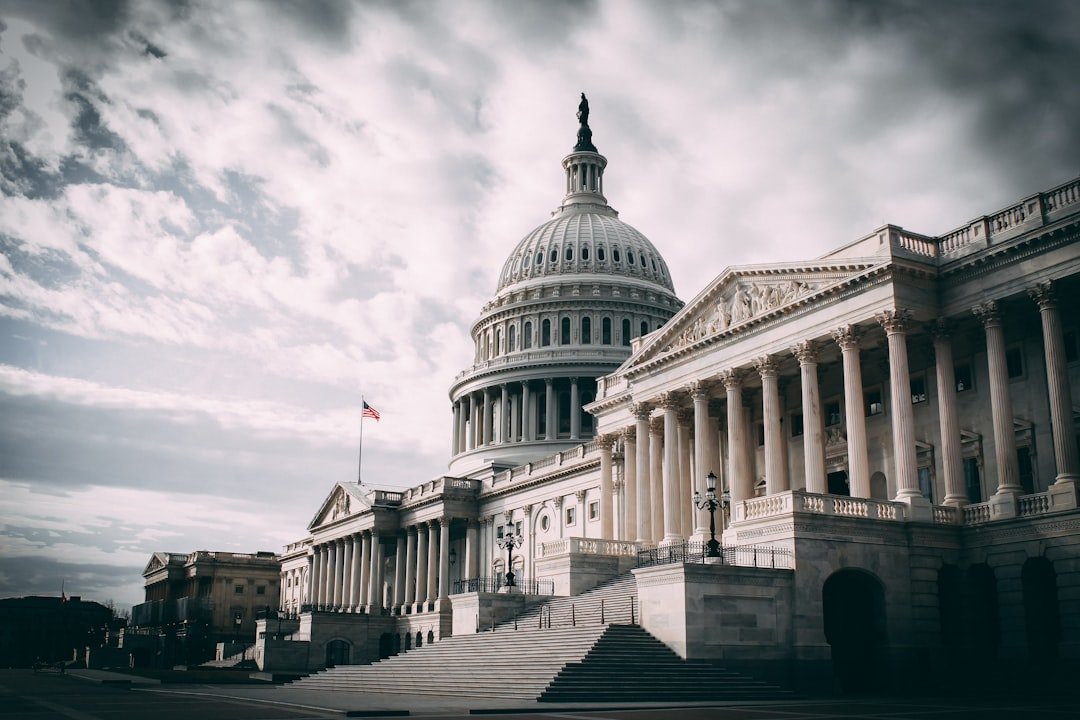
The legislative fight unfolding on Capitol Hill this week is nominally about Russia, Ukraine, and the economic pressure required to end a war now grinding into its third winter. But the real battle — the one that will outlast the current conflict and the current presidency — is about whether Congress intends to remain a co-equal branch in matters of economic warfare, or whether it has quietly acquiesced to an imperial presidency wielding tariff authority as a blunt instrument of foreign policy.
What Happened
The Lindsey O. Graham Sanctioning Russia Act of 2026, scheduled for a rule vote Tuesday and final passage as early as Thursday, would grant President Trump authority to impose secondary tariffs of up to 500% on any country deemed to be purchasing Russian energy, metals, or other strategic exports. The bill identifies an initial list of ten nations — China, India, Turkey, Azerbaijan, Hungary, Kazakhstan, Kyrgyzstan, Singapore, Slovakia, and the United Arab Emirates — as potential targets, with the administration empowered to add others. Unlike traditional sanctions legislation, which mandates specific designations, this bill delegates near-total discretion to the executive branch.
House Democrats, led by Ranking Member Richard Neal of the Ways and Means Committee, have broken with Senate sponsors and Ukrainian advocates to oppose the measure in its current form. In a joint statement with fellow Democrats, Neal argued the legislation would “dramatically expand presidential tariff authorities while failing to mandate sanctions on Russia, both of which are unacceptable.” The caucus is now negotiating a counter-amendment that would cap the number of sanctionable countries at eleven and require congressional notification before new designations take effect — a procedural safeguard the White House has privately signaled it would resist.
Why It Matters
The stakes extend far beyond the immediate fate of a single sanctions bill. Since the International Emergency Economic Powers Act (IEEPA) of 1977, Congress has progressively ceded trade weaponization authority to the executive branch, operating on the assumption that presidents would exercise restraint and coordinate with allies. The Trump administration’s first term shattered that assumption: Section 232 national security tariffs on steel and aluminum, Section 301 penalties on China, and the threatened auto tariffs on Europe and Japan all flowed from unilateral executive determinations, often over the objections of the national security establishment and key allies.
This bill would codify and expand that precedent. By authorizing secondary tariffs — penalties on third countries for trading with a sanctioned nation — Congress would be endorsing a tool the United States has historically used sparingly and multilaterally, most notably against Iran and North Korea through UN Security Council frameworks. Applying it unilaterally against major economies like India and Turkey, both NATO-adjacent and critical to global supply chains, risks fragmenting the very coalition architecture that has sustained Ukraine’s defense.
Neal’s objection cuts to the institutional core: “What is our protection afterwards? And if he decides, by the way, to take the harsh position as it relates to Ukraine, he could still do that as well.” The fear is not hypothetical. In February 2025, President Trump threatened to withdraw from NATO unless European members increased defense spending to 3% of GDP — a demand delivered via Truth Social, not diplomatic channels. The same administration has used tariff threats to extract concessions from Colombia on deportation flights and from Mexico on border enforcement. The pattern suggests tariff authority functions less as a calibrated sanctions tool than as a generalized leverage mechanism.
Historical Context
Congress has walked this path before. The Trading with the Enemy Act of 1917, amended in 1933 to grant President Roosevelt sweeping authority over gold flows and foreign exchange, became the legal basis for the Nixon shock of 1971 — the unilateral closure of the gold window that ended the Bretton Woods system. IEEPA itself was intended as a reform, imposing reporting requirements and congressional veto mechanisms that the Supreme Court invalidated in INS v. Chadha (1983). Since then, every president has used IEEPA more expansively than the last.
The Graham bill’s structure mirrors the Countering America’s Adversaries Through Sanctions Act (CAATSA) of 2017, which mandated sanctions on Russia, Iran, and North Korea while granting the president waiver authority. Trump used that waiver repeatedly, delaying implementation on Turkish S-400 purchases and Russian energy projects. The current legislation goes further: it creates no mandatory triggers, only discretionary ones. As a former Senate sanctions staffer told me on background, “CAATSA was Congress saying ‘you must.’ This bill is Congress saying ‘you may.’ That’s a profound difference.”
Ukraine’s perspective adds moral urgency but not institutional clarity. President Zelenskyy’s Monday address — “Lindsey Graham’s sanctions bill is still a bill, unfortunately, and not a law. It is important that it becomes law” — reflects a government facing another winter with dwindling air defenses and artillery shortages. Vitaly Kim, Ukraine’s veterans affairs minister, warned at the Ukraine Action Summit that “economic pressure is the only language Putin understands.” They are not wrong. But the mechanism matters. A sanctions regime that fractures the G7, alienates India, and empowers a president to rewrite trade policy by tweet may inflict more strategic damage than the Russian economy can absorb.
What to Watch
Three dynamics will determine the outcome. First, the Hoyer amendment: if the ten-country list holds and the eleven-country cap passes, it signals Congress still believes in legislative guardrails. If the White House succeeds in stripping the cap — as it did with the CAATSA waiver provisions — the delegation becomes effectively unlimited. Second, the Senate whip count: Graham’s death in early 2026 removed the bill’s most forceful Republican champion. Senator Jim Risch (R-ID), now leading the Foreign Relations Committee, has expressed reservations about secondary tariffs on allies. A bipartisan coalition of restraint — Risch, Rand Paul (R-KY), and progressive Democrats — could force a conference committee rewrite.
Third, the midterm calendar. With November elections looming, vulnerable House Democrats in districts with manufacturing exposure (Michigan’s 7th, Pennsylvania’s 10th, Ohio’s 9th) face pressure from both sides: labor unions warning of supply chain disruption, and pro-Ukraine donors demanding action. The White House calculates that a veto-proof majority is unlikely, meaning any bill reaching Trump’s desk will bear his fingerprints — a political win regardless of policy outcome.
Key Takeaway
The Graham bill is not a Ukraine strategy; it is a precedent-setting expansion of executive tariff power wrapped in the flag of Kyiv. Congress is being asked to authorize a tool it cannot control, against countries it cannot afford to alienate, on behalf of a president who has demonstrated no institutional restraint. The vote this week will reveal whether the legislative branch still views its Article I authority over commerce as a responsibility to exercise — or a relic to surrender. Ukraine deserves every effective pressure tool. But the Constitution does not permit Congress to write blank checks to the executive, even in wartime. Especially in wartime.