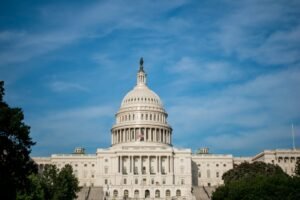
The FBI’s rapid takedown of an alleged ISIS‑inspired plot to bomb New York’s State Capitol in Albany highlights a shifting threat landscape in the United States. In 2026, with President Donald Trump back in the White House, the nation is witnessing a resurgence of rhetoric about “law and order,” yet the reality on the ground shows that the most dangerous actors are now lone individuals radicalized online, capable of targeting the very symbols of democratic governance. The arrest, made by the FBI Albany Joint Terrorism Task Force, signals both the effectiveness of current investigative tools and the urgent need for more sophisticated, technology‑driven counter‑terrorism strategies.
What Happened
The suspect, a 35‑year‑old woman who converted to Islam five years ago, had been radicalized through online propaganda and began creating multiple social‑media accounts under an honorific Islamic name, a practice that led to repeated suspensions for violating platform terms of service. According to the criminal complaint filed in the Northern District of New York, she swore allegiance to ISIS in both English and Arabic audio recordings and posted messages praising the September 11 attacks. Between July 16 and August 17, she exchanged messages with an undercover FBI source posing as an ISIS facilitator, repeatedly requesting assistance to carry out an attack on the Capitol building, which she noted lay less than two miles from her residence.
Surveillance teams observed the woman visiting the New York State Capitol five times between July 21 and August 9, during which she photographed the interior corridors and exterior façade, apparently scouting for vulnerabilities. In her messages to the undercover source, she declared an intent to “destroy as much of the building as possible and kill the senators while they are meeting,” and expressed a desire to “harm the enemies of God.” The complaint alleges that she sought logistical guidance, including the procurement of explosive materials, and indicated a willingness to act once the plan was operational. She was arrested on Wednesday by the FBI Albany Joint Terrorism Task Force and is expected to appear in federal court on Thursday afternoon on a single charge of attempting to provide material support to a designated foreign terror organization.
Why It Matters
This foiled plot matters because it underscores how ISIS continues to inspire homegrown terrorists who view the U.S. Capitol — not just the White House or foreign targets — as a strategic prize for sowing fear and destabilizing elected institutions. In a political environment where President Trump frequently frames terrorism as an external menace, the reality that a domestic actor plotted a lethal attack on a state legislative hub reveals a blind spot in national security policy. The case also raises public confidence concerns: citizens may question whether law‑enforcement agencies can adequately monitor radicalization pathways that operate largely beyond traditional surveillance parameters. Moreover, the rapid deployment of the Joint Terrorism Task Force demonstrates the value of inter‑agency collaboration, yet it also highlights the resource strain on local FBI field offices tasked with monitoring a growing spectrum of extremist threats.
The charge of attempting to provide material support to a designated foreign terrorist organization rests on 18 U.S.C. § 2339B, a statute that criminalizes any act that knowingly assists a foreign designated entity such as ISIS, which has been listed as a Foreign Terrorist Organization since 1999. Prosecutors must prove that the defendant knowingly intended to aid the organization and took substantial steps toward that goal, a high bar that reflects the difficulty of translating online chatter into actionable criminal conduct. The case therefore tests the limits of current surveillance authorities, especially as encrypted messaging platforms and private‑group forums enable conspiratorial planning that evades traditional wiretaps, prompting calls for expanded legal tools to address digital radicalization. If convicted, the sentence could reach up to 20 years, signaling a robust punitive response that may deter future online incitement and encourage platforms to cooperate with law‑enforcement through voluntary information‑sharing agreements.
President Trump’s administration has made combating terrorism a centerpiece of its agenda, invoking emergency powers and emphasizing stricter immigration controls. However, this plot illustrates that the most pressing terrorist threats now originate domestically, often from individuals radicalized through social media rather than foreign networks. Law‑makers from both parties have begun to pressure the White House for a coordinated strategy that combines hardened security at critical infrastructure sites with proactive digital monitoring, while civil‑rights advocates warn that expanded surveillance could infringe on constitutional protections. The upcoming court appearance will likely become a political flashpoint, with opponents using the case to critique or endorse the administration’s counter‑terrorism posture. If the prosecution secures a conviction, it may embolden legislators to push forward the Terrorism Prevention Act, a proposed bill that would increase funding for the FBI’s digital forensics units and mandate stricter data‑retention policies for social‑media platforms.
Historical Context
Historically, the Capitol has been a target of extremist violence, most notably the 1993 bombing of the World Trade Center and the 2021 attempted breach of the Capitol during the January 6th insurrection, both of which exposed vulnerabilities in protecting legislative chambers. The current plot aligns with a broader pattern of ISIS‑inspired lone actors, reminiscent of the 2015 San Bernardino attack and the 2020 murder of a federal judge in Wisconsin, where radicalization occurred primarily online. Unlike the 1990s, when terrorist recruitment relied on overseas networks and printed propaganda, today’s operatives are self‑radicalized through algorithms that amplify extremist content, making detection more complex for investigators. These developments have prompted the FBI to expand its Counter‑Radicalization Division, which now deploys analysts to monitor emerging online extremist communities and coordinate with state and local law‑enforcement agencies.
What to Watch
Key developments to monitor include the Thursday arraignment, where the judge may set bail conditions that could restrict the defendant’s access to communication devices, and the forthcoming sentencing phase, which could serve as a deterrent precedent. Congress is expected to revisit the 2025 Terrorism Prevention Act, potentially adding provisions for mandatory reporting of extremist content by major platforms and increasing funding for the FBI’s forensic labs. Additionally, the Department of Homeland Security may issue new guidance on securing state capitols, while civil‑liberties groups are likely to file challenges against any expanded data‑collection measures, creating a legal tug‑of‑war that will shape the next phase of America’s domestic counter‑terrorism effort. The outcome will also influence public perception of the administration’s claim that the nation is safer under its renewed emphasis on law‑and‑order policies.
Key Takeaway
In sum, the FBI’s thwarting of an ISIS‑inspired Capitol bombing plot underscores a new frontier in American terrorism: solitary, online‑radicalized actors who can strike at the heart of democratic institutions. The case demands a balanced response that leverages technology, upholds constitutional safeguards, and maintains bipartisan political will, lest the nation underestimate a threat that is both local and ideologically global.