Strategic Context
The intersection of executive branch communications strategy and congressional appropriations authority has entered a new phase of judicial scrutiny. Since January 2025, the Trump administration has deployed an estimated $12-15 million in congressionally appropriated agency funds toward television advertisements featuring the President personally — a practice that blurs the statutory line between permissible public information campaigns and impermissible political advocacy. The Anti-Deficiency Act (31 U.S.C. § 1341) and the Hatch Act (5 U.S.C. §§ 7321-7326) establish clear guardrails: agency funds may inform the public about government services, but may not finance communications designed to influence electoral outcomes or promote individual officeholders.
What distinguishes the current moment is not the practice itself — administrations of both parties have tested these boundaries — but the convergence of three factors: a federal judiciary increasingly willing to issue preliminary injunctions against sitting presidents, a compressed timeline before the November 2026 midterms where House control hangs on fewer than 15 competitive districts, and a cohort of government contractors and media vendors now exposed to clawback liability and reputational contagion. The ruling does not merely pause a media buy; it creates a precedent that any agency communications featuring the President personally face a presumption of political purpose.
What Changed
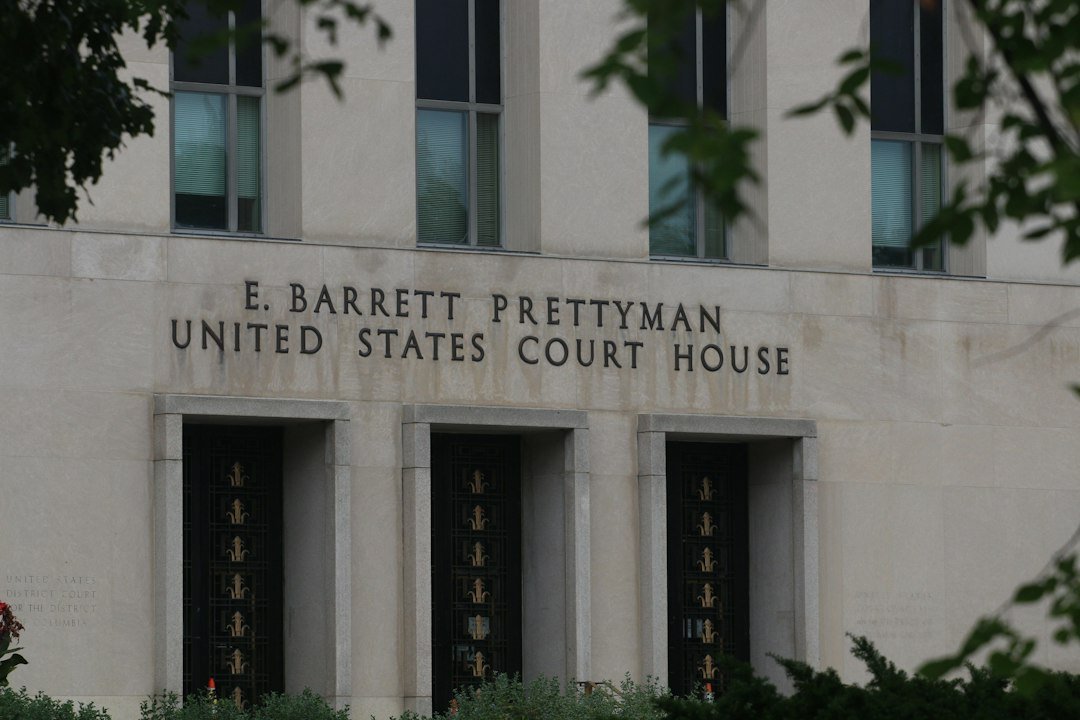
On Sunday, October 11, 2026, a U.S. District Court judge granted a temporary restraining order in one of at least three consolidated lawsuits (Citizens for Responsibility and Ethics in Washington v. Trump, No. 1:26-cv-01847; Public Citizen v. HHS, No. 1:26-cv-01902; and a third filed by a coalition of state attorneys general), ordering the immediate cessation of all taxpayer-funded advertisements featuring President Trump and requiring the cancellation of any remaining media placements. The order applies retroactively to spots already aired — opening the door for the Government Accountability Office to initiate recoupment proceedings against the agencies that authorized the spend — and prospectively to an estimated $4.2 million in committed but unfulfilled network and cable inventory across prime-time and news dayparts.
The legal mechanism is significant: the court relied on the Appropriations Clause (Article I, Section 9, Clause 7) rather than solely on statutory grounds, signaling that the judiciary views this as a structural constitutional violation — Congress’s exclusive power of the purse — rather than a mere technical breach of the Hatch Act. This framing elevates the stakes: agencies cannot cure the defect by reclassifying the ads; the constitutional infirmity attaches to the purpose of the expenditure itself. The Department of Justice has indicated it will seek an emergency stay from the D.C. Circuit, but the procedural posture — a TRO issued on a Sunday with immediate effect — suggests the district court found the plaintiffs likely to succeed on the merits and that irreparable harm (electoral distortion) would occur absent immediate relief.
Market and Institutional Impact
For government contractors, the immediate exposure is threefold. First, media buying agencies — including the large federal contractors that handle HHS, DHS, and VA communications contracts — face potential liability under the False Claims Act if they certified compliance with appropriations restrictions while placing politically tinged spots. Second, broadcast networks and cable systems that accepted the placements now hold inventory that cannot be aired and may not be fully refundable under standard cancellation clauses; the $4.2 million in forward commitments represents stranded assets on their books. Third, the ruling triggers mandatory reporting requirements: any contractor that executed media buys for the affected campaigns must now disclose the TRO to their contracting officers within five business days under FAR 52.203-13, potentially jeopardizing past performance ratings and future award eligibility.
The regulatory ripple extends to the political consulting ecosystem. Firms that advised on creative strategy, message testing, or media placement for the taxpayer-funded spots now face scrutiny over whether their work product constituted impermissible political consulting paid with federal dollars — a violation of 18 U.S.C. § 603 and OMB Circular A-87 cost principles. At least two major Beltway consulting shops have already placed staff on notice to preserve communications related to the ad campaigns. For fund managers, the relevant exposure vector is not direct equity risk but rather the contingent liability embedded in government services contractors’ balance sheets: companies like Maximus, GDIT, and Booz Allen Hamilton derive 15-25% of revenue from communications and outreach task orders that now carry heightened compliance costs and audit risk.
Institutionally, the ruling accelerates a trend toward judicial micromanagement of executive branch communications. Since 2021, federal courts have issued at least seven published opinions restricting agency messaging that features the President by name or likeness — a sharp increase from the historical average of one such ruling per presidential term. The practical effect is a chilling effect on legitimate public information campaigns: agencies may now pre-clear any advertising featuring the President through the Office of Legal Counsel, adding 30-45 days to campaign timelines and increasing legal costs by an estimated 20-30%. For the 2026 midterms specifically, the ruling removes a potential incumbent advantage: the President’s ability to leverage the bully pulpit through paid media funded by the treasury, rather than by the RNC or campaign committees subject to FEC limits and disclosure requirements.
Media companies face a distinct calculus. Broadcast networks have already begun reclassifying the canceled inventory as “political” rather than “commercial” for rate-card purposes — a distinction that triggers the lowest-unit-charge requirements of Section 315 of the Communications Act and could reduce revenue per spot by 40-60%. Cable systems, which operate under different regulatory frameworks, have more flexibility but face reputational pressure from both political parties. The net effect is a contraction of available political advertising inventory in the final six weeks before the election, driving up prices for campaign-funded spots and disadvantaging challengers who lack the incumbent’s free media access.
Precedent
The closest analogue is the 2014 GAO determination that the Obama administration’s HHS violated the Anti-Deficiency Act by using $3.1 million in Affordable Care Act implementation funds for a multimedia campaign featuring the President — but that finding came after the fact and carried no injunctive relief. The 1990s “Team 100” controversy during the Clinton administration resulted in reimbursement to the Treasury but no judicial order halting ongoing expenditures. What makes the current ruling unprecedented is the combination of speed (TRO within 72 hours of filing), scope (nationwide, all agencies, all media), and constitutional grounding. If the D.C. Circuit affirms, the precedent will establish that any presidential appearance in taxpayer-funded advertising creates a rebuttable presumption of political purpose — effectively requiring agencies to prove a negative before launching any campaign featuring the Commander in Chief.
“The constitutional violation here is not the content of the message but the source of the funds. When the Executive spends money Congress did not appropriate for political advantage, it usurps the legislative power of the purse — the most fundamental check in our system.” — District Court Order, October 11, 2026
For executives, the 2014 precedent offers a practical lesson: HHS ultimately reprogrammed funds and issued corrected communications without presidential imagery, at a cost of $800,000 in creative rework and a six-week delay. The current administration faces a compressed timeline — six weeks versus six months — and a judicial order that requires cancellation, not just correction.
Decision Framework
CEOs of government services firms should immediately audit all active task orders involving public communications, outreach, or advertising to identify any deliverables featuring the President, Vice President, or Cabinet secretaries by name or likeness. Legal counsel should prepare a compliance memorandum distinguishing between statutorily mandated public information (e.g., Medicare enrollment deadlines, disaster relief instructions) and discretionary messaging that could be construed as political. Contracting officers should be engaged proactively to request written direction on pending media buys — creating a paper trail that shields the contractor from False Claims Act exposure. For fund managers, the actionable signal is not to exit government services equities but to stress-test portfolio companies’ compliance infrastructure: firms with robust OLC pre-clearance processes and segregated political/official communications teams will weather the regulatory tightening; those without will face margin compression from increased legal spend and contract delays.
Policy architects should note that the ruling creates an opening for legislative clarification. A bipartisan appropriations rider defining “permissible presidential communications” — for example, limiting taxpayer-funded presidential appearances to declared emergencies, statutory signing ceremonies, and congressionally mandated reports — would restore agency operational certainty while preserving congressional control. Absent such legislation, the default will be judicial case-by-case adjudication, injecting unpredictability into every federal communications budget cycle.
Bottom Line: The court’s injunction transforms a political controversy into a concrete compliance crisis for the federal vendor ecosystem — any contractor touching presidential messaging now operates under a cloud of False Claims Act liability, and the six-week midterm window means the financial and reputational damage will be realized before any appellate resolution.