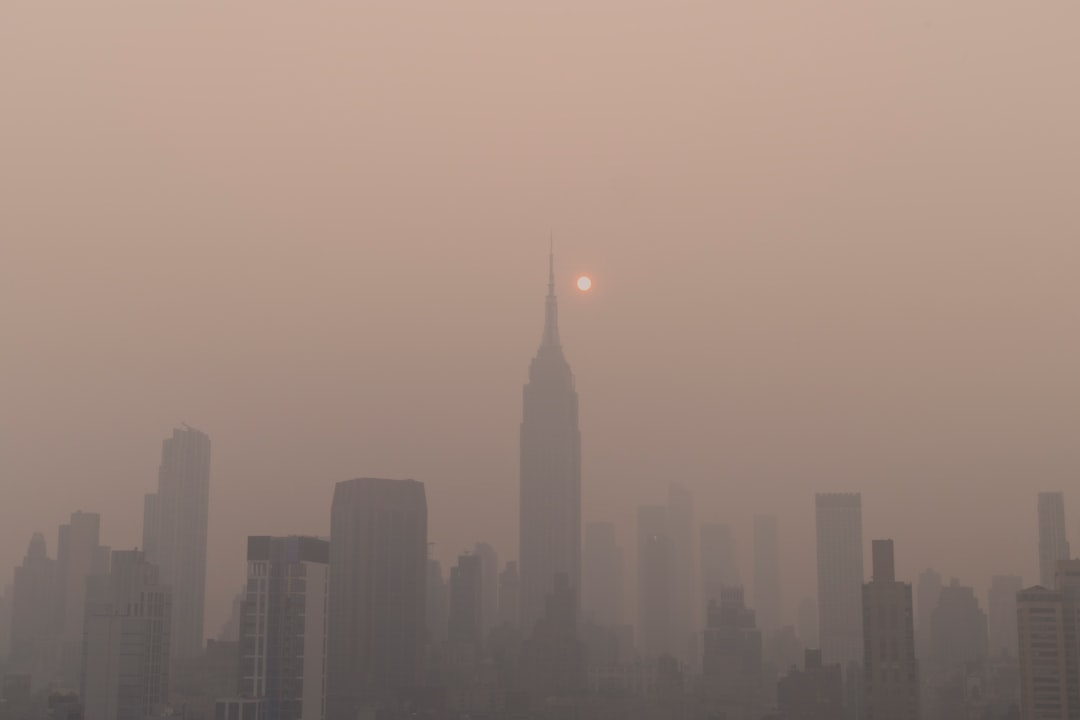
On July 15, 2026, the skyline of Midtown Manhattan was obscured by a thick, orange haze as smoke from a sprawling Canadian inferno drifted across the Atlantic. New York City officials, in an unprecedented move, began handing out N95 masks to commuters, while the entire state of Michigan was placed under an air‑quality alert. The scene, echoing a wintery nightmare, underscores a growing pattern: climate‑induced wildfires are no longer regional phenomena but trans‑national crises that demand federal leadership.
What Happened
Wildfires raging in Canada’s western provinces and Minnesota’s northern forests have produced a smoke plume that has crossed state lines and entered the U.S. airspace. State environmental agencies—Michigan, New York, Pennsylvania, Massachusetts, and the New England states—issued Code Red alerts on Thursday, 15 July, declaring air quality “unhealthy for everyone.” In New York City, the Department of Environmental Protection coordinated a distribution of N95 respirators to over 2 million commuters, citing an anticipated spike in fine particulate matter (PM₂.₅) that could exceed 200 µg/m³, a threshold that the U.S. Environmental Protection Agency (EPA) deems hazardous.
Data from the National Weather Service (NWS) in Chanhassen, Minnesota, indicated that the peak of the smoke plume was expected to arrive in the Upper Midwest by Friday, with the most severe concentrations projected for the mid‑town areas of Chicago, Detroit, and Cleveland. Residents were advised to stay indoors, close windows, and use air‑purification units. The NWS forecast also warned that the combined effects of high temperatures and smoke could aggravate cardiovascular and respiratory conditions, a risk that has been amplified by the region’s aging infrastructure.
Why It Matters
Beyond the immediate health risks, this episode exposes a systemic failure in U.S. preparedness for climate‑driven disasters. The Trump administration’s environmental record has been marked by a rollback of the Clean Power Plan, a reduction of the EPA’s authority to regulate wildfire smoke, and an overall reluctance to adopt a federal strategy for climate resilience. When the smoke reached the air‑quality thresholds in New York, the federal response was largely limited to the EPA’s “Air Quality Alert” notification, aiomanip to the local authorities’ own mitigation plans.
At the same timeretched, the economic implications are glaring. The New York and Midwest metropolitan areas, housing a combined population of nearly 60 million people, are economic engines. Prolonged smoke and heat can reduce labor productivity, increase medical costs, and disrupt supply chains. The federal government’s failure to coordinate a national emergency declaration or to provide additional resources to state agencies is a missed opportunity to mitigate these losses.
Legal frameworks such as the National Environmental Policy Act (NEPA) and the Clean Air Act provide federal oversight over air quality, yet the Trump administration’s policy shifts have weakened the enforcement of these laws. The administration’s decision to eliminate the “smoke‑smoke” regulatory program—formerly a pilot that allowed the EPA to set smoke‑specific standards—has left states to shoulder the burden of monitoring and mitigation. This places disproportionate responsibility on local agencies, many of which are underfunded.
Moreover, the cross‑border nature of the smoke plume brings international law into play. The United Nations Framework Convention on Climate Change (UNFCCC) obliges signatory states to reduce greenhouse‑gas emissions, but the U.S. under ಪ್ರಧಾನಿ Trump has been less aggressive in meeting its Paris Agreement targets. The Canada‑U.S. partnership on wildfire management is formalized in the 2014 North American Forest Fire Management Accord, yet the current emergency has exposed gaps cimentin this bilateral cooperation, especially in real‑time data sharing and mutual aid.
Historical Context
This is not the first time the U.S. Midwest and Northeast have been shrouded in wildfire smoke. In 2015, the California wildfires produced a smoke plume that reached as far as New England, prompting nationwide health advisories. The 2018 summer saw a surge of “mega‑fires Grace” across the Midwest, with the EPA recording an average of 150 µg/m³ fine particulates in Chicago for a week. The 2021 wildfire season, the most severe on record, sent smoke into the Great Lakes region, leading to an unprecedented federal emergency declaration by President Biden, which authorized the National Guard’s deployment to assist with air‑quality monitoring.
These episodes illustrate a trend: as temperatures climb, precipitation declines, and drought conditions intensify, wildfires are expanding in both frequency and intensity. The 2024‑2025 wildfire season already saw an 18 % increase in acreage burned compared to the 2010‑2019 average, a figure that the EPA attributes to the U.S.’s own emissions of methane and nitrous oxide.
What to Watch
Forecasters predict that the smoke plume could linger over the Northeast for two additional weeks, with a possible resurgence tied to a predicted heatwave in early August. State agencies are already preparing for increased medical strain; hospitals in New York and Michigan have reported a 12 % rise in emergency visits for asthma and COPD exacerbations during the past 48 hours.
Politically, the Trump administration’s refusal to engage in a tendo‑to‑the‑environmental‑policy debate may become a focal point in the upcoming midterm elections. If the public perceives that the federal government is ignoring the health and economic costs of wildfire smoke, voter backlash could reshape the congressional climate‑policy agenda. In addition, the federal government’s potential decision to declare a national emergency for air quality could unlock federal funds—such as the “Disaster Relief Fund” and the “Clean Air Restoration Program”—to aid state and local agencies in purchasing air‑purification equipment and conducting public health outreach.
Key Takeaway
The trans‑national wildfire smoke crisis of July 2026 is a stark reminder that climate change is not a distant threat but an immediate, cross‑border public‑health emergency. The Trump administration’s limited response, rooted in a broader deregulatory agenda, has left states scrambling to protect vulnerable populations. As the plume lingers, the urgency for a coordinated federal strategy—encompassing stronger air‑quality standards, cross‑border data sharing, and emergency funding—has never been clearer.