A constitutional boundary, not merely an immigration ruling
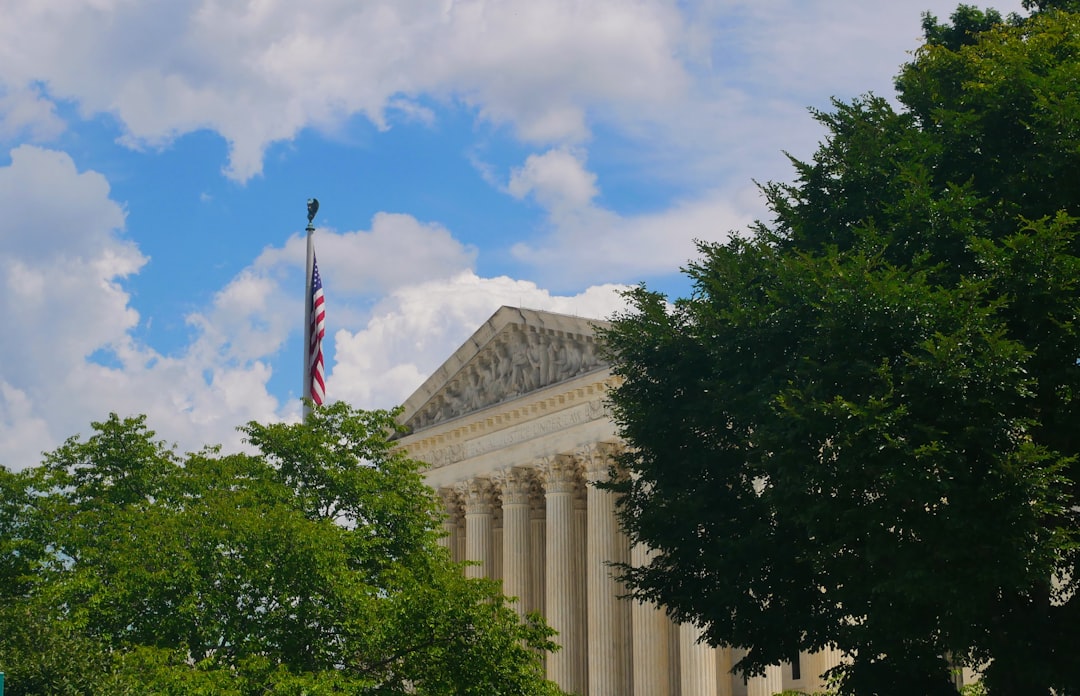
The Supreme Court’s rejection of Donald Trump’s attempt to end birthright citizenship is best understood as a decision about who has the authority to define membership in the American political community. In a 6–3 ruling, the Court held that the Fourteenth Amendment protects virtually every child born on U.S. soil, including children whose parents are undocumented or present only temporarily. The judgment therefore does more than preserve an administrative practice: it reasserts that the executive branch cannot redraw the constitutional boundary of citizenship by decree.
npr
+1
The relevant language is unusually direct. The Citizenship Clause declares that “all persons born or naturalized in the United States, and subject to the jurisdiction thereof, are citizens.” Since the late nineteenth century, the Supreme Court has understood that provision to include the U.S.-born children of noncitizens, subject to narrow exceptions such as children of foreign diplomats or members of an occupying enemy force.
constitution.congress
+1
Trump’s executive order sought to transform those exceptions into a broad new rule. It would have denied federal recognition to children whose mothers were unlawfully present or lawfully present only on temporary visas, where the father was neither a U.S. citizen nor a lawful permanent resident. That approach treated immigration status as a determinant of constitutional membership. The Court rejected the premise that a president may make such a change without an amendment to the Constitution or a new interpretation grounded in an act of Congress that survives constitutional review.
Chief Justice John Roberts’s formulation captured the institutional stakes: the authors of the Fourteenth Amendment extended citizenship to every free-born person within the country, making citizenship “the right to have rights.” The point is not rhetorical. A citizenship rule that changes with each administration would make legal identity dependent on executive policy, rather than on a stable constitutional guarantee.
reuters
The deeper institutional contest
The ruling is a setback for Trump, but it is not a simple restoration of institutional normality. The case arrives after the Court had already limited the power of lower-court judges to issue nationwide injunctions against executive policies. That earlier decision gave the administration room to pursue its agenda while litigation continued and raised the possibility that citizenship rules could vary by plaintiff, state or federal circuit.
bbc
+1
That procedural development matters because modern presidential power is often tested through litigation before the underlying merits are resolved. The birthright-citizenship dispute showed how a president can use an executive order to force the courts, Congress and the bureaucracy into a constitutional confrontation. Even when the final judgment rejects the policy, the process can generate uncertainty, consume administrative capacity and normalize the idea that fundamental rights are provisional until the judiciary intervenes.
The Court’s decision draws a clear line around citizenship, but the administration has already indicated that it will continue testing the perimeter. On August 6, Trump signed narrower orders aimed at children linked to foreign governments, designated “alien enemies,” commercial surrogacy arrangements and alleged birth tourism. A separate order sought to restrict entry by pregnant travelers whose purpose, in the administration’s view, was to obtain citizenship for a child. These measures are likely to produce further litigation because the constitutional question is not simply whether the government can police fraud or regulate entry; it is whether those tools can be used to deny citizenship that the Fourteenth Amendment otherwise guarantees.
reuters
+1
This is where the decision becomes a test of bureaucratic discipline. Birth certificates, passports, Social Security numbers and state records have historically operated on the assumption that birth in the United States establishes citizenship, except in recognized exceptional cases. Removing that assumption would require agencies to investigate parental status, visa categories, intent, family relationships and potentially medical or surrogacy arrangements. Legal scholars have warned that such a system could invite arbitrary questioning and discriminatory enforcement, particularly against families of Asian, Latino and immigrant backgrounds.
brennancenter
Markets, demographics and the meaning of certainty
The economic consequences are less immediate than the constitutional ones, but they are substantial. Citizenship is an asset in the broadest institutional sense: it determines access to public benefits, labor-market mobility, political participation, consular protection and the ability to pass rights to future generations. A rule that made those rights uncertain at birth would increase compliance costs for hospitals, state registrars, schools, employers and financial institutions.
It would also create a large population vulnerable to irregular status. Estimates cited during the debate suggested that ending birthright citizenship could result in approximately 255,000 children being born without citizenship each year, while increasing the unauthorized population by millions over the following decades. The result would not be a cleaner immigration system. It would be a second-generation status crisis, with people born and raised in the United States facing documentation barriers in the country they know as home.
usatoday
By preserving a uniform rule, the Court protects a form of legal certainty that markets quietly depend upon. Employers can assess workforce eligibility through standardized documents; lenders and insurers can rely on stable identity records; families can make long-term decisions without fearing that a change in presidential policy will retroactively weaken their children’s status. The American economy benefits from the accumulation of human capital across generations, not from converting citizenship into a conditional administrative privilege.
There is also a demographic dimension. Birthright citizenship has allowed the United States to absorb successive immigrant communities into a common civic framework. That framework has never eliminated racial or political conflict, but it has prevented the law from creating permanent hereditary categories of belonging. The Court’s ruling preserves that integrative function at a moment when immigration policy is increasingly organized around exclusion, enforcement and symbolic confrontation.
Trump can still pursue tighter visa screening, penalties for fraud and enforcement against unlawful entry. What he cannot do, the Court has now said, is treat the presidency as a substitute for constitutional amendment. The larger lesson for American readers is that institutions matter most when political leaders claim an emergency power to revise the country’s basic membership rules. The decision does not end the immigration conflict. It does, however, reaffirm that the meaning of citizenship cannot be rewritten by executive ambition alone.