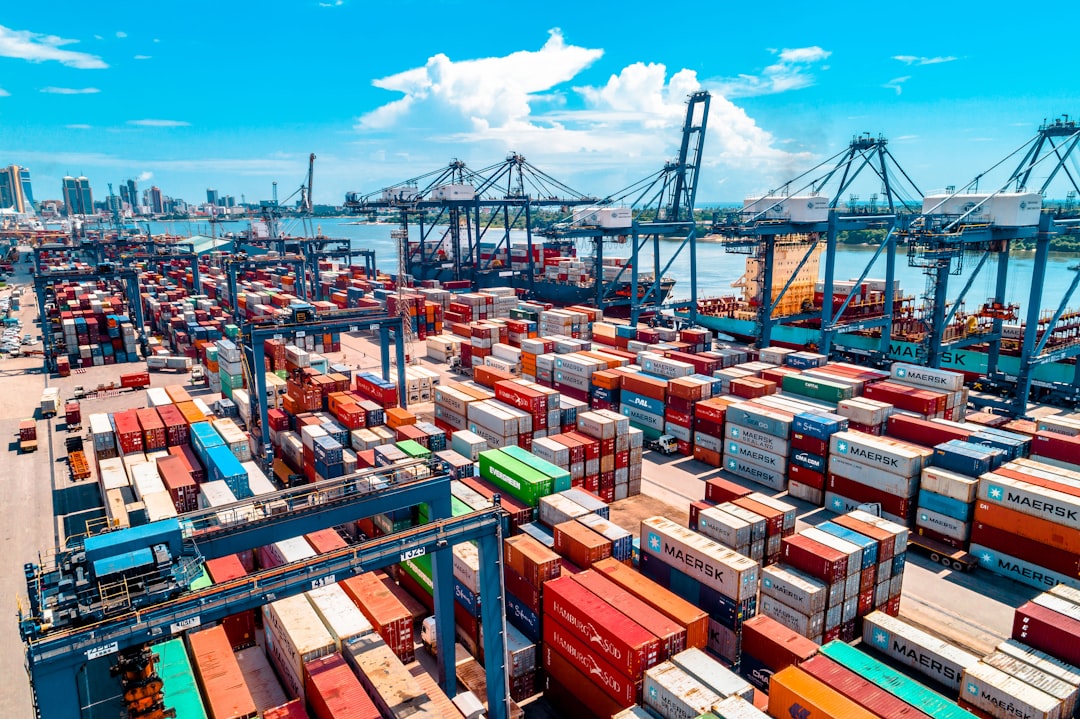
The architecture of American trade policy is undergoing a fundamental, and highly controversial, structural shift. President Donald Trump, facing significant judicial headwinds, is no longer merely proposing tariffs as a negotiating tool; he is institutionalizing them through a strategic pivot in legal justification. By moving away from broad protectionist rhetoric and toward specific, moral-based enforcement mechanisms, the administration is attempting to create a permanent, unassailable framework for global economic intervention.
The New Tiered Tariff Regime
The latest maneuver by the Trump administration involves a sophisticated two-tiered tariff structure, imposing levies of 10 percent and 12.5 percent on goods originating from 59 major trading partners, including the European Union. While the administration frames these measures as a necessary defense against the influx of goods produced via forced labor, the scope of the policy is staggering. According to the U.S. Trade Representative (USTR), the countries targeted by these tariffs account for more than 99% of all imports into the United States. This is not a targeted strike against specific bad actors; it is a comprehensive reconfiguration of the American trade landscape.
The administration has attempted to mitigate immediate economic shockwaves by exempting critical sectors such as energy and various food commodities. A senior administration official, speaking on the condition of anonymity, stated that the timing of this rollout was intended to ‘avoid complexity’ for businesses already struggling with the shifting regulatory environment. However, the optics of this move suggest a deeper intent: to normalize high-cost imports by embedding them within the framework of human rights enforcement, making it politically difficult for domestic critics to oppose the tariffs without appearing to condone forced labor.
The Legal Shell Game
To understand why this move is so significant, one must look at the recent friction between the White House and the judiciary. Following a Supreme Court ruling that struck down a broad swath of President Trump’s previous tariff initiatives, the administration has been forced to find new legal pathways to achieve the same economic ends. This is what Senator Ron Wyden (D-Oregon) has characterized as the use of a ‘zombie law’—reviving outdated or niche statutes to bypass modern judicial scrutiny. By invoking laws designed to address unfair trade practices and labor violations, the administration is effectively reconstructing its economic agenda under a different, more morally defensible guise.
The implications for international diplomacy are profound. The USTR’s recent fact sheet claimed, ‘The United States is the only country in the world to adopt, and effectively enforce, a ban on imports made with forced labor.’ This rhetoric does more than just signal a commitment to human rights; it establishes a unilateral standard that forces every major trading partner into a defensive posture. By framing trade policy as a moral crusade, the administration limits the ability of allies to negotiate on purely economic grounds. If a partner wants to avoid a 12.5 percent levy, they cannot simply offer lower prices; they must prove their entire supply chain meets a standard defined by Washington.
The Economic Reality vs. The Policy Promise
The central tension in this policy shift lies in the disconnect between the administration’s promised economic boom and the inflationary reality on the ground. A year into the implementation of double-digit tariffs, the promised era of domestic manufacturing resurgence has yet to materialize in the way the President’s economic platform envisioned. Instead, the economy has faced the persistent pressure of rising costs, a phenomenon that critics argue is a direct consequence of these levies.
The ‘o what’ for the American consumer is a permanent shift in the price floor of imported goods. While the administration argues that these tariffs protect American jobs and moral standards, the immediate mathematical reality is a tax on consumption. When 99% of imports are caught in this net, the cost is rarely absorbed by the exporting nation or the importing corporation; it is passed down to the American household. The strategic use of ‘forced labor’ as the justification provides the administration with a political shield, allowing them to argue that any resulting inflation is a necessary price for national integrity.
Historical Precedents and Institutional Erosion
This shift represents a departure from the traditional consensus-based trade model that has governed the United States since the post-WWII era. Historically, tariffs were used as surgical tools—often temporary—to protect specific infant industries or to retaliate against specific violations of trade agreements. What we are witnessing now is the weaponization of trade policy as a primary instrument of statecraft, applied broadly and indiscriminately.
By utilizing the USTR to enforce these new tiers, the administration is expanding the agency’s role from a facilitator of trade to a moral arbiter of global supply chains. This institutional expansion has significant long-term consequences for the rule of law in international commerce. When trade policy becomes indistinguishable from foreign policy and moral crusades, the predictability that global markets rely upon begins to erode. We are moving toward a ‘polycrisis’ environment where trade, human rights, and national security are fused into a single, volatile mechanism of executive power.
What to Watch in the Coming Months
As this policy takes hold, three key indicators will determine its success or failure. First, watch the litigation: The administration’s ability to maintain these tariffs will depend on whether the courts accept the ‘forced labor’ justification as a legitimate application of existing trade law, or whether they view it as a pretextual evasion of the Supreme Court’s previous rulings.
Second, monitor the reaction of the European Union and other major allies. If the EU perceives these tariffs as a direct assault on their industrial base rather than a genuine labor initiative, we could see a wave of retaliatory measures that could trigger a full-scale trade war. Finally, keep a close eye on the inflation data. If the cost of living continues to climb alongside these tariffs, the administration’s political capital may deplete, regardless of how much they emphasize the moral necessity of their actions.
Key Takeaway
President Trump is executing a masterful, if controversial, pivot: by rebranding protectionist tariffs as human rights enforcement, the administration is attempting to insulate its economic legacy from judicial oversight and political criticism, effectively turning the U.S. trade system into a permanent tool of moral and economic coercion.