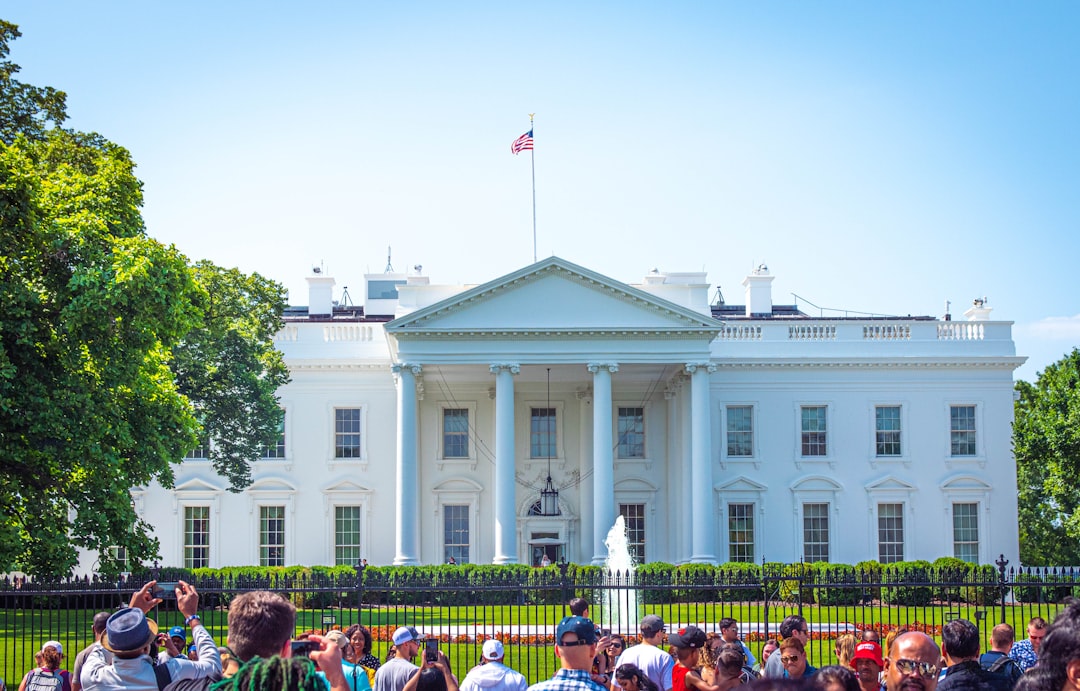
On the evening of July 16, 2026, the White House broadcast a prime-time address that sought to redefine the narrative of American electoral integrity, not through new evidence of fraud, but through a curated presentation of systemic vulnerabilities that experts argue have been overstated to serve a political agenda. President Donald Trump, now in his second term, utilized a speech designed to frame the 2028 election cycle as an existential battleground, asserting that the United States election infrastructure falls “catastrophically short” of protecting the democratic will.
The address, which drew heavily from documents recently published by the administration’s aides, did not present a coherent policy roadmap for reform. Instead, it wove together isolated incidents and technical glitches into a tapestry of alleged conspiracy. By selectively interpreting declassified materials, the President insinuated that the entire electoral apparatus is compromised, a claim that stands in stark contrast to assessments from the Cybersecurity and Infrastructure Security Agency (CISA) and bipartisan electoral officials who have consistently affirmed the security of the 2020 and 2024 voting records. The speech was less a call to action for modernization and more a foundational myth-making exercise, designed to precondition the electorate to doubt the outcome of the next presidential contest before a single vote is cast.
Why this matters extends far beyond the immediate rhetoric of a single Tuesday night broadcast. The core danger lies in the decoupling of public perception from institutional reality. When the Commander-in-Chief, who holds the ultimate authority to direct federal resources and shape national policy, repeatedly characterizes the election system as broken without providing verifiable, systemic proof, he creates a self-fulfilling prophecy of distrust. This is not merely political posturing; it is an active erosion of the social contract required for a democracy to function. If a significant portion of the electorate believes the game is rigged, the legitimacy of the winner—regardless of the actual vote count—becomes contingent on political loyalty rather than electoral mathematics.
The specific mechanism employed in this speech—the use of “declassified documents” to validate pre-existing conspiracy theories—represents a sophisticated evolution of disinformation tactics. By anchoring these claims in government records, however selectively interpreted, the administration provides a veneer of official sanction to what are essentially unproven allegations. This tactic bypasses the need for independent verification, forcing opponents and the media into a defensive posture of debunking rather than debating policy. It shifts the burden of proof onto the institutions tasked with securing the vote, demanding they prove a negative: that nothing went wrong, rather than requiring the accuser to demonstrate that something did.
The implications for the 2028 election cycle are profound. We are witnessing the institutionalization of doubt. If the narrative of “catastrophic failure” takes hold, the losing candidate in 2028 will have a ready-made, presidentially endorsed script to challenge the results. This sets the stage for prolonged constitutional crises, potential legal gridlock, and civil unrest. The speech effectively pre-emptively delegitimizes the 2028 outcome, creating a scenario where the only acceptable result for the President’s base is a victory that confirms their worldview, while any other outcome is dismissed as evidence of the very corruption the President claimed to expose.
Historically, this approach echoes the tactics of the late 19th century’s “Red Scare” periods and the early 20th-century debates over the integrity of the voting machine, but with a critical difference: the scale and speed of modern media amplification. In the past, claims of electoral corruption were often localized or contained within specific political machines. Today, a prime-time address from the Oval Office reaches millions instantly, bypassing traditional gatekeepers. The 1876 election, which resulted in the Compromise of 1877 and the end of Reconstruction, serves as a grim parallel; it was a crisis of legitimacy that required a political backroom deal to resolve because the public and the institutions could not agree on the validity of the count. We are currently constructing the conditions for a similar crisis, but with a more polarized electorate and a more volatile information ecosystem.
Furthermore, the legal and policy frameworks surrounding election security are being weaponized. The President’s rhetoric likely signals an upcoming push for federal preemption of state election administration, a move that would face immediate legal challenges under the 10th Amendment. By claiming the states are incompetent or complicit in a “catastrophic” failure, the administration seeks to justify a centralized federal takeover of election protocols. This would fundamentally alter the federalist structure of American elections, where state and local officials have historically managed the voting process. The tension between the President’s narrative and the reality of state-level administration is where the next major legal battles will be fought.
Looking ahead, the critical variables to watch are not just the President’s next statements, but the reaction of the bureaucratic state and the judiciary. How will CISA and the Department of Justice respond to these public accusations? Will they issue formal rebuttals, or will they remain silent to avoid appearing partisan? Additionally, the courts will be the ultimate arbiter if these claims are used to challenge future election results. The Supreme Court’s stance on the scope of federal authority over state elections will be the defining factor in whether this rhetoric translates into actual policy change or remains political theater.
The administration’s strategy also relies on the public’s inability to distinguish between technical vulnerabilities and systemic fraud. Every system has weaknesses; the question is whether those weaknesses rise to the level of “catastrophic” compromise. The President’s speech blurred this line intentionally. By failing to distinguish between a glitch in a specific county’s tabulation software and a coordinated national conspiracy, the speech制造s a false equivalence that inflates minor issues into existential threats. This lack of nuance is a feature, not a bug, of the strategy, as it fuels outrage and drives engagement at the cost of informed discourse.
Ultimately, the July 16 address was a watershed moment in the normalization of election denialism at the highest level of government. It moves the goalposts from requesting security audits to assuming the system is broken. This shift changes the entire landscape of American politics, turning the election process into a contest of narrative control rather than a measurement of public preference. The path forward is fraught with risk, as the trust required to accept an election result is being systematically dismantled by the very person sworn to uphold the Constitution.
Key Takeaway
The most significant outcome of President Trump’s July 16 speech is not the specific claims made about election vulnerabilities, but the strategic normalization of a “pre-emptive illegitimacy” narrative that threatens to render the 2028 election results politically unrecognizable to a large segment of the American public, regardless of the actual vote count.