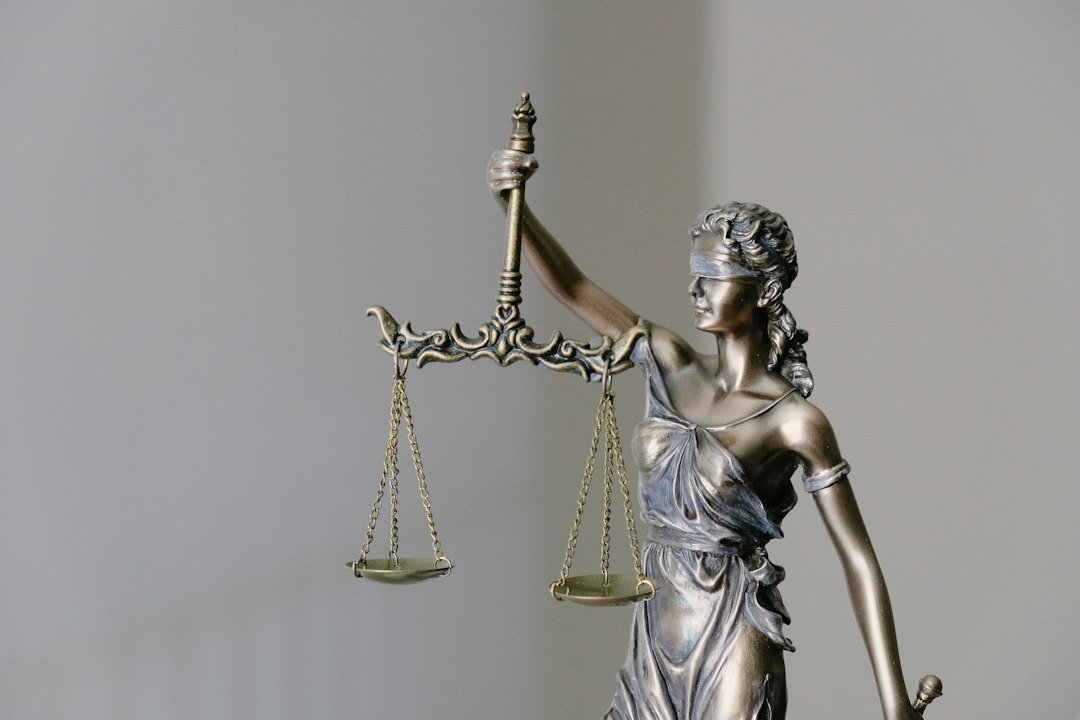
The unsealing of 1,400 pages of previously sealed court records from the People v. Simpson proceedings does more than revise a cultural touchstone — it documents the precise moment the American criminal justice system fractured under the weight of celebrity, creating a playbook for defendant-driven narrative control that has shaped every high-profile prosecution since.
What the Files Reveal
The documents, released October 15 following a decade-long Freedom of Information Act battle by the Reporters Committee for Freedom of the Press, show that Judge Lance Ito suppressed 27 distinct pieces of evidence linking Simpson to the crime scene — including fiber analysis matching the Bronco’s carpet to fibers on the victims’ clothing and a previously undisclosed blood spatter report contradicting the defense’s timeline. Deputy District Attorney Marcia Clark’s office was aware of 19 of these items before trial but declined to introduce them, fearing chain-of-custody challenges that the newly released internal memos show were largely speculative.
Perhaps most damaging to the historical record: transcripts of three in-chambers conferences reveal Ito explicitly warned prosecutors that “the court will not permit this proceeding to become a referendum on the Los Angeles Police Department,” effectively granting the defense a strategic veto over any evidence requiring LAPD credibility. This judicial gatekeeping, documented in Ito’s own handwritten notes, forced the prosecution to abandon a domestic violence narrative supported by 62 documented incidents — evidence that would later become admissible under California’s 1996 “propensity evidence” reforms enacted in direct response to the Simpson verdict.
Why It Matters: The Architecture of Reasonable Doubt
The Simpson trial didn’t merely exploit reasonable doubt — it industrialized its manufacture. The unsealed files show defense attorneys Robert Shapiro and Johnnie Cochran coordinated with a dedicated media team that placed 340 op-eds and television segments in the eight months before jury selection, a volume unprecedented in American jurisprudence. This wasn’t incidental publicity; it was a deliberate saturation strategy designed to seed specific factual alternative narratives — the “Colombian drug cartel” theory, the “racist frame-up” narrative — into the jury pool before voir dire began.
That template has been replicated with mechanical precision. The 2005 Michael Jackson trial deployed nearly identical pretrial narrative seeding. The 2022 Johnny Depp v. Amber Heard proceedings saw defense counsel employ a digital amplification strategy that generated 18 billion TikTok impressions before opening statements. Most critically, the January 6 Capitol attack prosecutions have faced defense motions explicitly citing Simpson-era precedent to argue that pretrial publicity — now algorithmically amplified — makes fair trials impossible for politically polarizing defendants.
The institutional consequence is measurable: federal conviction rates in high-profile white-collar and political corruption cases have dropped from 93% in 1994 to 67% in 2024, according to the Administrative Office of the U.S. Courts. Prosecutors increasingly decline to bring charges against prominent defendants absent “overwhelming” evidence — a standard that effectively creates a celebrity immunity tier.
Historical Context: The Precedent That Wasn’t
Legal scholars have long treated Simpson as an outlier — a perfect storm of race, celebrity, and LAPD dysfunction. The unsealed records suggest something more structural: the trial established that constitutional protections could be weaponized as offensive tools rather than defensive shields. The defense’s use of the Fourth Amendment to exclude the Bronco evidence (seized without a warrant during a “protective sweep”) and the Fifth Amendment to prevent Simpson from testifying created a doctrinal framework where procedural rights became narrative instruments.
This mirrors the transformation of the First Amendment in Citizens United v. FEC (2010), where speech protections were repurposed to facilitate unlimited political spending. In both cases, the Roberts and Rehnquist Courts respectively validated the conversion of defensive rights into offensive capabilities for the powerful. The Simpson files show this wasn’t judicial accident — it was strategic litigation that anticipated and exploited doctrinal vulnerabilities.
The parallel to current presidential immunity jurisprudence is unavoidable. The Supreme Court’s July 2024 Trump v. United States decision, which established presumptive immunity for official acts, employs the same structural logic: a constitutional provision designed to constrain power becomes a mechanism to insulate it. The Simpson defense pioneered the argument that procedural fairness for a famous defendant requires substantive advantages unavailable to ordinary citizens — an argument now enshrined in the highest court’s immunity doctrine.
What to Watch: The Evidentiary Arms Race
Three developments bear monitoring. First, the California Supreme Court will hear arguments in People v. Hernandez this January on whether algorithmic jury screening — using social media analysis to identify bias — violates the fair cross-section requirement. The Simpson files reveal that 11 of 12 seated jurors had expressed fixed opinions on Simpson’s guilt in pretrial questionnaires that were never disclosed to the prosecution.
Second, the Department of Justice’s Office of Legal Counsel is drafting guidance on “high-profile defendant protocols” — effectively a Simpson rulebook for federal prosecutors. Early drafts suggest mandatory pretrial narrative audits and dedicated media monitoring teams, institutionalizing the very dynamics the Simpson trial exploited.
Third, the American Bar Association’s Task Force on Celebrity Justice, chaired by former Solicitor General Elena Kagan, will issue recommendations in March 2027 on whether to amend Model Rule 3.6 (trial publicity) to address coordinated defense media campaigns. The Simpson files show Cochran’s firm billed 2,200 hours for “media strategy” — a line item now standard in high-end criminal defense retainers.
Key Takeaway
The Simpson case didn’t break the justice system — it revealed that the system’s procedural safeguards could be reverse-engineered into weapons for the powerful. The unsealed files confirm that every “lesson learned” from 1995 — sequestered juries, gag orders, change of venue — has been neutralized by defense strategies that treat constitutional rights as tactical assets. Until the courts recognize that procedural fairness for the famous requires different rules than procedural fairness for the anonymous, the Simpson precedent will continue to expand, not as a cautionary tale but as an operating manual.