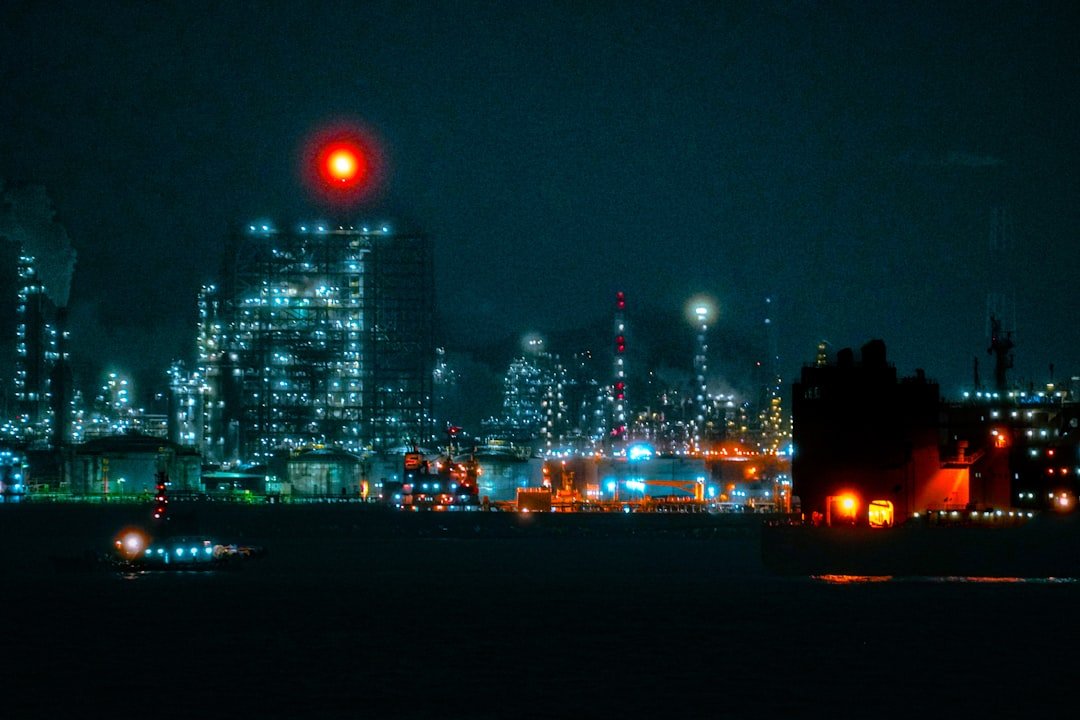
The latest U.S. sanctions on Iranian oil smuggling networks should not be read as another routine expansion of the Specially Designated Nationals list. They are the operational expression of “Economic Fury,” Washington’s attempt to turn financial coercion into a strategic instrument against Tehran’s state, military economy and regional networks. On July 14, the Treasury Department targeted a shipping network associated with Mohammad Hossein Shamkhani, an Iranian oil magnate whose business empire Washington says has moved sanctioned petroleum through a web of vessels, managers and front companies. The action brought the number of individuals, entities and vessels sanctioned within his network to more than 200.
reuters
The larger significance is that the United States is no longer concentrating only on Iranian producers or formal state institutions. It is pursuing the commercial infrastructure that makes sanctions survivable: ship managers, commodity brokers, technical-service companies, insurers, corporate nominees and vessels that can be renamed, reflagged or transferred between shell companies. This is a campaign against the architecture of evasion rather than merely against the cargo.
Sanctions as infrastructure warfare
Oil sanctions work imperfectly because petroleum is fungible, global and difficult to trace once it enters a complex maritime supply chain. Iran’s shadow fleet exploits those characteristics through ship-to-ship transfers, opaque ownership structures, false cargo descriptions, manipulated vessel identities and jurisdictions willing to host lightly scrutinized companies. The Treasury’s April action against the Shamkhani network described a system of UAE-based shipping and consulting firms, an Indian subsidiary, procurement vehicles and managers that collectively gave a sanctions-exposed operation the appearance of an ordinary international logistics business.
treasury
That detail matters. The power of the American financial system does not rest solely on Washington’s ability to freeze an Iranian bank account. It rests on the compliance decisions of thousands of banks, insurers, traders, ports and service providers that fear losing access to the dollar system. A designation therefore imposes a legal prohibition on U.S. persons, but its practical effect can be much wider: a vessel may become difficult to insure, finance, charter, repair or unload even when the transaction itself never touches the United States.
Washington is also widening the definition of the revenue stream it seeks to disrupt. In June, the Treasury targeted a network accused of disguising Iranian-origin liquefied petroleum gas as Omani product, while separately sanctioning an exchange house that allegedly moved hundreds of millions of dollars for sanctioned Iranian banks. The message is institutional as much as economic: generating money, disguising its origin and repatriating it are now treated as parts of one sanctions-evasion chain.
treasury
The power politics behind the crackdown
“Economic Fury” is designed to alter the political calculus inside Iran, but it also exposes the limits of coercion. Treasury says it has sanctioned more than 1,000 persons, vessels and aircraft since the maximum-pressure campaign began under National Security Presidential Memorandum 2. Such numbers demonstrate bureaucratic reach, yet they do not by themselves establish strategic success. A sanctions campaign can become extraordinarily active while the target continues exporting enough oil to fund the state, the security apparatus and the networks that protect the trade.
treasury
The Shamkhani case is particularly revealing because it links elite privilege to sanctions evasion. By naming a commercial empire tied to a family connected with Iran’s senior security establishment, Washington is presenting the oil trade not simply as a national revenue operation but as a system through which regime insiders accumulate wealth. That framing serves two purposes: it seeks to raise the cost of corruption for Iranian elites, and it gives the campaign a public argument that sanctions are aimed at the rulers’ access to money rather than at ordinary Iranians.
But the same strategy carries a danger. Broad financial pressure can weaken the state without producing political concessions, while worsening inflation, currency depreciation and shortages for the population. Tehran’s response is likely to be adaptation rather than capitulation: new registries, replacement managers, alternative payment channels, deeper reliance on Asian buyers and greater use of intermediaries willing to accept legal and reputational risk. Sanctions may reduce the value Iran receives per barrel without eliminating the barrel itself.
The campaign also tests the relationship between executive power and institutional accountability in Washington. OFAC can act rapidly under existing executive orders, while the State Department, Homeland Security Investigations and intelligence agencies provide the designations with diplomatic and investigative force. Yet a policy built around successive administrative listings is vulnerable to questions about evidence, proportionality, licensing and delisting. Treasury itself acknowledges that the credibility of sanctions depends not only on adding names to the list but also on the possibility of removing them under lawful procedures.
treasury
What it means for markets
For American readers, the immediate issue is not whether a particular tanker can be identified on a government spreadsheet. It is whether the campaign raises the risk premium embedded in energy, shipping and trade. Iranian oil will probably continue reaching buyers, but every additional designation raises the cost of concealment: longer voyages, older vessels, more expensive insurance, indirect payments and larger discounts demanded by refineries willing to handle questionable cargo.
That pressure can produce contradictory effects. If enforcement materially reduces Iranian exports, global crude prices may rise, particularly during a period of heightened tension around Middle Eastern shipping routes. If traders instead conclude that Iran’s exports will continue through a more expensive shadow system, the effect may be a widening gap between benchmark prices and the heavily discounted price received by Tehran. In that scenario, sanctions function less as an on-off switch than as a tax on Iran’s access to global commerce.
The international consequences are equally important. The targeted networks span Iran, the UAE, India, China and other maritime jurisdictions, meaning Washington is effectively exporting its compliance expectations through the world’s commercial arteries. That can deter evasion, but it can also generate friction with governments that view secondary sanctions as an assertion of extraterritorial American power. The more aggressively the United States reaches foreign firms with no obvious American connection, the more other states will have an incentive to build payment, insurance and shipping systems outside U.S.-dominated channels.
The central question, then, is not whether Economic Fury can impose pain. It plainly can. The question is whether pain can be converted into leverage before sanctions fatigue, market adaptation and diplomatic resistance dilute the campaign. The new measures show a United States increasingly capable of mapping and disrupting the hidden mechanics of Iran’s oil trade. They do not yet show that Washington has solved the harder problem: turning financial dominance into a durable political outcome.