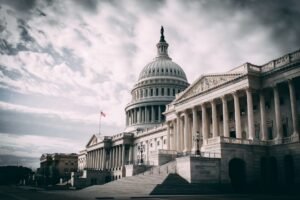
Chinese President Xi Jinping will travel to the United States for a state visit from September 23 to 25, 2026, at the invitation of President Donald Trump, according to a statement released by China’s Foreign Ministry on Monday. The visit, confirmed by Reuters and echoed in international outlets, will be Xi’s first state visit to Washington since his 2015 trip under President Barack Obama and his first face‑to‑face meeting with Trump since the latter returned to office in January 2025. The agenda is expected to include talks at the White House, a working dinner at Camp David, and possibly a visit to a major American tech hub, reflecting the broad scope of issues on the table.
The trip comes amid a fragile but persistent U.S.-China relationship defined by record trade volumes, competing technological ambitions, and heightened security tensions. In 2025, bilateral trade reached approximately $690 billion, with the United States running a $350 billion deficit in goods, while Chinese investment in U.S. semiconductor and AI firms continued to face heightened scrutiny under the Committee on Foreign Investment in the United States (CFIUS). Both sides have also maintained competing narratives over Taiwan, the South China Sea, and global governance institutions, making this summit a critical test of whether managed competition can avoid slipping into confrontation.
Why It Matters
First, the visit offers a concrete opportunity to resuscitate formal dialogue channels that have lain dormant since the suspension of the U.S.-China Strategic and Economic Dialogue (S&ED) in 2023. Reviving such mechanisms—perhaps under a new banner like the U.S.-China High-Level Economic and Security Dialogue—could provide a structured venue for managing disagreements over market access, intellectual property rights, and export controls. Without regular high‑level engagement, miscalculations rise, especially as both nations advance competing standards in 5G, artificial intelligence, and quantum computing.
Second, the summit will serve as a bellwether for the Trump administration’s approach to China, which has blended tariff pressure with selective engagement. During his first term, Trump imposed sweeping tariffs on $370 billion of Chinese goods while simultaneously negotiating the Phase One trade deal. In his second term, early signals suggest a continuation of reciprocal tariffs on sectors deemed critical to national security, coupled with incentives for American firms to reshore supply chains. Xi’s visit may reveal whether Beijing is willing to make concessions—such as increased market access for U.S. financial services or commitments to curb fentanyl precursor exports—in exchange for relief on specific tariff lines.
Third, the personal dynamics between Trump and Xi cannot be overlooked. Their 2017 Mar-a-Lago summit set a tone of informal diplomacy that yielded short‑term de‑escalation on North Korea but left structural issues unresolved. A second personal meeting, now under the weight of a renewed great‑power rivalry, will test whether personal rapport can translate into concrete policy shifts. Observers will watch for body language, joint statements, and any side agreements that hint at a new modus vivendi, even as both leaders contend with domestic pressures—Trump facing a midterm election cycle and Xi navigating a slowing economy and internal party debates over reform.
Historical Context
The last state visit by a Chinese president to the United States occurred in September 2015, when Xi Jinping hosted President Obama at the White House and announced a series of climate and cybersecurity agreements. That visit preceded the establishment of the U.S.-China Climate Change Working Group and a landmark accord on limiting greenhouse gas emissions. By contrast, the 2017 Xi‑Trump summit at Mar-a-Lago, while cordial, produced few substantive outcomes beyond a vague pledge to increase American exports to China and a joint statement on North Korea denuclearization.
Institutional memory also matters. The U.S.-China Joint Commission on Commerce and Trade (JCCT), which met annually from 1983 to 2016, was allowed to lapse after 2017, leaving a gap in routine trade troubleshooting. Reviving a similar framework—perhaps modeled on the U.S.-EU Trade and Technology Council—could provide a predictable venue for resolving disputes over subsidies, market access, and technology transfer. The 2026 visit could thus be seen as an attempt to rebuild the architecture of engagement that eroded during the first Trump administration and the early Biden years.
What to Watch
Deliverables from the summit will be closely parsed for concrete commitments. Key areas include: (1) a potential agreement to resume reciprocal market access for U.S. cloud and AI services in China, paired with Chinese commitments to limit forced technology transfer; (2) a joint statement on preventing the illicit flow of fentanyl precursors, a issue that has become a bipartisan priority in Congress; and (3) a framework for crisis communication regarding Taiwan, possibly involving the establishment of a direct hotline between the National Security Council and China’s State Council Office of Taiwan Affairs.
Beyond the official communiqué, back‑channel signals will be telling. Observers should note whether senior Chinese officials—such as Vice Premier He Lifeng or State Councilor Wang Yi—are granted expanded access to U.S. policymakers, and whether American business leaders are invited to private roundtables that could seed future commercial deals. Any indication of a follow‑up working group meeting scheduled for early 2027 would suggest that both sides view the summit as a starting point rather than a one‑off photo opportunity.
Key Takeaway
Xi’s 2026 state visit is less a ceremonial courtesy and more a strategic inflection point: it offers the first high‑level test of whether the Trump administration’s blend of pressure and pragmatism can produce a sustainable framework for managing U.S.-China rivalry, potentially setting the tone for the next phase of great‑power competition.