Executive Summary
The public display of Supreme Leader Ali Khamenei’s flag-draped casket in Tehran signifies the commencement of a volatile week of state funerals, occurring precisely as diplomatic channels with the United States remain frozen. Iranian military commanders have explicitly declared that the death of the Supreme Leader, killed in February 2026 strikes, mandates a shift from negotiation to vengeance, fundamentally altering the calculus for President Donald Trump’s administration.
Context: The Funeral as a Political Weapon
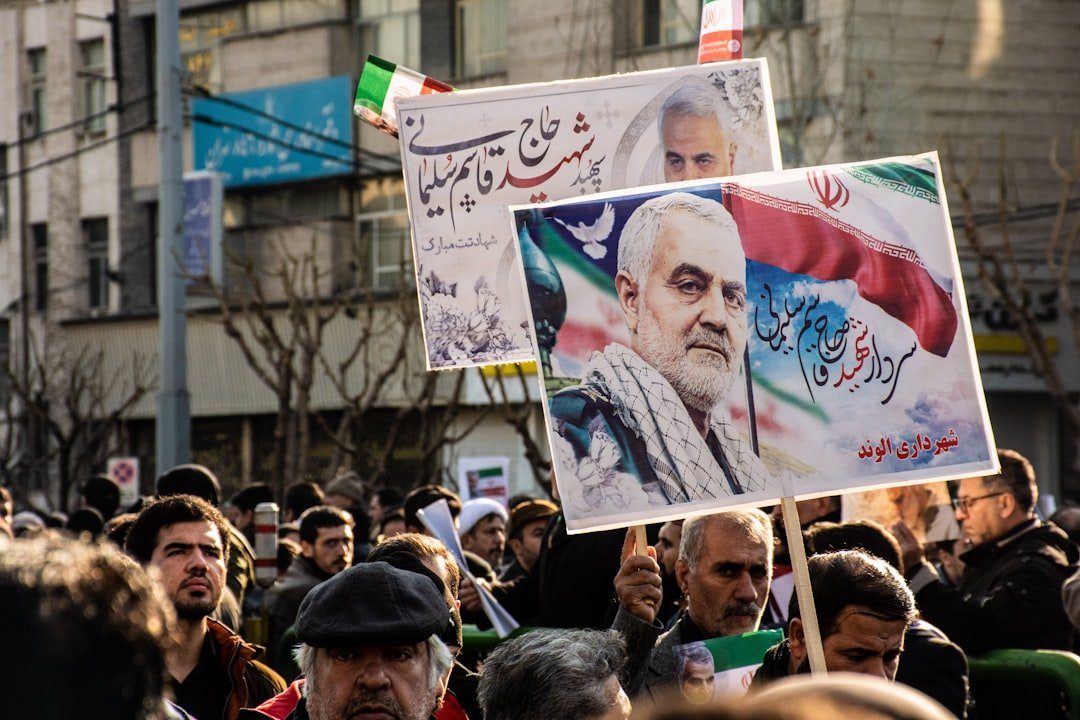
On Friday, July 3, 2026, the Iranian state initiated a multi-day spectacle of mourning following the assassination of Ayatollah Ali Khamenei, whose 37-year reign was abruptly terminated by the first airstrike of the current war. According to reports from US News and France24, the coffin was placed at the Grand Mosalla in Tehran, drawing millions of expected attendees and high-ranking officials, including President Masoud Pezeshkian and top negotiator Mohammad Bagher Ghalibaf. The visual symbolism was potent: state television broadcasted Pezeshkian praying at the remains, where a black turban was placed to signify the deceased’s lineage as a descendant of the Prophet Mohammed. This public ritual serves not merely as a farewell but as a mobilization tool, aiming to unify the populace behind a narrative of martyrdom and external aggression.
The timing of these events is critical, occurring just three weeks before the escalation of the broader Iran war, yet now defining its immediate trajectory. The death of the supreme leader, who was targeted in February 28 Israeli strikes that also killed his wife, Zahra Haddad Adel, has created a power vacuum that is being managed through a blend of public grief and martial rhetoric. As noted in CBS News updates, the funeral is not a passive event; it is a strategic pause in peace talks, with the Iranian leadership using the occasion to reassert sovereignty and rally domestic support against the ‘criminal United States’ and the ‘treacherous, criminal Zionist regime.’ The funeral proceedings are scheduled to last a week, ensuring that the nation remains focused on the loss of its leader while the military prepares for the next phase of engagement.
Strategic Analysis: The Shift from Diplomacy to Retaliation
The most alarming development for Western policymakers is the explicit pivot in tone from Iran’s military establishment. Major General Amir Hatami, commander-in-chief of the Iranian army, has publicly vowed to ‘avenge the blood’ of the slain supreme leader. In a statement to state broadcaster IRIB, Hatami declared, ‘Without a doubt, this martyrdom has strengthened our resolve,’ and issued a direct threat to the United States and Israel. This rhetoric indicates that the internal succession process is being accelerated by external pressure, with the military likely seeking to consolidate power through a demonstration of force rather than a return to the negotiating table. The presence of the country’s top negotiator, Ghalibaf, at the funeral alongside the President suggests that the diplomatic apparatus is currently subordinate to the military’s demand for retribution.
Furthermore, the succession dynamics remain opaque and potentially destabilizing. Reports indicate that the new Supreme Leader, Ayatollah Mojtaba Khamenei, remains in hiding following the February 28 strikes that killed his father and mother. He is believed to be in contact with a small, trusted group, but his public silence contrasts sharply with the aggressive posturing of the military command. This duality creates a complex command structure where the nominal head of state is obscured, while the military leadership asserts absolute agency in the conduct of the war. The funeral thus serves as a cover for the consolidation of power by the hardline military faction, potentially sidelining moderate elements like President Pezeshkian during this critical window of vulnerability.
Implications for Regional Stability and US Policy
For the Trump administration, which took office in January 2025, this event represents a severe disruption to any potential de-escalation strategy. The suspension of peace talks, directly linked to the funeral and the vow of revenge, suggests that the diplomatic window between Washington and Tehran has closed for the foreseeable future. The ‘week of mass funeral events’ provides a timeline for Iran to coordinate a coordinated response, likely involving proxy forces across the region or direct attacks on US and Israeli assets. The narrative of ‘martyrdom’ is being weaponized to justify an expansion of the conflict, making any immediate ceasefire or negotiation impossible without a significant shift in the military’s stance.
The broader geopolitical implication is a hardening of the Middle East’s conflict lines. The death of a long-reigning leader in the midst of a war creates a ‘rally around the flag’ effect that is difficult for external actors to counter. With the new leader in hiding and the military openly declaring war, the region faces an extended period of instability. The funeral in Tehran is not an end to the conflict but a catalyst for its intensification, as Iran seeks to demonstrate that the assassination of its supreme leader has only unified its resolve against foreign intervention.
Bottom Line
The public funeral of Ayatollah Ali Khamenei has served as the definitive trigger for a strategic pivot in Iran, transforming a potential diplomatic pause into a mandated campaign of vengeance that suspends all peace efforts and escalates the risk of direct conflict with the United States and Israel.