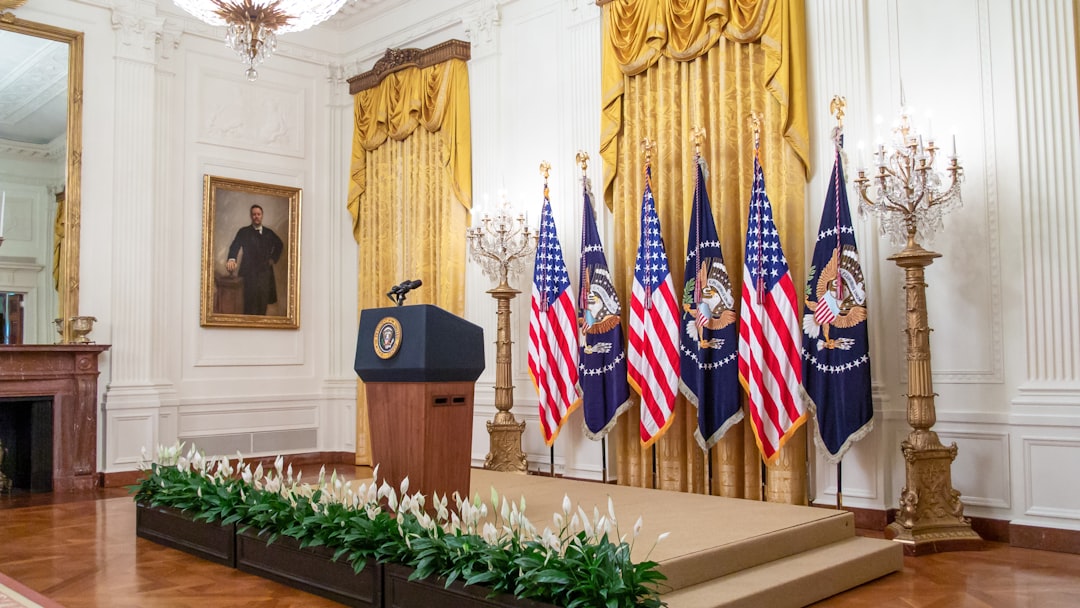
President Donald Trump’s return to the White House Correspondents’ Association dinner on Friday night was billed as a resilience ritual — “the show must go on” — three months after a gunman’s bullets shattered the April gathering. But the subtext was far more consequential: a sitting president used the premier institution of press-state détente to declare the adversarial relationship not just sustainable, but profitable for both sides, while floating a fourth-term trial balloon that the room greeted with the nervous laughter of accomplices.
What Happened
The rescheduled dinner at the Waldorf Astoria on July 25, 2026, carried the weight of interrupted history. The original April 26 event ended minutes after it began when a shooter opened fire outside the venue, killing one Secret Service agent and wounding two others before being neutralized. Friday’s restart was meant to signal institutional continuity. Instead, Trump converted the podium into a campaign stage. He donned a red “Trump 2028” hat — a direct reference to the 22nd Amendment’s two-term limit — and declared, “I’m pleased to announce my intention to, and this is a somewhat of a scoop, my intention to run for a fourth term as president of the United States.” The line was framed as a joke. The hat was not.
The president’s remarks traced a familiar arc: media obituaries (“When I’m not around, you’re going to be broke”), personal grievances (criticizing CNN’s Kaitlan Collins’ award for her coverage of the 2025 Oval Office meeting with Ukrainian President Volodymyr Zelenskyy), and retribution signaling (noting the Wall Street Journal’s Katharine Graham Award for its Epstein-Trump coverage while revealing he had refiled a $10 billion defamation suit against the paper’s publisher in May). The Journal’s reporters shook Trump’s hand on stage. The transaction was complete.
Why It Matters
The WHCA dinner has historically functioned as a ritualized truce — one night where the presidency and the press corps perform a shared commitment to the First Amendment, however strained the other 364 days may be. Trump’s 2017-2020 boycott broke that precedent. His 2025 return (the April event) was meant to reset it. Friday’s performance suggests a different calculation: the president no longer needs the dinner’s legitimacy; the dinner needs his ratings.
“When I’m not around, you’re going to be broke” was not a throwaway line. It articulated a symbiotic dependency that the commercial press model has created. Since 2015, cable news ratings, digital subscriptions, and newsletter growth have correlated directly with Trump-centric coverage cycles. The president knows this. The journalists in the room know this. The “Trump 2028” hat — merchandise sold by his campaign — converted the dinner into a product placement opportunity, with the press corps as unpaid distributors.
The constitutional dimension cannot be dismissed as mere performance. The 22th Amendment, ratified in 1951 after Franklin Roosevelt’s four terms, explicitly bars a third election. A fourth-term joke from a sitting president who attempted to overturn the 2020 election and faces no meaningful primary opposition in 2028 operates as an Overton window probe. Each repetition normalizes the previously unthinkable. The press’s laughter — nervous, complicit, recorded for broadcast — becomes the mechanism of normalization.
The Wall Street Journal episode reveals the transactional architecture. The paper won the evening’s most prestigious award for accountability journalism — specifically for reporting on Trump’s ties to Jeffrey Epstein. Trump’s response: shake the reporters’ hands publicly, then remind the room he is suing their publisher for $10 billion. The message to every newsroom executive: we can honor you tonight and bankrupt you tomorrow. The chilling effect on editorial independence requires no direct order; the incentive structure does the work.
Historical Context
No president has weaponized the WHCA dinner quite this way. Richard Nixon attended only once (1969) and skipped the rest, resenting the press corps. Ronald Reagan, recovering from the 1981 assassination attempt, phoned in his remarks — a gesture of vulnerability that humanized the office. Barack Obama used the dinner for comedic craft, including the 2011 roast of Trump that many credit with catalyzing his presidential run. Trump’s first-term boycott (2017-2020) was a rejection of the ritual itself. His return signals not reconciliation but capture.
The closest parallel may be the Gridiron Club dinners of the late 19th century, where politicians and journalists performed skits that papered over corruption with camaraderie. The WHCA was founded in 1914 precisely to create professional distance from that era. Friday’s dinner inverted a century of institutional purpose.
What to Watch
Three indicators will reveal whether Friday was anomaly or inflection point. First: the 2028 Republican primary. If no serious challenger emerges and Trump’s “joke” candidacy becomes a de facto announcement, the press corps’ July laughter will be cited as elite consent. Second: the WSJ defamation suit. A favorable ruling for Trump — or a settlement that chills future Epstein-adjacent reporting — would confirm the litigation-as-governance model. Third: WHCA leadership. The association’s board, which invited Trump back after the April shooting, faces a credibility test. Will they enforce boundaries in 2027, or has the dinner become a permanent Trump platform?
Watch also the White House Correspondents’ Association scholarship recipients — the student journalists honored Friday. Their presence underscored what’s at stake: a generation learning that the press-state relationship is a variety show, not a constitutional check.
Key Takeaway
The rescheduled WHCA dinner did not restore a norm; it revealed that the norm has been replaced by a transactional equilibrium where a president who threatens the press’s economic model and constitutional order is also its most reliable revenue engine — and the press, institutionally, has decided the show is too profitable to stop.