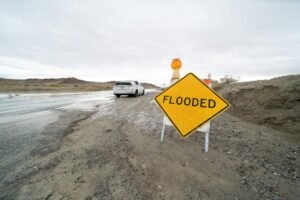
Ten days. That is how long tens of thousands of residents in northwestern Indiana have waited for electricity to return after a derecho tore through the region on August 11. In Gary — where 33 percent of the population lives below the federal poverty line and the median household income sits at roughly $32,000 — the outage has not been an inconvenience. It has been a survival crisis. At least seven people have died. Food has spoiled. Medical devices have gone dark. And the response from utilities and government agencies has followed a pattern that should alarm anyone tracking the intersection of climate adaptation and economic inequality in America.
What Happened
The August 11 derecho — a widespread, long-lived wind storm associated with a band of rapidly moving thunderstorms — carved a path of destruction across northwestern Indiana, toppling transmission towers, snapping distribution poles, and flooding substations. NIPSCO, the primary electric utility serving the region, reported peak outages exceeding 120,000 customers. As of August 21, more than 15,000 remained without power. The utility has deployed over 2,000 line workers, including mutual aid crews from as far as Canada, but the scale of damage to the transmission backbone — not just local distribution lines — has created a bottleneck that no amount of crew hours can immediately resolve.
Gary bore the brunt. The city’s aging infrastructure, much of it dating to the mid-20th century industrial peak, proved uniquely vulnerable. Flooding from the Little Calumet River compounded the wind damage, submerging equipment that had never been hardened for the kind of precipitation events climate models have predicted for decades. NIPSCO’s own 2023 Integrated Resource Plan acknowledged that “extreme weather events are increasing in frequency and severity” but projected major transmission hardening investments only through 2030. The derecho arrived four years early.
Why It Matters
The Gary outage is not an anomaly. It is a stress test that the American grid failed — and one that will be repeated with increasing frequency. The North American Electric Reliability Corporation’s 2024 Long-Term Reliability Assessment warned that the Midwest faces elevated reliability risk through 2028 due to generator retirements, load growth, and “increasingly extreme weather patterns.” But reliability risk is not distributed equally. A 2023 study by the University of Michigan’s Energy Institute found that census tracts in the bottom income quartile experience power outages 2.4 times longer on average than those in the top quartile, even controlling for storm severity. The mechanism is straightforward: utilities prioritize restoration based on customer density and critical infrastructure — hospitals, water treatment, dense commercial corridors. Low-density, high-poverty neighborhoods wait longest.
This dynamic played out visibly in Lake County. Neighboring Merrillville and Crown Point — whiter, wealthier, with newer underground distribution in key corridors — saw restoration rates significantly faster than Gary’s core neighborhoods. NIPSCO denies any disparate treatment, citing circuit-level damage assessments. But the perception of neglect is reinforced by a deeper structural reality: Indiana’s regulatory framework does not require utilities to meet equity-based restoration metrics. The Indiana Utility Regulatory Commission evaluates reliability through System Average Interruption Duration Index (SAIDI) and System Average Interruption Frequency Index (SAIFI) — aggregate metrics that mask neighborhood-level disparities. A utility can hit its regulatory targets while leaving entire communities in the dark for weeks.
The federal response has been similarly constrained. FEMA’s Individual Assistance program was activated for Lake County on August 18 — a full week after the storm — providing up to $42,500 per household for temporary housing and home repairs. But FEMA assistance does not cover food replacement, generator costs, or lost wages. The Small Business Administration’s disaster loan program offers low-interest loans, not grants, saddling already-strapped families with debt. And the Biden-era Infrastructure Investment and Jobs Act’s $65 billion for grid resilience — the largest such investment in history — allocates funds through competitive grants and formula distributions that favor states with dedicated grid resilience offices and matching funds. Indiana has neither a state resilience office nor a committed match.
Historical Context
The Gary blackout echoes a longer history of infrastructure abandonment in the industrial Midwest. When U.S. Steel’s Gary Works employed 30,000 workers in the 1970s, the city’s tax base supported robust municipal services and utility maintenance. The plant’s decline — employment now hovers around 4,000 — hollowed out the revenue needed to modernize the local grid. NIPSCO, a subsidiary of NiSource, operates under a rate-base regulation model that incentivizes capital expenditure on new generation and transmission, not maintenance of aging distribution in shrinking cities. The result is a grid built for a Gary that no longer exists, serving a population it was never designed to protect.
There is precedent for federal intervention. After Hurricane Katrina exposed the catastrophic failure of levee maintenance in low-income New Orleans neighborhoods, Congress passed the Post-Katrina Emergency Management Reform Act of 2006, mandating equity considerations in disaster planning. After Superstorm Sandy left Lower Manhattan’s public housing developments without power for weeks while Wall Street restarted in days, New York State established the Office of Storm Recovery and mandated utility hardening plans with environmental justice screens. Indiana has no such mandate. The Trump administration’s Federal Energy Regulatory Commission has signaled skepticism toward equity-based reliability standards, with Commissioner Mark Christie arguing in a 2025 dissent that “reliability is a technical metric, not a social policy tool.” That philosophy is now being tested in the dark streets of Gary.
What to Watch
Three developments will determine whether Gary’s experience catalyzes change or becomes another forgotten crisis. First, the Indiana Utility Regulatory Commission’s ongoing docket on “Distribution System Planning” — opened in March 2025 under pressure from consumer advocates — could establish the state’s first equity-weighted reliability metrics. A final order is expected by December 2026. Second, NIPSCO’s next rate case, likely filed in early 2027, will reveal whether the utility seeks recovery for derecho-related costs through broad-based rate increases or targeted resilience investments. Consumer advocates at the Indiana Office of Utility Consumer Counselor have already signaled they will oppose any rate hike that does not include binding commitments to harden Gary’s distribution network. Third, the 2026 midterm elections will test whether disaster response becomes a salient issue in Indiana’s 1st Congressional District — a seat that flipped from Democratic to Republican in 2024 by fewer than 3,000 votes. Representative Frank Mrvan’s successor, Republican Mark Leyva, has opposed federal grid resilience mandates as “overreach.” His constituents in Gary may disagree.
Key Takeaway
The ten-day blackout in Gary is not a story about a storm. It is a story about a grid built for a 20th-century economy, regulated by 20th-century metrics, and governed by a political system that treats energy reliability as a market outcome rather than a public good. Until reliability standards account for who loses power longest — and until federal resilience funding flows to the communities least able to advocate for it — every derecho, every hurricane, every wildfire will reproduce the same disparity. The lights will come back on in Gary. The question is whether the system that failed them will change before the next storm arrives.