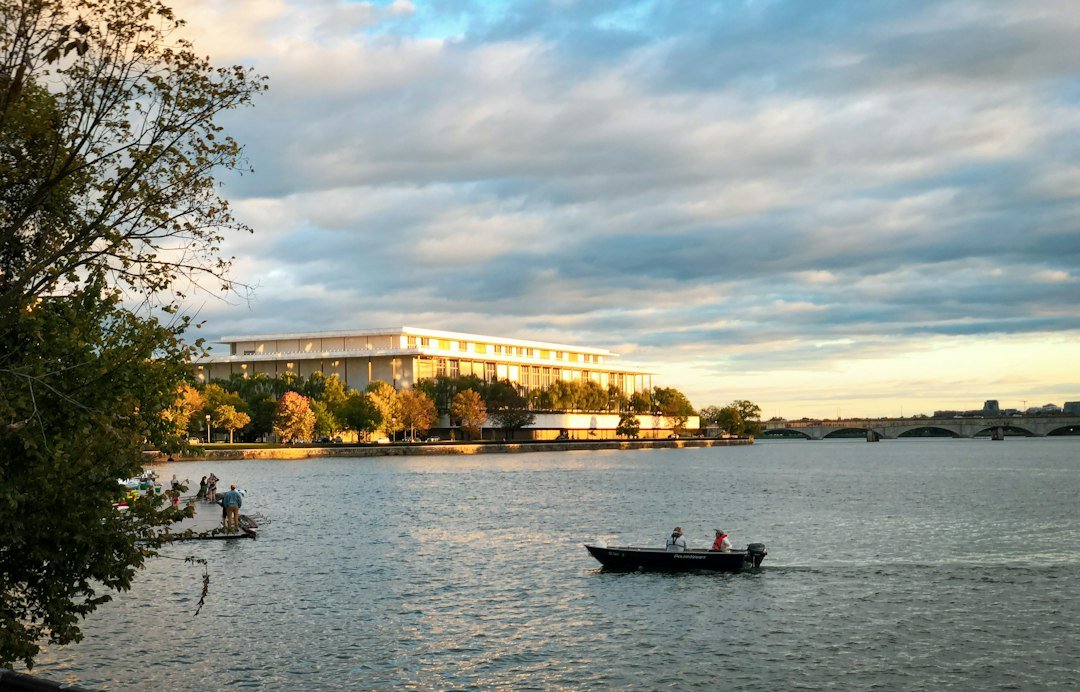
The Kennedy Center for the Performing Arts was designed to be the one cultural institution in Washington that belonged to no single administration — a living memorial to a slain president, governed by a board staggered across presidential terms precisely to prevent the kind of wholesale capture now documented in internal emails and memoranda obtained by The New York Times. What those documents reveal is not merely a leadership change but a deliberate dismantling of the statutory architecture that insulated the center from political cycles, replaced by a governance model that treats the nation’s cultural flagship as an extension of the West Wing press office.
What Happened
The takeover unfolded in three phases, each more aggressive than the last. Within weeks of his January 2025 inauguration, President Trump installed loyalists on the board of trustees through recess appointments and accelerated nominations, bypassing the traditional vetting process that had historically produced boards mixing major donors with artists, scholars, and bipartisan public servants. By March, the new board had voted to terminate President Deborah Rutter — appointed by President Obama and reappointed by President Biden — despite her contract running through 2028, replacing her with Ric Grenell, a former acting director of national intelligence with no arts administration experience. The third phase, documented in emails between the White House counsel’s office and the center’s general counsel, involved a systematic review of programming contracts, grant agreements, and honor selections with an explicit directive to “align artistic output with administration priorities.”
The financial mechanics are equally revealing. The center’s $45 million annual federal appropriation — roughly 20% of its operating budget — was leveraged as a compliance tool. Internal budget memoranda show the Office of Management and Budget attaching riders to the FY2026 continuing resolution that would zero out federal funding unless the center submitted its artistic calendar for White House review 90 days in advance. The center’s private endowment, built over five decades to $180 million, was subjected to a Treasury Department review of its investment policies, a move the center’s former chief financial officer described in a resignation letter as “unprecedented federal intrusion into a private nonprofit’s fiduciary decisions.”
Why It Matters
The Kennedy Center’s capture matters because it establishes a working model for converting congressionally chartered cultural institutions into instruments of executive preference. The center is not unique in its statutory structure — the National Gallery of Art, the Smithsonian Institution, the United States Holocaust Memorial Museum, and the National Endowment for the Arts all operate under similar public-private governance frameworks designed to balance federal accountability with artistic independence. If the Kennedy Center’s board staggering, fixed-term leadership, and programming autonomy can be overridden through a combination of recess appointments, budget riders, and regulatory pressure, the same playbook applies to every cultural entity that receives federal dollars.
The chilling effect is already measurable. The Times reports that three major touring companies — the Alvin Ailey American Dance Theater, the Public Theater’s Mobile Unit, and a planned retrospective of August Wilson’s Century Cycle — withdrew from 2026-27 Kennedy Center seasons after receiving informal guidance that their programming “may not align with current administrative priorities.” The center’s educational partnerships with D.C. public schools, which served 42,000 students annually, were suspended pending a “curriculum review” by the Department of Education. Major donors, including the David M. Rubenstein and the Morris and Gwendolyn Cafritz foundations, have paused seven-figure commitments pending clarity on governance. The center’s bond rating was placed on negative watch by Moody’s in August, citing “governance instability and political risk.”
Perhaps most consequential is the precedent for the Kennedy Center Honors, the institution’s most visible public franchise. The 2025 honorees were selected not by the center’s artistic advisory committee — a peer-review body of artists, critics, and scholars — but by a White House-appointed “cultural advisory council” that included no working artists. The honorees announced in July included a conservative media personality, a faith-based filmmaker, and a country music star whose primary qualification appeared to be public support for the administration. The ceremony itself was moved from its traditional December date to January 20, 2026 — Inauguration Day — and rebranded as the “American Cultural Achievement Awards.”
Historical Context
This is not the first time a president has attempted to shape the Kennedy Center. Richard Nixon, the center’s namesake’s political rival, attended its 1971 opening but refused to fund its operating costs, leaving a structural deficit that took decades to resolve. Ronald Reagan used the 1982 honors to celebrate artists aligned with his cultural agenda, prompting a boycott by several honorees. But both presidents operated within the existing governance framework — they appointed board members as terms expired, they lobbied privately, they accepted the institution’s statutory independence as a constraint. What distinguishes the current moment is the explicit rejection of that constraint. The 1958 National Cultural Center Act, amended in 1964 to rename the institution for Kennedy, states that the board “shall not be subject to the direction or control of any officer or employee of the federal government” — language drafted specifically to prevent the scenario now unfolding.
The closest historical parallel may be the 1930s transformation of the Federal Theatre Project, a New Deal program that employed 12,000 theater workers before Congress defunded it in 1939 after the House Un-American Activities Committee alleged communist infiltration. That episode established a lasting principle: when cultural institutions become explicitly partisan, they lose both public trust and congressional support. The Kennedy Center’s bipartisan credibility — it has hosted every president since Nixon, its honors have recognized artists across the ideological spectrum — was its primary asset. That asset has been liquidated for short-term political return.
What to Watch
Three developments will determine whether the Kennedy Center’s capture becomes permanent or provokes a corrective response. First, the D.C. Circuit Court of Appeals is scheduled to hear oral arguments in Kennedy Center Trustees v. Trump this November, a lawsuit filed by seven ousted board members arguing that their removal violated the Federal Vacancies Reform Act and the center’s enabling statute. A ruling against the administration could restore the pre-2025 board majority; a ruling upholding the removals would effectively nullify statutory independence provisions across the cultural sector.
Second, the FY2027 appropriations process will test whether Congress — specifically the Senate Appropriations Committee, where Ranking Member Patty Murray has signaled opposition to the administration’s riders — can reassert legislative control. The center’s authorization expires September 30, 2026, requiring reauthorization that could codify governance protections or, conversely, ratify the new model. Third, the private philanthropic response will indicate whether the center can survive as a going concern without federal funding. The center’s 2025 annual report, released quietly in June, showed a 34% decline in individual giving and a 60% drop in corporate sponsorships — the steepest declines in its history.
Key Takeaway
The Kennedy Center’s transformation represents the most successful test to date of a broader strategy: using the machinery of the administrative state to convert independent cultural institutions into instruments of executive will. The playbook — recess appointments, budget riders, regulatory pressure, rebranding — is portable, legally tested, and now proven effective. What happened at the Kennedy Center is not ultimately about one theater or one administration’s taste in art. It is about whether the statutory architecture Congress built over seven decades to protect cultural infrastructure from political cycles can survive a president willing to ignore it. The answer, so far, is that it cannot.