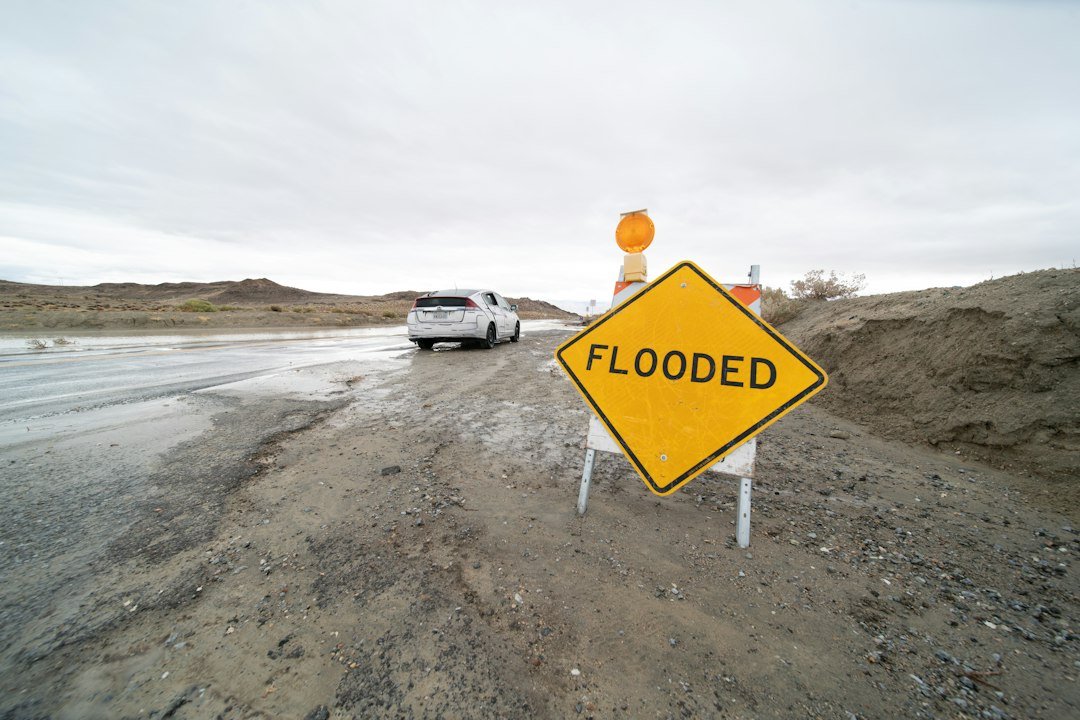
SACRAMENTO — When Governor Gavin Newsom signed a statewide emergency proclamation on September 21, 2026, he wasn’t responding to a disaster. He was getting ahead of one. The declaration — issued three months before the typical peak of California’s wet season — marks the first time a governor has invoked emergency powers based solely on a seasonal climate forecast rather than an active catastrophe. That distinction matters. It signals a profound evolution in how American states conceptualize climate risk: not as discrete events to be managed after landfall, but as predictable, modelable threats that demand pre-positioned resources and legal authority before the first drop falls.
What Happened
The emergency proclamation, signed under the California Emergency Services Act, activates the State Emergency Plan and authorizes the Office of Emergency Services (Cal OES) to coordinate across 58 counties, mobilize the California National Guard, and streamline procurement for flood mitigation, debris flow barriers, and snow removal equipment. The governor’s office cited a 75% probability that the current El Niño event will exceed the intensity of any recorded since 1950 — a threshold that would surpass the 1997-98 and 2015-16 events that caused $1.1 billion and $600 million in damages respectively. Already, a late-summer tropical remnant fueled by anomalously warm Pacific waters triggered flash flooding in San Bernardino County and coastal erosion in Santa Barbara, prompting seven local emergency declarations before the statewide order.
The proclamation also unlocks $85 million in pre-disaster mitigation funding from the state’s Disaster Resilience Reserve — a fund created by the 2023 Climate Resilience Bond (Proposition 4) that voters approved by a 59-41 margin. Crucially, the declaration positions California to request a pre-landfall federal emergency declaration from FEMA, a mechanism used sparingly since the Stafford Act amendments of 2018 allowed “anticipatory” declarations. If granted, it would release federal resources — including U.S. Army Corps of Engineers flood-fighting teams — before any presidential disaster declaration, which traditionally follows damage assessments.
Why It Matters
The strategic logic is clear: every dollar spent on pre-positioned sandbags, cleared drainage channels, and staged swift-water rescue teams saves an estimated $6 in post-disaster recovery costs, according to the National Institute of Building Sciences’ 2024 update. But the political calculus is equally significant. Newsom, widely viewed as a potential 2028 presidential contender, is betting that visible competence in climate governance outweighs the risk of crying wolf. A “bust” El Niño — one that delivers average rainfall — would invite accusations of performative governance and wasted taxpayer money. The 2015-16 “Godzilla El Niño” that largely bypassed Southern California still haunts institutional memory; then-Governor Jerry Brown’s drought emergency remained in effect while reservoirs failed to refill.
More structurally, the declaration tests the federal-state partnership under a Trump administration that has signaled skepticism toward climate adaptation spending. In March 2026, the White House Office of Management and Budget proposed a 22% cut to FEMA’s Building Resilient Infrastructure and Communities (BRIC) program — the primary federal vehicle for pre-disaster mitigation grants. Congress restored most funding in the FY2027 continuing resolution, but the tension remains. California’s request for a pre-landfall federal emergency will force the administration to either approve climate-driven anticipatory aid — implicitly validating the forecast science — or deny a populous, donor-state’s request weeks before a potential catastrophe. The precedent matters: Florida under Governor Ron DeSantis secured pre-landfall declarations for Hurricanes Ian (2022) and Idalia (2023), but those were based on 72-hour hurricane tracks, not three-month seasonal outlooks.
The emergency also exposes fractures in California’s own capacity. The state’s flood control system — a patchwork of 1,600 miles of levees, many maintained by chronically underfunded reclamation districts — earned a “D” grade from the American Society of Civil Engineers in 2025. The Central Valley’s flood bypasses, designed for 1950s hydrology, have not been expanded to handle the “atmospheric river + El Niño” compound events that climate models now project. Newsom’s proclamation directs the Department of Water Resources to accelerate the Flood-MAR (Managed Aquifer Recharge) program, but only 12 of 50 identified recharge sites are operational. The emergency powers allow eminent domain for temporary flood easements — a tool that will test rural landowner patience in the San Joaquin Valley.
Historical Context
California has declared statewide emergencies for winter storms before — most recently in January 2023, when a parade of atmospheric rivers killed 22 people and caused $4.6 billion in damage. But those were reactive: the emergency followed the forecast by days, not months. The only true precedent for anticipatory declaration at this scale is the 1983 “El Niño Watch” issued by Governor George Deukmejian, which activated the National Guard for sandbagging but lacked the statutory framework of today’s Emergency Services Act. The legal architecture has evolved: the 2019 amendment to Government Code § 8625 explicitly permits proclamations “based on conditions of extreme peril to the safety of persons and property” that are “imminent or probable,” not merely actual. Newsom’s order is the first test of that language against a seasonal climate forecast.
Nationally, the shift mirrors FEMA’s own evolution. Since the 2018 Disaster Recovery Reform Act, the agency has emphasized “pre-disaster” mitigation over post-disaster reimbursement. But the cultural inertia is immense: 93% of federal disaster dollars still flow after presidential declarations, not before. California’s move — if followed by a federal pre-landfall declaration — could normalize anticipatory governance across hurricane-prone Gulf states and wildfire-vulnerable Western states. The alternative — a federal denial — would force California to rely entirely on its $45 billion climate resilience budget, the largest subnational climate fund in the world, but one that cannot access federal logistics capabilities like the Defense Logistics Agency’s commodity distribution network.
What to Watch
Three metrics will define the next 90 days. First, the Oceanic Niño Index (ONI) for November-January: if it exceeds +2.0°C (the 1997-98 peak was +2.4°C), the forecast verifies and Newsom’s gamble pays policy dividends. Second, the FEMA Region IX response timeline: a pre-landfall emergency request typically gets a 72-hour turnaround; any delay past October 15 suggests political friction. Third, the legislative reaction in Sacramento: the Assembly Budget Committee has scheduled an October 3 oversight hearing on Cal OES procurement speed. If the emergency powers accelerate contracting from the current 140-day average to under 30 days, the administration gains a template for future climate emergencies — wildfire, heat, drought — that don’t carry El Niño’s forecast lead time.
Watch also the insurance market. The California Department of Insurance reported in August that 12% of homeowners policies in high-flood-risk ZIP codes were non-renewed in 2025, pushing residents into the FAIR Plan, the state’s insurer of last resort. A major flood event could trigger the FAIR Plan’s reinsurance exhaustion clause, requiring a legislative bailout. Newsom’s emergency includes a directive to Insurance Commissioner Ricardo Lara to expedite rate filings for parametric flood products — a market innovation that pays out based on rainfall thresholds rather than damage assessments. If successful, it could become a national model for climate-risk insurance.
Key Takeaway
California’s preemptive emergency declaration represents the leading edge of a governance transformation: the migration of climate risk from “act of God” to “manageable variable” through the fusion of seasonal forecasting, emergency law, and capital markets. Whether this El Niño delivers catastrophe or merely a wet winter, the precedent is now set — a governor can, and did, treat a probability distribution as a legal fact. The next test isn’t meteorological. It’s whether the federal system, designed for discrete disasters, can adapt to a era of predictable, compounding, forecastable climate emergencies — or whether states will increasingly go it alone, armed with their own resilience bonds, their own insurance pools, and their own emergency powers, effectively federalizing climate adaptation by default.