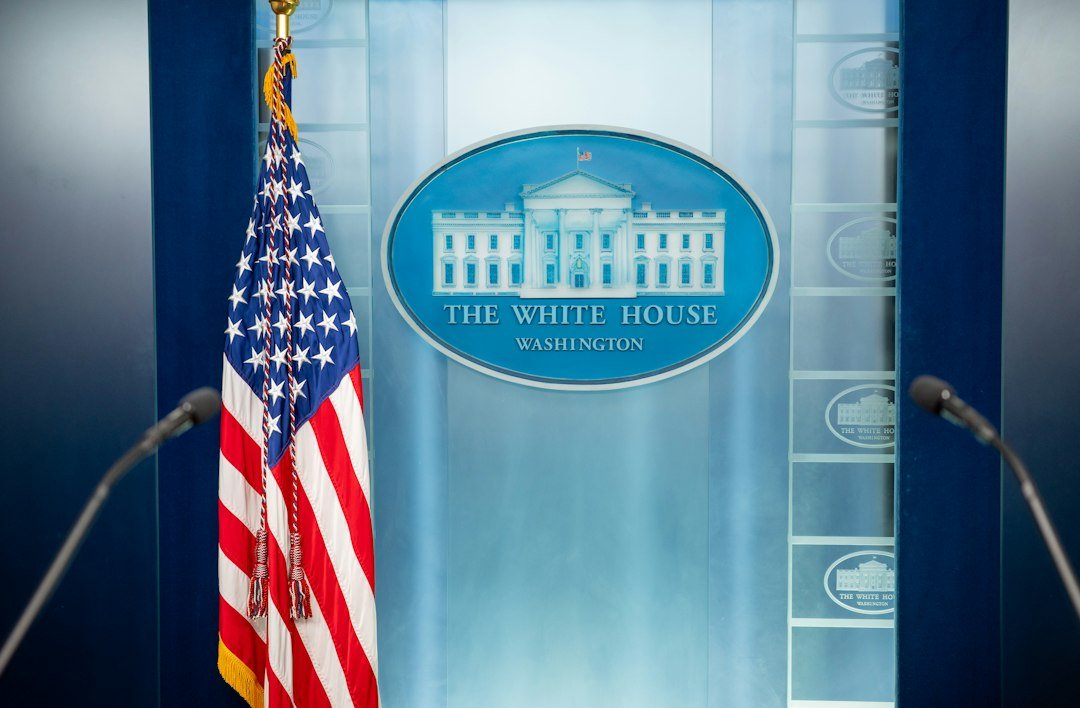
The White House did not simply launch a streaming channel on Monday evening. It inaugurated a parallel information architecture designed to render the traditional press corps functionally obsolete. When TRUMP TV: The Essentials Station went live on YouTube at 7 p.m. Eastern, it did so three days after the administration revoked hard passes for correspondents from CNN, Politico, and MSNBC — the most aggressive restriction on White House access since the Nixon administration compiled its enemies list.
What Happened
The sequence is deliberate. On Friday, the White House Correspondents’ Association (WHCA) was notified that credentials for at least six journalists across the three organizations would be terminated effective immediately, citing “repeated violations of professional standards” — a phrase that appears nowhere in the WHCA’s bylaws or the First Amendment. By Monday, the replacement infrastructure was operational: a taxpayer-funded, 24-hour stream featuring presidential remarks, policy explainers, and curated footage of administration officials, all unmediated by editorial judgment or follow-up questions.
The channel’s first broadcast cycle included a 14-minute segment on the administration’s energy deregulation agenda, a sit-down with the Secretary of Commerce on tariff policy, and a looping reel of the President’s rally highlights from the previous weekend. No lower-third identified the producers. The YouTube channel’s “About” section lists the White House Office of Communications as the creator, with a contact email ending in @who.eop.gov — confirming this is an official government publication, not a campaign artifact.
Why It Matters
The constitutional significance cannot be overstated. The First Amendment protects a free press not as a courtesy to journalists but as a structural check on executive power. The daily briefing, the pool report, the shouted question on the South Lawn — these are not traditions. They are the mechanical gears of accountability. When the White House simultaneously ejects the reporters who ask uncomfortable questions and builds a distribution channel that airs only the answers it prefers, it severs the feedback loop between the governed and the government.
Consider the practical effect. A correspondent from a banned outlet can no longer attend the daily briefing, cannot file a pool report distributed to thousands of newsrooms, cannot shout a question as Marine One lifts off. But the administration’s preferred narrative — unchallenged, unedited, algorithmically amplified — now reaches anyone with an internet connection. The White House has not merely criticized the press; it has vertically integrated the press function into the executive branch.
This also rewrites the economics of political journalism. News organizations invest millions in White House bureaus predicated on access. If access becomes contingent on coverage tone, the business model for adversarial reporting collapses. Smaller outlets without the resources to sustain a Washington bureau without guaranteed access will withdraw. The press corps will consolidate into organizations willing to negotiate terms — or into state-aligned outlets that never asked hard questions to begin with.
Legal challenges are already being drafted. The WHCA has signaled it will seek a temporary restraining order in federal court, arguing that the credential revocations violate the due process protections established in Sherrill v. Knight (1977), which held that White House press access cannot be denied arbitrarily. But litigation moves at the speed of courts; the information environment moves at the speed of fiber. By the time a ruling arrives, the new architecture may be entrenched.
Historical Context
Presidents have always sought to bypass the press. Franklin Roosevelt used fireside chats to speak over the heads of hostile newspaper publishers. Richard Nixon created the White House Office of Communications explicitly to “control the message” and experimented with a “White House News Summary” distributed directly to radio stations. The Obama administration pioneered the use of WhiteHouse.gov, YouTube, and social media to publish unmediated content — though it never revoked credentials from major news organizations.
What distinguishes the current moment is the combination of exclusion and substitution. Nixon’s enemies list was secret; this one is announced via press release. The Obama digital operation supplemented the press corps; this one is positioned to replace it. The closest historical analogue may be the Volkischer Beobachter model — not in ideology, but in function: a state-funded information utility that crowds out independent verification.
Congress has tools. The FY2026 Financial Services and General Government appropriations bill includes a provision — Section 627 — prohibiting the use of funds “to produce or disseminate content intended to supplant independent journalism.” But enforcement requires oversight hearings, subpoenas, and the political will to confront a president of one’s own party. That will has not yet materialized.
What to Watch
Three developments will determine whether this is a tactical maneuver or a permanent restructuring. First, watch the WHCA’s legal strategy: whether they pursue a narrow injunction on credential restoration or a broader declaratory judgment on the legality of government-run streaming channels that compete with the press corps they exclude. Second, monitor YouTube’s content moderation decisions. The platform’s policies prohibit “coordinated inauthentic behavior” and “government-funded media” without labels — but the White House channel currently carries no state-media designation. If Google applies its own standards consistently, the channel should be labeled. If it does not, the platform becomes complicit in the erasure of the distinction between state communication and independent journalism.
Third, watch the foreign correspondents. The White House Foreign Press Group operates under different credentialing rules. If their access is preserved while domestic outlets are purged, the administration creates a two-tier press corps: international witnesses who can report on the exclusion, and domestic reporters who cannot. That dynamic shaped coverage of authoritarian transitions in Hungary, Turkey, and the Philippines. It would be a grim irony if Washington correspondents came to rely on foreign bureaus to learn what their own president said in the Rose Garden.
Key Takeaway
The launch of Trump TV is not a media story. It is a constitutional story. The White House has built a state broadcaster and fired the referees. The question is not whether the administration has the right to communicate directly with the public — every president does. The question is whether a president can simultaneously dismantle the independent infrastructure that verifies, contextualizes, and challenges those communications. If the answer is yes, the First Amendment becomes a right to speak without a corresponding right to be heard asking the follow-up.