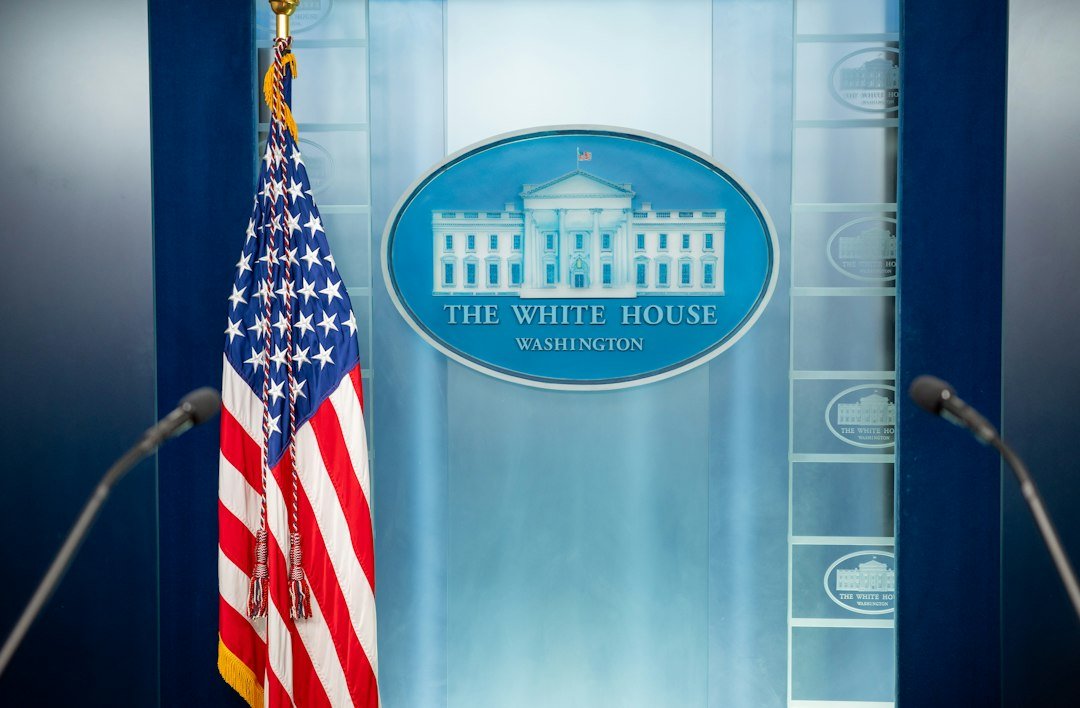
President Donald Trump’s dismissal of MS Now correspondent Akayla Gardner with a curt “be quiet” on Saturday was the visible flashpoint of a quieter, more consequential restructuring: the White House has effectively seized operational control of the presidential press pool from the independent association that has managed it for more than a century.
What Happened
On September 20, the administration revoked White House credentials for three organizations — MS Now, Politico, and CNN — after Trump announced what he called a “ban on the free press.” A federal judge issued a temporary restraining order on September 25 restoring access, but that evening, Trump aides physically blocked MS Now and CNN personnel from covering the state dinner for Chinese President Xi Jinping. The following day, the White House removed CNN from its scheduled rotation to provide pool television coverage of Trump’s trip to Knoxville, Tennessee, replacing the network with Real America’s Voice, a pro-Trump outlet lacking the technical capacity to distribute live video to other broadcasters.
The White House Correspondents’ Association (WHCA), which has coordinated pool assignments since 1914, was bypassed entirely. The association’s president, Kelly O’Donnell, confirmed to colleagues that the administration had unilaterally assumed selection authority — a power neither the WHCA nor any previous administration has claimed belongs to the executive branch. The pool system exists to ensure that a single set of cameras and reporters documents the president’s movements for the entire press corps; replacing a wire-ready network with a partisan outlet that cannot fulfill that distribution function breaks the pool’s operational logic.
Why It Matters
The credential revocations and pool seizure represent two distinct escalations. The first is retaliatory: targeting outlets for coverage the White House dislikes. The second is structural: capturing the mechanism that determines which journalists get physical proximity to the president. Since 1981, when the Reagan administration attempted to bar Lesley Stahl from a pool event and backed down after WHCA protest, every administration has respected the association’s role as honest broker. The Trump administration’s second term has discarded that precedent.
Real America’s Voice’s inclusion is the tell. The network, founded in 2018, carries programming from Steve Bannon and Charlie Kirk and has amplified election denialism. It does not maintain a Washington bureau capable of filing pool reports, nor does it operate the satellite uplink infrastructure that allows pool footage to reach every network simultaneously. Its presence on Air Force One serves a symbolic function — signaling that loyalty, not capability, now governs access — but it degrades the informational commons that the pool was designed to protect.
Legal scholars note that the credential revocations likely violate the First Amendment under the Sherrill v. Knight (1977) standard, which requires viewpoint-neutral criteria for press access. The D.C. Circuit has affirmed that once the White House opens its doors to journalists, it cannot exclude them based on editorial content. The temporary restraining order granted by Judge Tanya Chutkan on September 25 cited this precedent. But the pool seizure operates in a gray zone: no statute governs pool composition, and the WHCA’s authority rests entirely on custom and presidential acquiescence.
Historical Context
Presidents have long chafed at press independence. Richard Nixon’s administration compiled an enemies list and used the IRS and FCC against hostile outlets. The Obama administration prosecuted more leakers under the Espionage Act than all previous administrations combined and secretly seized Associated Press phone records in 2013. The Biden administration continued aggressive leak investigations until public pressure forced a policy reversal in 2021.
But no modern administration has claimed the authority to decide which network operates the pool camera. During the 2020 transition, the Trump White House briefly restricted pool access for COVID-19 briefings, citing space constraints — a move the WHCA negotiated within days. The current seizure is not a dispute over logistics; it is a claim of right. By installing a partisan outlet that cannot perform the pool’s distribution function, the administration has signaled that the pool’s purpose — universal access to a shared record — is subordinate to political preference.
The pattern of targeting female reporters adds a gendered dimension that historians will note. Since January 2025, Trump has publicly silenced or mocked at least seven women journalists — including CNN’s Kaitlan Collins, ABC’s Mary Bruce, and PBS’s Yamiche Alcindor — while male counterparts asking similar questions received substantive answers. The “be quiet” directive to Gardner, a Black woman, echoes the 2018 exchange with CNN’s Abby Phillip and the 2020 confrontation with Weijia Jiang of CBS, suggesting a durable pattern rather than isolated incidents.
What to Watch
Three developments will determine whether this restructuring consolidates or collapses. First, the WHCA’s response: the association’s board meets this week to consider formal protest, potential litigation, and whether to advise members against participating in White House-controlled pool rotations. A collective boycott by major networks would force a confrontation; fragmentation would legitimize the new arrangement.
Second, the judicial trajectory: Chutkan’s temporary order expires October 10. If the administration defies a permanent injunction, the conflict moves from administrative dispute to constitutional crisis. The Justice Department has already signaled it will argue that press pool composition is a non-justiciable political question — a claim the D.C. Circuit rejected in CNN v. Trump (2019) regarding Jim Acosta’s hard pass.
Third, the international dimension: the Xi Jinping state dinner exclusion occurred during a summit with a government that operates the world’s most sophisticated press control apparatus. Chinese state media noted the irony. Foreign correspondents accredited to the White House — who rely on pool feeds for their own reporting — have privately expressed alarm that the U.S. model they cite as a global standard is being dismantled from within.
Key Takeaway
The press pool was never guaranteed by law; it survived on the mutual recognition that a functioning democracy requires a shared factual baseline, even — especially — when the president dislikes the coverage. By seizing the pool and staffing it with outlets that cannot distribute its product, the Trump administration has not merely punished adversarial journalists. It has broken the mechanism that made universal presidential coverage possible, betting that the political gains of a controlled image outweigh the institutional costs of a fractured record. The bet may pay off in the near term. But the precedent — that pool access is a presidential privilege, not a press right — will outlast this administration, available to any successor willing to use it.