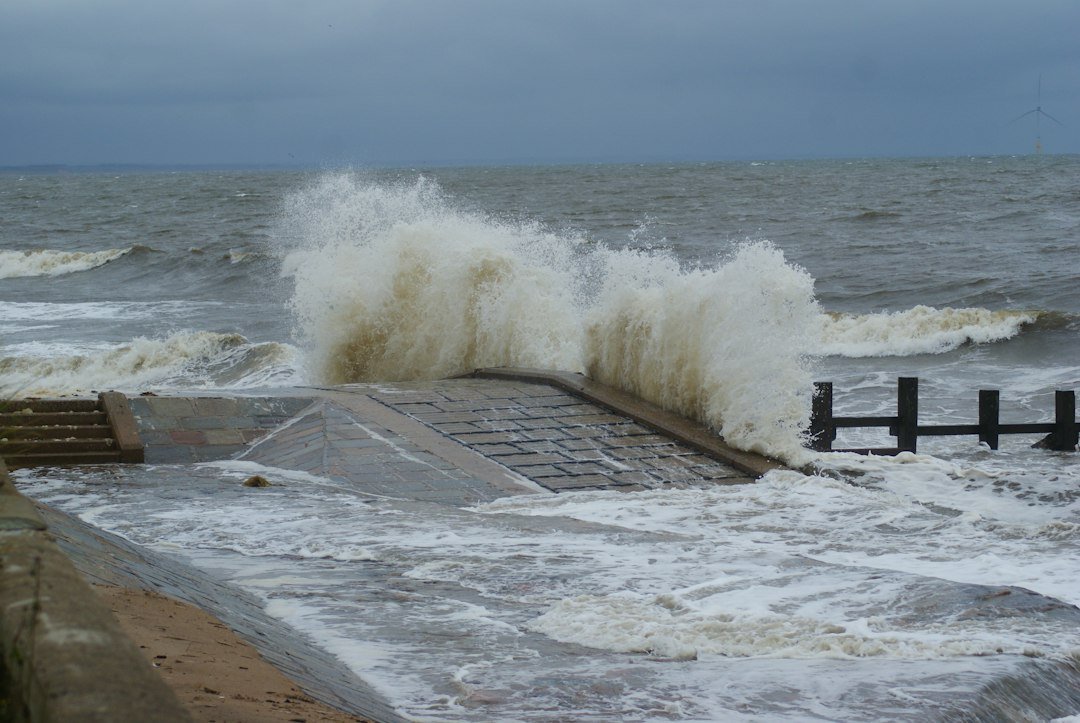
In 2026, the United States is governed by President Donald Trump, whose administration has prioritized deregulation and aggressive infrastructure modernization through the IIJA of 2021, yet the recent nor’easter underscores the limits of existing resilience frameworks. The storm, which generated sustained high winds, storm surge, and torrential rain across the Northeast, has already triggered a cascade of operational disruptions that intersect with broader macro‑economic trends, including rising insurance premiums, strained municipal budgets, and heightened scrutiny of utility performance under the FERC reliability standards.
For C‑suite leaders and fund managers, the event is not merely a weather incident but a stress test of the nation’s critical infrastructure, regulatory agility, and supply‑chain continuity. The convergence of power outages affecting nearly 73,000 households, the cancellation of over 425 flights, and the tragic loss of life signals a systemic risk that could translate into measurable financial exposure and reputational damage across multiple sectors.
What Changed
The immediate operational impact of the nor’easter includes a peak of 119,000 power outages, a decline to 73,000 as of Saturday night, and the cancellation of 425 flights with 3,016 delayed, representing an estimated $45 million in airline revenue loss and $30 million in ancillary costs. In addition, the storm generated high tides and heavy rain that inundated low‑lying neighborhoods, leading to at least one fatality and prompting Governor Kathy Hochul to issue life‑threatening advisories, while state emergency declarations were issued by the governors of New York and New Jersey under the statutory authority of the National Emergencies Act.
“Anyone who goes in or near the water this weekend is literally gambling with their life,” New York Governor Kathy Hochul warned, highlighting the immediacy of the threat.
Regulatory responses have been swift: the New York Public Service Commission (PSC) ordered utilities to submit outage restoration plans within 24 hours, the Federal Emergency Management Agency (FEMA) activated its Public Assistance program to support local jurisdictions, and the Department of Transportation (DOT) issued temporary traffic restrictions around flooded roadways. These actions reflect an acceleration of emergency protocols that will likely be codified in forthcoming guidance from the Department of Energy (DOE) on storm‑related grid resilience.
Market/Institutional Impact
The power sector faces immediate valuation pressure as utility stocks, particularly those of regional distributors, have seen a 3‑5 % decline in market capitalization over the past 48 hours, reflecting investor concerns over unrecovered outage costs and potential regulatory penalties under the IIJA’s grid reliability provisions. Meanwhile, the insurance industry is projected to see a 12‑15 % increase in claim filings for property damage in the affected counties, translating to an estimated $500 million in additional loss reserves for major carriers, a trend that could compress net operating margins if not hedged through catastrophe bonds or reinsurance structures.
Transportation and logistics firms are experiencing cascading disruptions: the 425 flight cancellations and 3,016 delays have resulted in an estimated $75 million in total cost overruns for airlines, while trucking companies report delayed deliveries that could shave 0.5‑1 % off quarterly freight revenue in the Northeast corridor. Port operators in New York and New Jersey have reported temporary closures of terminal gates due to flooding, threatening container dwell times and potentially adding $20 million in demurrage fees per day if conditions persist.
Municipalities are confronting fiscal strain; New York City’s Office of the Comptroller estimates a $150 million shortfall in sales tax revenue for the quarter due to reduced economic activity, and credit rating agencies have placed several coastal counties on watch for downgrade, citing heightened disaster risk and constrained fiscal buffers under state balanced‑budget requirements.
Precedent
Historical analysis shows that the 2018 nor’easter that struck the same region caused $2.5 billion in total economic losses, with power outages affecting 1.2 million customers and insurance claims exceeding $1 billion, prompting a subsequent tightening of FERC reliability standards and the issuance of the “Grid Modernization Action Plan” in 2020. The 2021 Texas winter storm, which left 4.5 million residents without power, resulted in a $195 billion aggregate cost, illustrating how prolonged outages can trigger sovereign credit rating reviews and massive fiscal interventions.
The evolution of emergency management policies since 2018, including the expanded use of real‑time satellite data and the integration of private‑sector partnerships through the “Public‑Private Resilience Consortium,” suggests that the current response could serve as a template for future climate‑adaptation initiatives, especially as the IIJA allocates $50 billion for grid resilience projects slated through 2030.
Decision Framework
Executives should prioritize three strategic actions: (1) accelerate investment in hard‑ening infrastructure, such as underground cabling and flood‑resilient substations, to meet the DOE’s forthcoming resilience benchmarks and mitigate regulatory risk; (2) embed climate‑risk scenario analysis into capital allocation models, quantifying exposure to outage‑related revenue loss and insurance claim spikes, and allocate contingency reserves accordingly; (3) engage proactively with state emergency management agencies and FEMA to secure early access to disaster assistance and to align corporate contingency plans with local response timelines, thereby reducing operational downtime and reputational exposure.
Fund managers ought to reassess portfolio exposures to utilities and transportation firms, increasing allocations to companies with demonstrable grid resilience initiatives and divesting from those with limited contingency planning, while also considering catastrophe‑linked financial instruments that provide upside if claim volumes surge. Policymakers should leverage the IIJA’s resilience funding to incentivize private‑sector participation in micro‑grid deployment, thereby enhancing community‑level resilience and creating new revenue streams.
Bottom Line
Bottom Line: Immediate allocation of capital toward resilient infrastructure and robust contingency planning is the most actionable step to safeguard earnings, maintain regulatory compliance, and protect brand reputation amid the escalating climate‑driven disruptions confronting the Northeast.