The Justice Department’s announcement Monday that federal prosecutors have charged 26 foreign nationals with illegally registering and voting in California elections represents more than a routine enforcement action. It is the opening salvo in a deliberate strategy to federalize election integrity policing — a move that upends two decades of bipartisan consensus deferring to states on voter roll maintenance and forces a constitutional collision over who controls the franchise.
What Happened
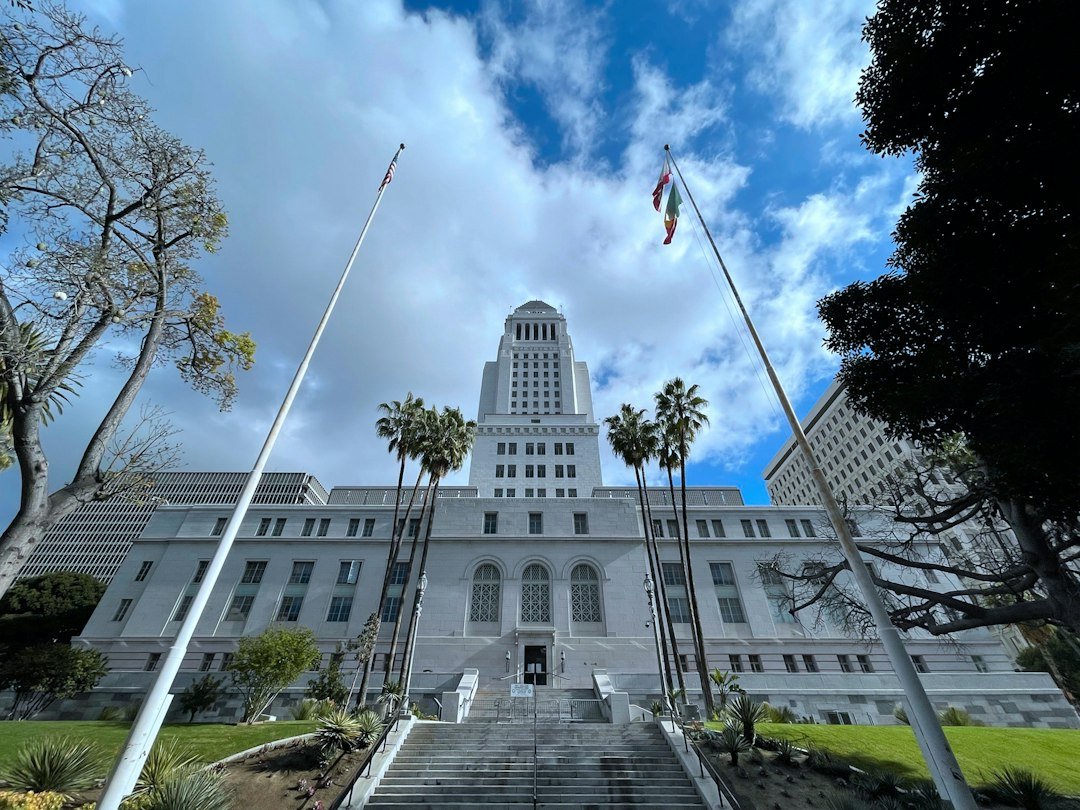
On October 19, 2026, Homeland Security Investigations agents executed coordinated arrests across Los Angeles, Orange, and San Diego counties, charging 26 individuals — all foreign nationals — with violations of 18 U.S.C. § 611 (voting by aliens) and 18 U.S.C. § 1015(f) (false claim of citizenship to register). The operation, dubbed “Operation Secure Ballot,” followed a civil lawsuit filed by the Department on October 12 against the State of California alleging systematic failures in its automatic voter registration system under the National Voter Registration Act. Assistant Attorney General for the Criminal Division Kenneth Polite Jr. — a Biden appointee retained by the Trump administration — told reporters the charges stemmed from an 18-month investigation cross-referencing DMV records, jury duty excusal forms, and voter files.
The sweep’s scale is unprecedented. Between 2002 and 2024, the Public Integrity Section of the Criminal Division averaged fewer than three § 611 prosecutions annually nationwide. Monday’s single-day total exceeds the previous five years combined. The accompanying warning letter to California’s 58 county registrars — stating that “knowingly processing or tabulating ballots submitted by noncitizen voters” could expose election workers to federal prosecution — cites 52 U.S.C. § 20511, a provision of the Help America Vote Act never before interpreted to impose personal criminal liability on local officials.
Why It Matters
The operational significance lies in the shift from civil to criminal enforcement. Since the 2002 Help America Vote Act, federal election oversight has operated through cooperative compliance: the Election Assistance Commission issues guidance, states certify systems, and the DOJ’s Civil Rights Division litigates Voting Rights Act violations. By deploying the Criminal Division and HSI — a law enforcement arm of DHS — the administration has reclassified voter roll inaccuracies as national security threats. This mirrors the post-9/11 framework that transformed immigration enforcement from administrative to criminal, culminating in Operation Streamline and the mass prosecution of illegal entry under 8 U.S.C. § 1325.
The legal theory underpinning the registrar warning letter is equally aggressive. HAVA’s Section 303 requires states to maintain computerized voter registration lists coordinated with other state databases. But the statute’s enforcement mechanism has always been the withholding of federal funds, not criminal referral. By invoking § 20511 — which criminalizes “depriving or attempting to deprive” residents of a “fair and impartial election” — prosecutors are effectively arguing that a registrar’s failure to catch a noncitizen registration constitutes election fraud. If upheld, this would make every county clerk a potential federal defendant for database mismatches beyond their control.
California’s response reveals the federalism fault lines. Secretary of State Shirley Weber called the sweep “political theater” and noted that the state’s automatic voter registration system, implemented in 2018, includes citizenship verification through the DMV’s REAL ID compliance checks. The 26 charged individuals, she stated, represent 0.0001% of the state’s 22 million registered voters — a rate consistent with academic studies finding noncitizen voting at 0.0003% to 0.001% nationally. Yet the DOJ’s civil complaint alleges structural deficiencies: that California’s DMV does not transmit citizenship status data to the Secretary of State in real time, creating a lag during which ineligible registrants can be added to rolls.
Historical Context
The last time the federal government pursued noncitizen voting at this scale was 1876, when U.S. Attorneys in the South prosecuted hundreds of Black voters under the Enforcement Acts for allegedly voting without meeting citizenship requirements — charges widely understood as tools of Reconstruction-era suppression. The statutes used Monday, § 611 and § 1015(f), were enacted in 1948 and 1996 respectively but lay virtually dormant. The 1996 Illegal Immigration Reform and Immigrant Responsibility Act added the false citizenship claim provision, yet between 1997 and 2024, federal prosecutors brought fewer than 50 cases total under both statutes combined.
A more recent parallel is the 2018-2019 Kansas litigation over Secretary of State Kris Kobach’s documentary proof-of-citizenship requirement. The Tenth Circuit struck it down in *Fish v. Kobach*, ruling that the NVRA preempted state laws demanding documents beyond the federal registration form. The Supreme Court declined review. The current DOJ strategy appears designed to circumvent that precedent: rather than litigate state requirements, it prosecutes individual voters and threatens local officials, creating a chilling effect that achieves through enforcement what legislation could not.
What to Watch
Three developments will determine whether this becomes enduring doctrine or a one-off pressure campaign. First, the Northern District of California’s handling of the civil case — specifically whether Judge Vince Chhabria, an Obama appointee, grants the DOJ’s motion for a preliminary injunction requiring real-time DMV-to-SOS data sharing. A ruling for the government would federalize California’s voter list maintenance infrastructure. Second, the criminal cases themselves: defense attorneys have already signaled motions to dismiss based on *Fish* preemption and the lack of *mens rea* — several defendants hold green cards and may have reasonably believed they were eligible. Third, replication. The DOJ has opened similar investigations in Nevada, Colorado, and Washington — all states with automatic voter registration and Democratic trifectas. If U.S. Attorneys in those districts file parallel charges before the 2026 midterms, a national pattern emerges.
The registrar warning letter’s practical impact is already visible. In Riverside County, Registrar Rebecca Spencer announced a “voluntary pause” on processing new registrations pending legal review. In San Francisco, Registrar John Arntz has requested indemnification from the state. If county officials begin rejecting or flagging registrations en masse to avoid federal exposure, the resulting disenfranchisement of eligible voters could dwarf the original problem — a dynamic election law scholars call “administrative chill.”
Key Takeaway
The California sweep is not really about 26 voters. It is a stress test of the constitutional architecture governing elections: whether the federal government can use criminal law to override state voter registration systems, whether HAVA’s cooperative framework can survive weaponization, and whether the NVRA’s floor on registration accessibility becomes a ceiling. The answers will shape not just the 2026 midterms but the distribution of electoral power for a generation.