Strategic Context
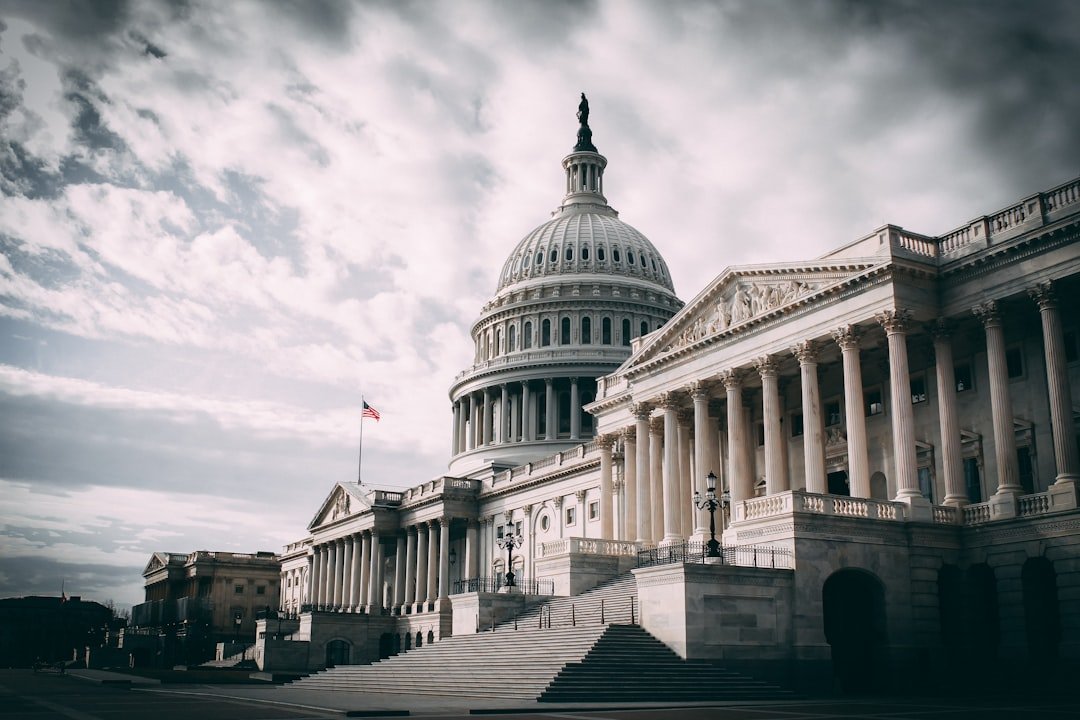
The 220-204 House vote to terminate President Trump’s military campaign against Iran represents more than symbolic congressional pushback. It marks the third time the lower chamber has invoked the 1973 War Powers Resolution to challenge executive unilateralism, and the first time Republican defections have expanded beyond the original four dissenters. Seven Republicans broke ranks — three for the first time — signaling that the political cost of sustaining an undeclared war is rising faster than the White House anticipated. With the Congressional Budget Office quantifying the conflict at $38 billion spent and a $3 billion monthly burn rate, plus a projected 0.5 percentage point inflation lift in Q1 2027, the fiscal architecture underpinning the administration’s “America First” economic narrative is visibly straining.
Critically, this vote occurs 50 days before midterm elections where control of both chambers hangs in the balance. The AP-NORC polling showing most Americans deem the war “not worth fighting” creates a permission structure for vulnerable incumbents to distance themselves from the White House without courting primary challenges. Chairman Brian Mast’s defense — framing Iranian hostility as a “continuous ongoing threat” that justifies open-ended engagement — reflects the institutional Republican position, but the seven defections suggest that position is no longer monolithic. For executives, the relevant question is not whether this resolution becomes law — it almost certainly will not, given Senate inertia and a guaranteed presidential veto — but what the fracture portends for policy continuity, defense allocation, and regional risk pricing.
What Changed
Three material shifts distinguish this vote from its predecessors. First, the defection cohort expanded from four to seven Republicans, including three first-time dissenters, indicating that the political calculus has moved from conscience votes to strategic positioning. Second, the CBO’s formal scoring — $38 billion in direct costs, munitions stockpile depletion, and quantified inflation passthrough — converts abstract opposition into budgetary language that appropriators and bond markets cannot ignore. Third, the timing: this is almost certainly the final House vote before the midterms, freezing the Iran war as a live campaign issue for the remaining 50 days. Lawmakers depart for full-time campaigning this week, carrying this vote as either shield or sword depending on district demographics.
The White House response reveals its own vulnerability. President Trump’s 2024 campaign explicitly rejected foreign entanglements; the Iran campaign — launched February 28, now entering its seventh month of “on-again, off-again deadly missile strikes” — contradicts that pledge at precisely the moment voters evaluate Republican stewardship. The administration’s reliance on Article II authority rather than a new Authorization for Use of Military Force (AUMF) leaves it exposed to both legal challenge and appropriations pressure. No supplemental funding request has cleared Congress; the war is being funded through reprogramming and Overseas Contingency Operations accounts, a mechanism designed for temporary emergencies, not seven-month campaigns.
Market and Institutional Impact
Defense Industrial Base: The CBO’s munitions depletion finding has immediate implications for prime contractors. Raytheon, Lockheed Martin, and Northrop Grumman face accelerating replenishment orders — but without a supplemental appropriation, those orders compete with existing program baselines. Watch for earnings call language shifting from “replenishment tailwinds” to “appropriations uncertainty” in Q3 reports. The $3 billion monthly burn rate implies roughly $36 billion in annualized munitions and platform sustainment demand, but the absence of authorized funding creates contract execution risk that Wall Street models have not fully priced.
Energy Markets and Inflation Expectations: The 0.5 percentage point CBO inflation projection for Q1 2027 assumes continued Strait of Hormuz disruption risk and strategic petroleum reserve draws. Current Brent futures curve pricing embeds a $4-6/barrel geopolitical premium; a credible de-escalation path — which a post-midterm Democratic House could pursue through appropriations riders — would compress that premium rapidly. Fund managers should model a 3-5% downside in energy equities and a 15-20 basis point reduction in breakeven inflation rates if the November election yields divided government with Democratic leverage over defense spending.
Fiscal Trajectory and Bond Markets: The $38 billion spent to date represents 0.14% of GDP — modest in isolation but additive to a deficit already running at 6.2% of GDP. The War Powers Resolution, if honored, would trigger a 30-day withdrawal timeline under Section 5(c), forcing the administration to either seek a new AUMF (unlikely in current Senate) or terminate operations. A termination scenario reduces FY2027 baseline defense outlays by approximately $36 billion, a meaningful delta for CBO scoring and debt sustainability models. Treasury issuance calendars should be stress-tested against this variable.
Institutional Credibility and Separation of Powers: The third consecutive House passage without Senate action exposes a structural asymmetry: the War Powers Resolution’s 60-day clock (Section 5(b)) has long since expired, yet the executive branch continues operations under a legal theory that the 2001 and 2002 AUMFs cover Iran — a position the Office of Legal Counsel has not formally defended in writing. This erosion of statutory constraint should concern any executive monitoring regulatory risk; if war powers can be stretched this far, what limits remain on emergency economic authorities?
Precedent
The 2019 Yemen War Powers Resolution provides the closest analog. Congress passed S.J.Res. 7 with bipartisan majorities in both chambers — the first time both houses invoked the War Powers Resolution — only for President Trump to issue the second veto of his first term. The override failed. However, the Yemen vote forced the administration to cease refueling Saudi coalition aircraft and accelerated the UAE’s withdrawal, demonstrating that even vetoed resolutions alter operational reality. The Iran parallel is imperfect: Yemen involved support for a partner; Iran involves direct U.S. kinetic action. But the mechanism — congressional pressure reshaping executive behavior despite formal veto — remains operative.
More recently, the 2023-2024 debates over Ukraine supplemental funding showed that defense appropriations can become vehicles for war powers enforcement. The House Republican conference’s current fracture on Iran mirrors the Ukraine coalition dynamics: a core of hawks, a growing bloc of fiscal skeptics, and a leadership team managing an unsustainable coalition. The seven Republican defectors on Iran include members who opposed the Ukraine supplemental on cost grounds — suggesting a converging “restrain and account” faction that could dictate post-midterm appropriations strategy regardless of which party holds the gavel.
Decision Framework
For Defense Sector CEOs: Model two FY2027 scenarios. Scenario A (status quo): continuing resolution funding at FY2026 levels, Iran operations sustained through OCO reprogramming, replenishment orders flow but with 6-9 month contract award delays. Scenario B (divided government): Democratic House attaches Iran withdrawal language to defense appropriations, forcing supplemental negotiation; replenishment funding secured but Iran-specific lines zeroed. Assign 65% probability to Scenario A, 35% to Scenario B — but weight Scenario B’s impact higher due to program termination risk.
For Energy Portfolio Managers: Hedge Hormuz disruption risk through Q1 2027 using put spreads on Brent and long volatility positions on Middle East equity indices. The midterm election creates a binary catalyst: Republican hold preserves current risk premium; Democratic House takeover increases probability of appropriations-driven de-escalation by 40-50% based on 2019 Yemen precedent. Size positions to capture asymmetric downside in energy if de-escalation materializes.
For Policy Architects and Legal Counsel: Prepare for the post-midterm window (January-March 2027) when a new Congress could pass a binding Iran AUMF repeal or defunding rider with veto-proof margins if Republican defections scale from seven to 20+. The War Powers Resolution’s expedited procedures (Section 6) privilege the minority party in the Senate — a Democratic Senate minority could force floor votes on privileged resolutions that vulnerable Republicans cannot easily table. Map your members’ 2026 vote against their 2028 primary vulnerability; that matrix predicts the next defection wave.
The House vote is not a legal termination of the Iran war. It is a market signal that the political coalition sustaining it is fracturing along fiscal, constitutional, and electoral fault lines simultaneously. Executives who treat this as noise rather than leading indicator will misprice the 2027 policy environment.
Bottom Line
Bottom Line: The third House war powers vote — now with an expanding Republican defection bloc, CBO-quantified costs ($38B spent, $3B/month, +0.5% inflation), and 50 days until midterms — creates a measurable probability that the Iran campaign becomes a negotiated appropriations casualty in early 2027 regardless of presidential veto threats. Position capital and policy engagement for a divided-government de-escalation scenario that the market is underweighting.