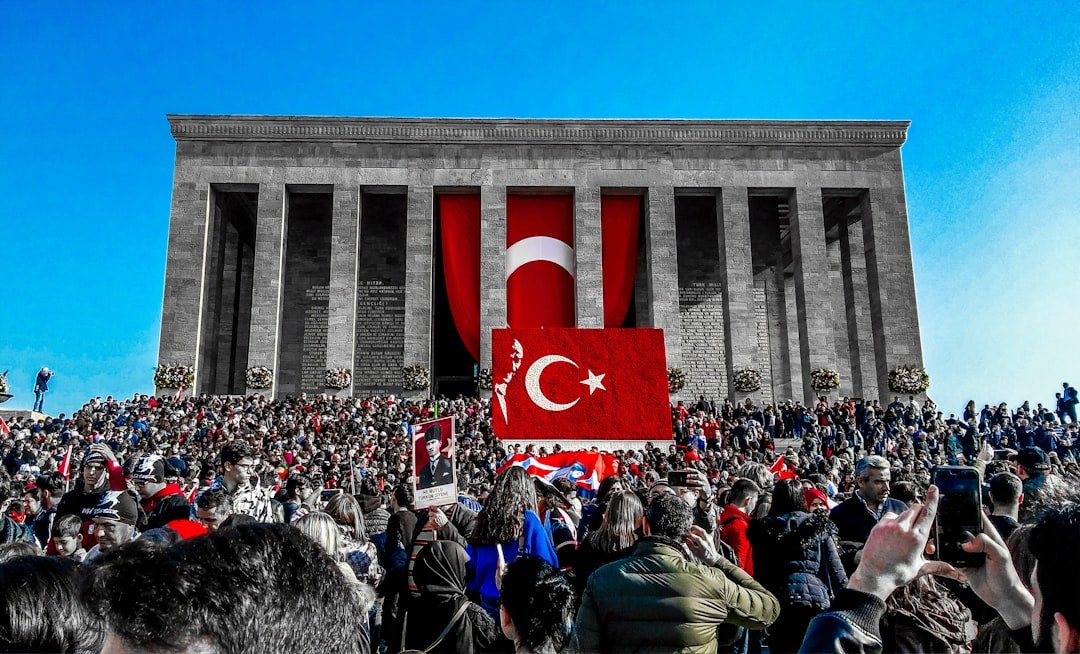
The arrival of President Donald Trump in Ankara this week marks a pivotal moment for the North Atlantic Treaty Organization, not because of the ceremonial flyovers or the military salutes that greeted him on the tarmac, but because the summit has become the stage for a fundamental renegotiation of the transatlantic security compact. While the headlines focus on the familiar rhetoric regarding defense spending quotas, the real story unfolding in Turkey is a stark display of operational dissonance that suggests the alliance is facing a crisis of purpose rather than just a crisis of budget.
President Trump’s presence in Turkey, which he has explicitly linked to his personal relationship with President Recep Tayyip Erdoğan, underscores a transactional approach to alliance management that is increasingly at odds with the institutional norms of NATO. According to U.S. Ambassador to NATO Matthew Whitaker, the President’s frustration is not merely rhetorical; it is rooted in a concrete operational failure where European allies refused to grant overflight rights or allow the use of military bases for Operation Epic Fury, the U.S.-led campaign against Iranian targets. This refusal, coupled with public political statements criticizing the strikes, has transformed the summit from a routine strategic review into a tribunal on the reliability of collective defense.
The context of this friction is critical. The summit convenes just one year after NATO members pledged, under intense American pressure, to ramp up security-related spending to 5% of their GDP. Yet, as President Trump noted during a June 24 appearance at the White House, “There’s a problem with Spain,” highlighting that despite the financial commitments, the political will to act in concert with Washington remains fractured. The anger over Operation Epic Fury reveals that the 5% target, while a significant fiscal milestone, has not translated into the operational interoperability or shared risk tolerance that the U.S. expects from its European partners when facing threats beyond the traditional European theater.
The Operational Schism: Money Versus Action
The core of the tension at the Ankara summit lies in the distinction between financial contributions and operational participation. For decades, the debate has centered on the 2% GDP defense spending benchmark, a metric that has now been superseded by the more ambitious 5% target. However, President Trump’s disappointment, as articulated by Ambassador Whitaker, suggests that the U.S. administration views the lack of base access and overflight rights as a far more damaging betrayal than a shortfall in budgetary allocations. When allies decline to facilitate a specific military operation, they are effectively decoupling their strategic autonomy from American leadership, creating a scenario where the alliance exists in name but fails in function during critical moments of crisis.
This dynamic is particularly volatile given the scope of Operation Epic Fury. Unlike the traditional NATO mandate, which focuses on the defense of member territories against external aggression in Europe, the operation against Iran represents an expeditionary engagement that many European capitals viewed as legally and politically precarious. The refusal to support the operation was not merely a bureaucratic hurdle; it was a calculated political decision by allies like Spain to distance themselves from U.S. foreign policy initiatives that they deemed “illegal, absurd and cruel,” as some critics have labeled the strikes. This signals a growing divergence in threat perception, where Washington sees a global necessity to confront Iranian aggression, while European capitals prioritize regional stability and legal constraints over unilateral American action.
The implications for the alliance’s long-term strategy are severe. If the United States cannot count on its allies for logistical support or political cover during high-stakes operations, the credibility of Article 5—the collective defense clause that has been the bedrock of NATO since 1949—begins to erode. The question is no longer whether Europe can pay for its own defense, but whether it is willing to fight alongside the United States when the battlefront is not in Europe. President Trump’s assertion that he would not have attended the summit were it not held in Turkey by President Erdoğan suggests a deepening skepticism about the value of the gathering itself, implying that the traditional diplomatic rituals of NATO are becoming less relevant than bilateral deals.
Historical Precedents and Institutional Stress
History offers sobering parallels to the current strain on NATO. The 2003 Iraq War similarly exposed deep fissures within the alliance, pitting the “Old Europe” of France and Germany against the “New Europe” and the United States. However, the current situation in 2026 is distinct because the friction is not just about a specific war, but about the very mechanism of alliance decision-making. In 2003, the U.S. proceeded without broad NATO consensus, but the institutional framework remained intact. Today, the refusal of allies to support Operation Epic Fury suggests a more fundamental rejection of the U.S. as the primary security guarantor, driven by a desire for strategic autonomy that has been building for years.
The institutional mechanisms of NATO are ill-equipped to handle this type of friction. The alliance operates on the principle of consensus, meaning that any major strategic shift requires the agreement of all 32 members. When a superpower like the United States demands operational support and is rebuffed by a coalition of medium-sized powers, the consensus model becomes a tool for obstruction rather than collaboration. The historical precedent of the Cold War, where the Soviet threat forced a monolithic unity, is gone. In its place is a multipolar reality where European nations are increasingly looking to the Global South for trade and security partnerships, reducing their reliance on Washington and, consequently, their willingness to follow its lead.
What to Watch: The Path Forward
As the summit concludes in Ankara, the immediate question is how President Trump will respond to this diplomatic rebuff. Will he double down on the threat of withdrawing U.S. troops or reducing security guarantees, as he has threatened in the past? Or will he pivot to a strategy of bilateralism, bypassing the NATO framework entirely to forge individual security arrangements with friendly nations like Turkey? The answer will likely depend on the outcome of his bilateral meetings with President Erdoğan and other key leaders, which are expected to focus on defense spending and the future of the alliance.
Furthermore, the summit’s focus on Ukraine and the long-term strategy toward Russia adds another layer of complexity. If European allies are unwilling to support U.S. operations against Iran, a state that is often viewed as a rival to Russia but not a direct threat to NATO territory, their commitment to the defense of Ukraine—a core NATO interest—may also be questioned. The disconnect between financial pledges and operational reality could lead to a scenario where Europe pays for defense but refuses to engage in the conflicts that define the current geopolitical landscape, leaving the United States to bear the brunt of global security responsibilities alone.
The final days of the summit will be a test of whether the alliance can bridge the gap between its financial ambitions and its operational capabilities. If the outcome is merely a reaffirmation of the 5% spending target without a resolution to the operational rift, the alliance risks becoming a hollow shell, devoid of the collective will necessary to project power in an increasingly hostile world. The silence of the European allies regarding Operation Epic Fury speaks louder than the speeches they will deliver on the summit stage.
Key Takeaway: The crisis at the 2026 NATO summit is not a failure of wallet, but a failure of will; the refusal of allies to support Operation Epic Fury reveals that the transatlantic alliance is fracturing along lines of operational trust, forcing the United States to reconsider whether a collective defense structure can survive when its members are unwilling to fight alongside it.