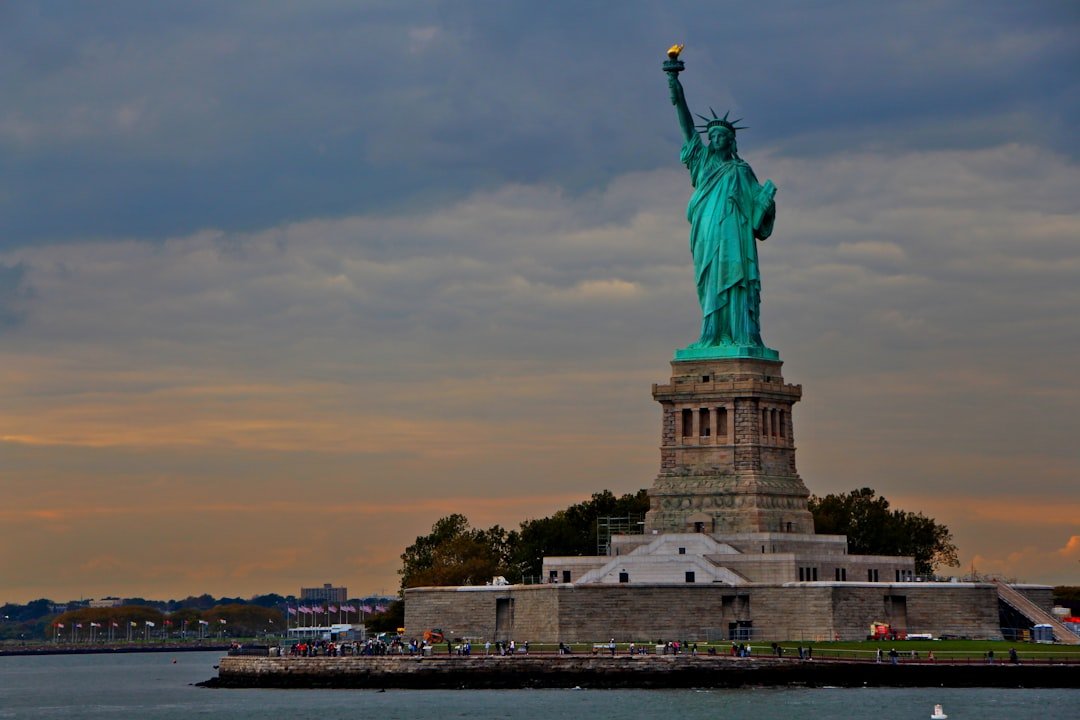
The waters surrounding Liberty Island, once a symbol of unyielding resilience, became the site of a profound human tragedy on Saturday night, August 8, 2026. While the immediate headlines focus on the heartbreaking loss of a 27-year-old woman and her 5-month-old daughter, the ripples of this accident are already moving toward the halls of regulatory power. This was not merely an isolated maritime mishap; it is a grim reminder of the persistent gap between the rapid expansion of recreational watercraft usage and the aging regulatory frameworks designed to ensure passenger safety in one of the world’s most complex waterways.
The Incident Near Liberty Island
According to reports from the New York Police Department and local authorities, a vessel capsized in New York Harbor during the late hours of Saturday. The scale of the disaster was significant, with 12 individuals injured during the chaos of the overturning vessel. Emergency responders and police divers conducted intensive searches in the dark, turbulent waters near the Statue of Liberty, eventually locating the 27-year-old woman and the 5-month-old baby girl. Tragically, both were pronounced dead at a local hospital shortly after being recovered from the water.
The mechanics of the capsize remain under active investigation by the U.S. Coast Guard and local maritime authorities. Initial reports suggest a sudden instability that led to the vessel overturning, but the specific cause—whether it was environmental factors, vessel overcrowding, or mechanical failure—has yet to be determined. What is certain is the devastating human cost: a life lost and a child whose future was extinguished before it truly began, leaving a community and a family in mourning.
The Regulatory Gap in High-Traffic Waterways
Why does a tragedy like this occur in one of the most heavily monitored maritime corridors in the United States? To understand the significance of this event, one must look beyond the immediate wreckage and toward the institutional mechanisms of the U.S. Coast Guard and the Department of Homeland Security. New York Harbor is a high-density zone where commercial shipping, commuter ferries, and private recreational vessels intersect in a delicate, often dangerous, choreography. As the demand for recreational boating has surged in recent years, the enforcement of safety protocols—such as life jacket requirements for infants and stability standards for smaller vessels—has struggled to keep pace.
The tragedy highlights a systemic issue in maritime law: the difficulty of policing “non-commercial” recreational transit. Unlike the highly regulated commercial ferry lines that operate under strict Department of Transportation oversight, private vessels often operate in a regulatory gray zone. While safety standards exist on paper, the physical enforcement of these standards in the middle of a crowded harbor at night is an immense logistical challenge for the Coast Guard. This incident raises a critical question for policymakers: as our waterways become more crowded, are our enforcement budgets and technological capabilities keeping up with the increased risk profile?
Furthermore, the incident touches upon a broader debate regarding the modernization of maritime safety technology. In an era where President Trump’s administration has emphasized deregulation in various sectors to stimulate economic growth, the tension between “ease of use” for recreational operators and the stringent oversight required for public safety is palpable. When regulations are loosened to reduce the burden on citizens, the margin for error in high-stakes environments like New York Harbor narrows significantly. This death is a sobering data point in that ongoing tension between economic liberty and the state’s duty to protect its most vulnerable citizens.
Historical Precedents and the Evolution of Safety
Maritime disasters have historically served as the primary drivers for legislative change. We can look back at the precedents set by the 1912 sinking of the Titanic, which fundamentally restructured international maritime safety through the creation of the International Convention for the Safety of Life at Sea (SOLAS). In more recent domestic history, various boating accidents in the late 20th century led to the mandatory implementation of child safety device laws and stricter vessel stability testing.
However, the modern challenge is different. We are no longer just dealing with larger ships, but with an explosion of smaller, diverse, and often less-regulated craft. The historical pattern is clear: tragedy precedes regulation. The question for the current administration and the maritime industry is whether we will wait for a statistically significant increase in these types of fatalities before implementing more robust, tech-driven monitoring systems—such as mandatory AIS (Automatic Identification System) transponders for all vessels in high-traffic zones, regardless of size.
What to Watch: The Investigation and Policy Fallout
In the coming weeks, several key developments will dictate whether this tragedy remains a localized news story or evolves into a national policy debate. First, the official Coast Guard report will be the most critical document. We must look for whether the investigation identifies a failure in vessel stability, a lack of proper safety equipment (specifically regarding the infant), or a failure in navigational awareness. If the investigation points to a preventable lack of safety gear, the pressure on state and federal legislators to mandate stricter equipment checks will intensify.
Second, watch for the reaction from the maritime industry and advocacy groups. We are likely to see a push from safety organizations for increased funding for the Coast Guard’s recreational boating safety programs. Simultaneously, we should monitor the legislative response in Washington. Given the current political climate under President Trump, any move toward increased federal oversight of recreational activities may face significant pushback from those wary of government expansion. The battleground will likely be framed as “safety vs. freedom,” a classic American political trope that will determine if new mandates are passed or if the status quo remains.
Key Takeaway
The deaths of the mother and child in New York Harbor are a profound human tragedy that exposes a critical institutional vulnerability: the widening gap between the increasing density of recreational maritime activity and the capacity of federal agencies to enforce safety standards in high-traffic corridors. This incident is a signal that the current regulatory equilibrium is insufficient, and unless maritime oversight is modernized to match the complexities of 2026’s waterways, such tragedies may become an inevitable cost of recreational liberty.