Hook
The loss of three American service members was reported after a weekend Iranian missile and drone attack on a U.S. base in southern Jordan, prompting President Trump to order immediate airstrikes against Iranian targets. The rapid escalation, which left dozens wounded and raised fresh concerns about a broader conflict, underscores how quickly the war in the Middle East can shift from covert harassment to high‑stakes combat.
What Happened
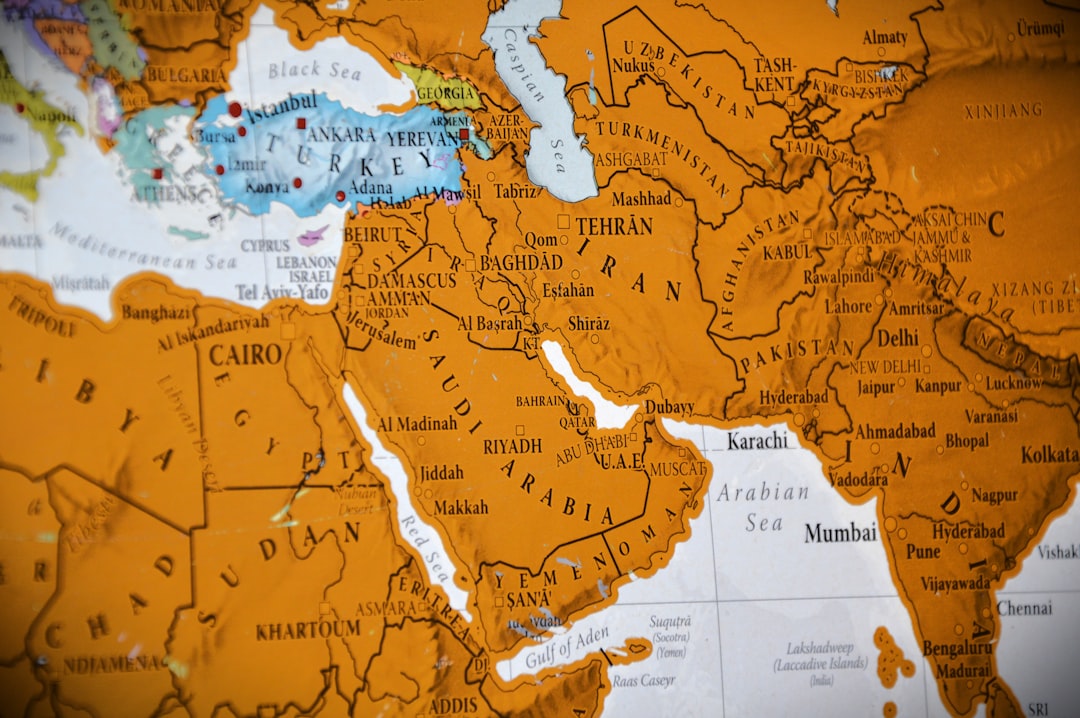
The assault, carried out by Iran’s Islamic Revolutionary Guard Corps using a mix of ballistic missiles and loitering drones, struck the Al‑Tanf garrison near the Iraq‑Jordan border early Saturday morning. CENTCOM confirmed that three U.S. troops died at the scene and a fourth service member is unaccounted for, while more than 30 personnel were treated for injuries. Defense officials said the defensive missile batteries and radar systems that normally intercept such threats appeared to be overwhelmed, allowing the barrage to breach the base’s perimeter and cause significant damage to equipment and structures.
In response, President Trump authorized a fresh wave of precision airstrikes on Iranian military facilities in retaliation, a move confirmed by the Pentagon and reported by CBS News. The strikes, carried out by U.S. fighter jets and cruise missiles, targeted IRGC command centers in the al‑Quds region of eastern Iraq and a missile depot in western Iran, aiming to degrade Tehran’s ability to launch further attacks. Defense Secretary Lloyd Austin said the operation was directly linked to the Jordanian assault, while Iranian officials condemned the action as a flagrant violation of sovereignty.
Why It Matters
The loss of three American lives on U.S. soil however distant the theater creates immediate political fallout for President Trump, whose 2025 re‑election campaign now faces a stark test of his maximum pressure strategy. Congressional leaders from both parties have already called for briefings, and the House Foreign Affairs Committee is set to hold an emergency hearing on the administration’s war‑making authority. Public opinion polls in the coming weeks are likely to reflect growing fatigue with prolonged Middle East engagements, making the administration’s next moves a decisive factor in voter perception.
Beyond the domestic arena, the incident signals a dangerous escalation that could draw additional regional actors into the conflict. Iran’s proxy network, including the Houthi movement in Yemen, has already threatened to shut the Bab el‑Mandeb strait, a chokepoint through which roughly 10 % of global oil shipments pass. A disruption there would spike oil prices and force NATO and Gulf allies to reconsider their own force postures, potentially pulling the United States into a wider maritime confrontation.
The speed of the U.S. response ordering airstrikes within hours of the casualties highlights a shift toward rapid, kinetic retaliation that may leave little room for diplomatic de‑escalation. Allies such as Kuwait and Bahrain reported their own air‑defense alerts against Iranian missiles, indicating that the campaign is spreading across the Gulf. This expanding theater raises the risk that Iran will respond asymmetrically, perhaps by targeting U.S. logistics lines in Iraq or by mobilizing Shia militias in Iraq and Syria, thereby deepening the quagmire.
From a legal standpoint, the strikes test the limits of the 2002 Authorization for Use of Military Force (AUMF) against Iran and the War Powers Resolution. While the President argues that the operation is a direct response to an imminent threat, critics contend that the lack of a formal congressional declaration of hostilities could violate the War Powers Act, which requires notification within 48 hours and limits sustained combat operations to 60 days without authorization. The impending legal debate may shape future presidential war‑making powers.
Historical Context
This is not the first time U.S. forces have been targeted by Iranian‑linked attacks in the region. In early 2020, a similar drone strike killed an American contractor in Iraq, prompting a swift U.S. response that escalated into a near‑confrontation with Tehran. The pattern of tit‑for‑tat strikes, each followed by a brief period of de‑escalation, has repeated throughout the past five years, most notably after the 2022 killing of a U.S. serviceman in Syria and the 2023 missile attack on the Al‑Asad airbase.
The current clash also echoes the 2019 attack on Saudi oil facilities, which led to a temporary suspension of Saudi‑U.S. arms sales and a spike in global oil prices. Like those earlier incidents, the Jordanian base attack underscores how quickly a localized incident can reverberate through global supply chains and diplomatic channels, reminding policymakers that the Middle East remains a flashpoint where a single casualty can trigger a cascade of strategic decisions.
What to Watch
Watch for the Pentagon’s next steps: whether the airstrikes will be followed by a sustained campaign of targeted strikes or a limited punitive raid, and how quickly the administration seeks to restore deconfliction channels with Iran. Additionally, monitor the Houthi threat to close the Bab el‑Mandeb, as any actual closure would force the U.S. Navy to reroute vessels through the Red Sea, straining logistics and potentially prompting a naval buildup in the Gulf.
Congressional activity will be a key indicator of the conflict’s trajectory. If leaders introduce legislation to curb the President’s ability to conduct unilateral strikes, it could signal a shift toward a more restrained posture. Conversely, if hawkish members push for expanded authorities or additional troop deployments, the risk of a broader war escalates. The coming weeks of diplomatic overtures or the lack thereof from Iran will determine whether this incident remains a flashpoint or becomes a catalyst for a larger regional war.
Key Takeaway
The killing of three U.S. troops and the swift retaliatory airstrikes ordered by President Trump mark a dangerous inflection point: it demonstrates that the United States is now willing to respond militarily to Iranian provocations that directly threaten American personnel, even as the risk of a wider Iran-U.S. confrontation looms. The episode highlights the fragility of regional security, the vulnerability of global energy routes, and the tightening constraints on presidential war‑making authority all of which will shape the next phase of U.S. foreign policy in the Middle East.