A Monument Becomes a Mirror
The White House’s declaration that “there would be no better addition” to Mount Rushmore than Donald Trump is not principally a proposal about stone. It is a statement about political inheritance: who gets to define American greatness, who gets remembered as its author, and whether the presidency is an institution that temporarily belongs to the public or a personal brand that can be engraved into the nation itself.
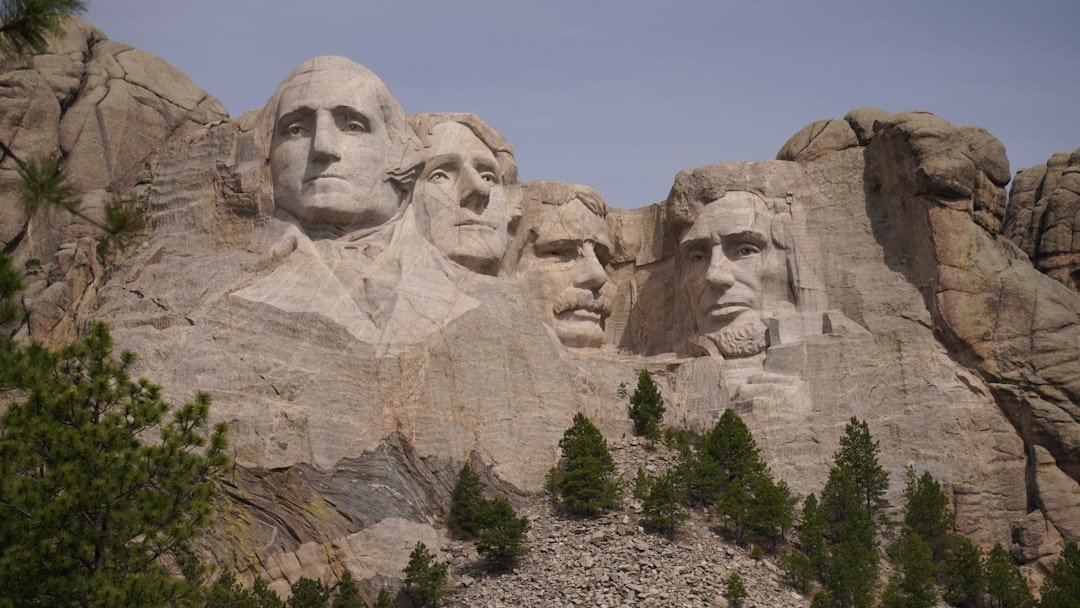
The remark followed Trump’s social-media video depicting his likeness carved into the memorial beside George Washington, Thomas Jefferson, Theodore Roosevelt and Abraham Lincoln. The image was presented ahead of his July 2026 address at Mount Rushmore, part of the celebrations surrounding the United States’ 250th anniversary. The White House has not identified any actual plan to alter the memorial, and the National Park Service has no apparent mechanism for turning a president’s self-promotional post into a constitutional act. Yet treating the episode as a joke would miss its political significance. The spectacle is the message.
Mount Rushmore is already an argument in granite. Its four presidents were selected not because they represented an uncontested national consensus, but because later generations wanted to construct a usable story about founding, expansion, preservation and national transformation. Trump’s proposed addition would extend that logic while radically changing its emphasis. The monument would no longer merely commemorate presidential achievement; it would dramatize presidential self-valuation.
That distinction matters. A democratic republic depends on a separation between the office and the individual who occupies it. Presidents seek legacies, but they are not supposed to be the sovereign authors of national memory. The White House statement collapses that distance by presenting Trump’s inclusion as self-evidently deserved. It converts a question that would ordinarily be settled by historians, legislators, cultural institutions and public debate into an assertion of loyalty: Trump is great because Trump says he is great, and the official machinery of government repeats it.
From Communication to Command
The deeper development is the continued transformation of presidential communication into a form of governance. Trump’s political method has long relied on direct, emotionally charged messaging that bypasses traditional intermediaries. Social media allows the president to announce a position, provoke a controversy and force institutions to respond before journalists, civil servants, congressional committees or courts have established a common factual framework. Research on Trump’s first presidency described this as a shift toward “policy-making by tweets,” in which personalized online discourse could weaken horizontal checks on executive power.
tandfonline
The 2026 Mount Rushmore episode shows the next stage: not merely governing through posts, but governing through spectacle. The post does not need to create a legal obligation to be effective. It establishes the president’s preferred frame, mobilizes supporters, pressures allied officials to affirm it and compels opponents to debate the president’s symbolic claim on his terms. The White House spokesperson’s statement is therefore more consequential than its literal content. It demonstrates how the institutional voice can become an amplifier for personal mythology.
This is not unique to Trump, although he has made it unusually visible. Political leaders across parties now understand that attention is a governing resource. The administration’s use of memes, provocative posts and influencer networks reflects a wider shift in which political narratives increasingly compete with policy details for public authority. NPR’s reporting has characterized the current approach as one in which “governance” and “content” reinforce each other: political action is communicated as viral material, while viral material creates pressure for political action.
npr
That feedback loop has institutional costs. A cabinet department, court ruling or congressional vote is slow, documented and vulnerable to scrutiny. A presidential post is immediate, personalized and optimized for reaction. It rewards certainty over evidence and loyalty over deliberation. When the White House speaks in the language of a campaign rally, citizens are encouraged to evaluate public decisions as expressions of allegiance rather than as exercises of accountable state power.
The Market for Political Certainty
For markets, the immediate Mount Rushmore controversy is unlikely to affect valuations, interest rates or capital flows. No serious investor will revise an earnings model because the president has been digitally placed on a national monument. But markets should not be indifferent to the political culture that the episode represents. Investors price not only tax policy and regulation, but also institutional reliability: whether decisions are made through recognizable procedures, whether rules can be challenged, and whether public agencies retain some autonomy from personal political demands.
Personalized power can produce short-term clarity while creating long-term uncertainty. A leader who communicates directly may appear decisive, especially during negotiations or crises. But if policy depends heavily on the leader’s moods, posts and public feuds, businesses must monitor personality as closely as statutes. That raises the premium on political intelligence and increases the risk that a social-media escalation will affect trade policy, sanctions, immigration enforcement or executive appointments before formal institutions have absorbed the change.
American households experience this volatility differently from institutional investors. For many voters, Trump’s symbolism is not about a literal monument; it is about recognition. His supporters see an establishment that dismissed their economic frustrations, cultural grievances and distrust of traditional media. The Mount Rushmore image answers that alienation with a promise of restoration: the leader will place their preferred version of America at the center of the national story. The emotional appeal is real, even when the historical claim is inflated.
Critics, meanwhile, see something more dangerous than vanity. They see an attempt to make the nation’s symbols answer to one man, and to turn disagreement with him into disagreement with America itself. That is why the episode will persist beyond the news cycle. It tests whether patriotism can remain larger than a presidency, and whether institutions can preserve their authority when the executive branch increasingly behaves like a permanent media operation.
The practical question is not whether Trump will ever be carved into Mount Rushmore. The relevant question is whether the country will permit political memory to be set by unilateral performance. Monuments are supposed to outlast their makers. A presidency that insists on placing itself inside the monument risks doing the opposite: making the monument an extension of the president’s campaign.
For American readers, the warning is less about one provocative post than about habituation. Democratic institutions rarely disappear in a single dramatic act. They are weakened when official language becomes promotional, when spectacle replaces procedure and when citizens learn to treat personal dominance as evidence of national strength. The granite may remain unchanged. The more important transformation is occurring in the public’s expectations of what presidential power is allowed to look like.