The Pivot from Blame to Bureaucracy
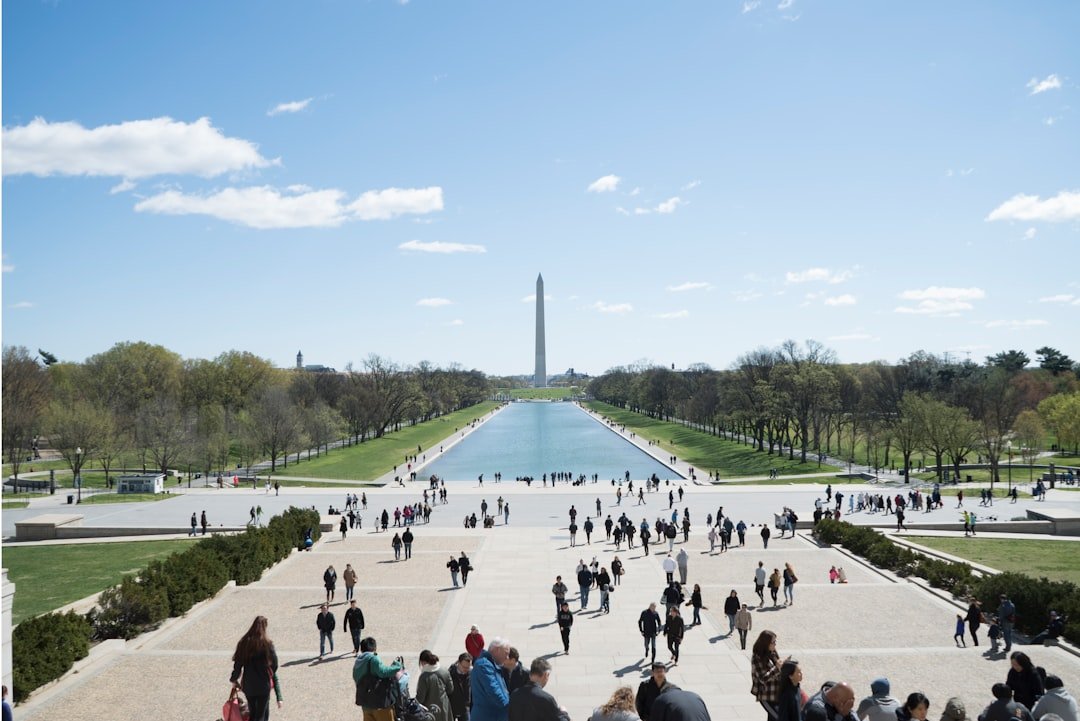
The visual decay of the Lincoln Memorial Reflecting Pool has served as a persistent, murky metaphor for the current administration’s struggles with large-scale federal infrastructure projects. For weeks, President Donald Trump maintained a singular narrative: the algae-stained waters and peeling liners were the direct result of targeted vandalism. However, his sudden concession on August 10, 2026, that ‘ome contractor error’ was to blame marks a significant rhetorical shift, moving the conversation from criminal intent to administrative failure.
This is not merely a dispute over water quality; it is a collision between the President’s high-velocity mandate for national renewal and the rigid, often slow-moving mechanisms of federal preservation oversight. What began as a campaign promise to restore the nation’s most iconic landmarks has devolved into a closed, empty basin that stands as a silent testament to the complexities of managing the nation’s most sensitive cultural assets.
The Anatomy of a Maintenance Crisis
The saga began in early 2026 when the President vowed to revitalize the Reflecting Pool, a cornerstone of the National Mall’s aesthetic and symbolic power. By mid-summer, the project had entered a state of total suspension. The pool, once a pristine mirror for the Lincoln Memorial, was rendered unusable by visible structural degradation and biological growth. The administration’s initial response was to attribute the discoloration to external interference, effectively framing the issue as a matter of security and law enforcement rather than engineering.
The reality, as revealed by the President’s recent admission, is far more granular. The failure appears to stem from a breakdown in the technical execution of the liner installation, a critical component that prevents the pool’s water from seeping into the underlying soil. When the integrity of this barrier is compromised, the chemical balance of the water shifts, leading to the rapid algae blooms that have plagued the site. This error, while described by the President as a ‘contractor error,’ points to a deeper failure in the oversight protocols required for projects of this historical magnitude.
Why the ‘Contractor Error’ Narrative Matters
In the ecosystem of Washington politics, the distinction between ‘vandalism’ and ‘contractor error’ is profound. When the administration blames vandals, the solution is increased security, more patrols, and more surveillance—a hardline, security-focused response. When the administration admits to contractor error, the solution shifts to audits, investigations into procurement processes, and potential legal action against private firms. This transition forces the administration to confront the reality that the problem is not an external enemy, but an internal failure of execution.
Furthermore, this admission introduces a layer of fiscal scrutiny that the White House was clearly attempting to avoid. Large-scale federal projects are governed by strict oversight mechanisms involving the General Services Administration (GSA) and the National Park Service (NPS). By attributing the failure to a contractor, the President is attempting to insulate the executive branch from direct accountability while simultaneously signaling that the administration will hold private entities to a higher standard. This creates a delicate political tightrope: the President must appear tough on mismanagement without admitting that his administration’s oversight of the project was insufficient.
The broader implication for the administration’s infrastructure agenda is significant. President Trump has prioritized the physical restoration of American symbols as a means of projecting strength and competence. A visible, high-profile failure like the Reflecting Pool provides an easy target for political opponents to question the administration’s ability to manage the complex, multi-billion dollar infrastructure investments promised during the 2024 campaign. The ‘o what’ for the average citizen is a growing skepticism regarding the speed and efficacy of federal renewal projects.
Historical Precedents in Monumental Failures
The history of Washington D.C. is littered with the remnants of ambitious, failed public works projects. From the complex engineering challenges of the early 20th-century subway expansions to the various struggles to maintain the integrity of the Washington Monument, the city’s monuments are in a constant state of battle against both the elements and human error. Historically, when major landmarks fall into disrepair, it often leads to a massive restructuring of how the National Park Service manages its capital improvement programs.
In previous eras, such failures were often buried in departmental reports. However, in the hyper-transparent, social-media-driven environment of 2026, a visual failure like the Reflecting Pool cannot be hidden. The optics of an empty, stained pool in the heart of the capital are too potent to ignore. This incident is likely to trigger a renewed debate over the balance between ‘rapid renewal’—the President’s preferred method—and the ‘conservative preservation’ model favored by long-standing institutional experts within the Department of the Interior.
What to Watch: The Audit and the Contract
As the administration moves forward, two specific developments will be critical to monitor. First, look for the results of the inevitable investigation into the specific contractor responsible for the liner installation. This will determine whether the administration doubles down on its ‘tough on contractors’ stance or if there is a broader systemic review of how the GSA awards these high-stakes, high-visibility contracts.
Second, watch the budget negotiations for the 2027 fiscal year. The cost of remediating the Reflecting Pool, combined with the potential for legal battles with contractors, will likely lead to requests for emergency funding or shifts in the National Park Service’s maintenance budget. The battle over the pool is essentially a battle over how much the government is willing to spend to correct the mistakes of the previous months, and whether that cost is seen as a necessary fix or a symptom of incompetence.
The Key Takeaway
The admission of ‘contractor error’ regarding the Lincoln Memorial Reflecting Pool marks a transition from a security-based defense to a management-based reality. For the Trump administration, the challenge is no longer just about protecting the monuments from external threats, but about proving that the federal government can execute complex, high-stakes engineering projects without the visual evidence of failure becoming a permanent symbol of administrative oversight gaps.